

If you work while you travel, your backpack is basically your office, your closet, and your carry-on all in one. The wrong pick means a laptop that gets crushed in an overhead bin, a TSA line that takes forever because your compartments aren’t organized, or a bag that gets gate-checked because it’s technically over the size limit.
Table of Contents
This guide covers what actually matters when choosing a carry-on backpack with a laptop compartment, plus specific, currently available models worth considering in 2026 — with real prices, capacities, and laptop-sleeve specs pulled from the manufacturers themselves.
Quick Answer
For most digital nomads, a 30–40L backpack with a padded, suspended laptop sleeve (fits up to 16″), a separate TSA-friendly laptop-access panel, and carry-on dimensions under roughly 22 x 14 x 9 inches is the sweet spot. Strong current options include the Peak Design Travel Backpack 45L, Tortuga Pro Backpack 40L, Aer Travel Pack 4 35L, and the Nomatic 30L Travel Bag.
What to Look For
Laptop protection first: look for a padded sleeve that’s suspended off the bottom of the bag (so it doesn’t take the impact if you set the pack down hard) and sits against your back, not against the outer shell where it can get crushed by other luggage.
TSA-friendly access matters more than people expect. A laptop compartment you can unzip flat, on its own, without digging through your clothes, saves real time at security — and some travelers specifically want a pocket that lets the laptop lie flat for checkpoints that allow you to leave it in the bag.
Carry-on compliance is non-negotiable if you’re trying to travel bag-only. Most international carriers cap carry-ons around 22 x 14 x 9 inches (55 x 35 x 23 cm), though budget airlines are often stricter — check your specific airline before buying, especially if you fly a mix of full-service and budget carriers.
Capacity in the 30–40L range covers most one-bag digital nomad trips of one to several weeks; smaller nomad-focused 20–28L packs work if you’re minimalist or pairing the backpack with a separate carry-on suitcase.
Opening style is a matter of preference: a clamshell (opens flat like a suitcase) makes packing and finding things easier, while a top-loading or panel-loading design can be more weatherproof and structured for daily commuting once you land.
Top Picks for 2026
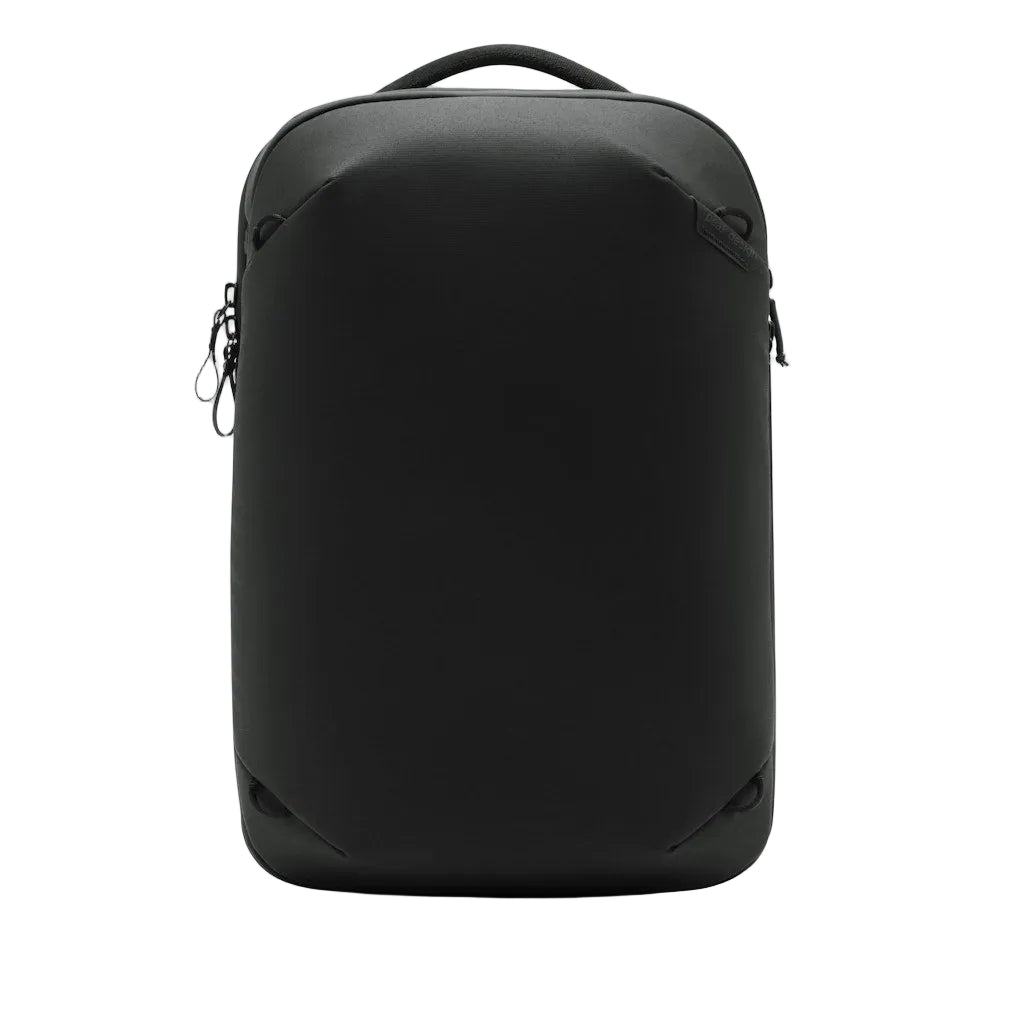
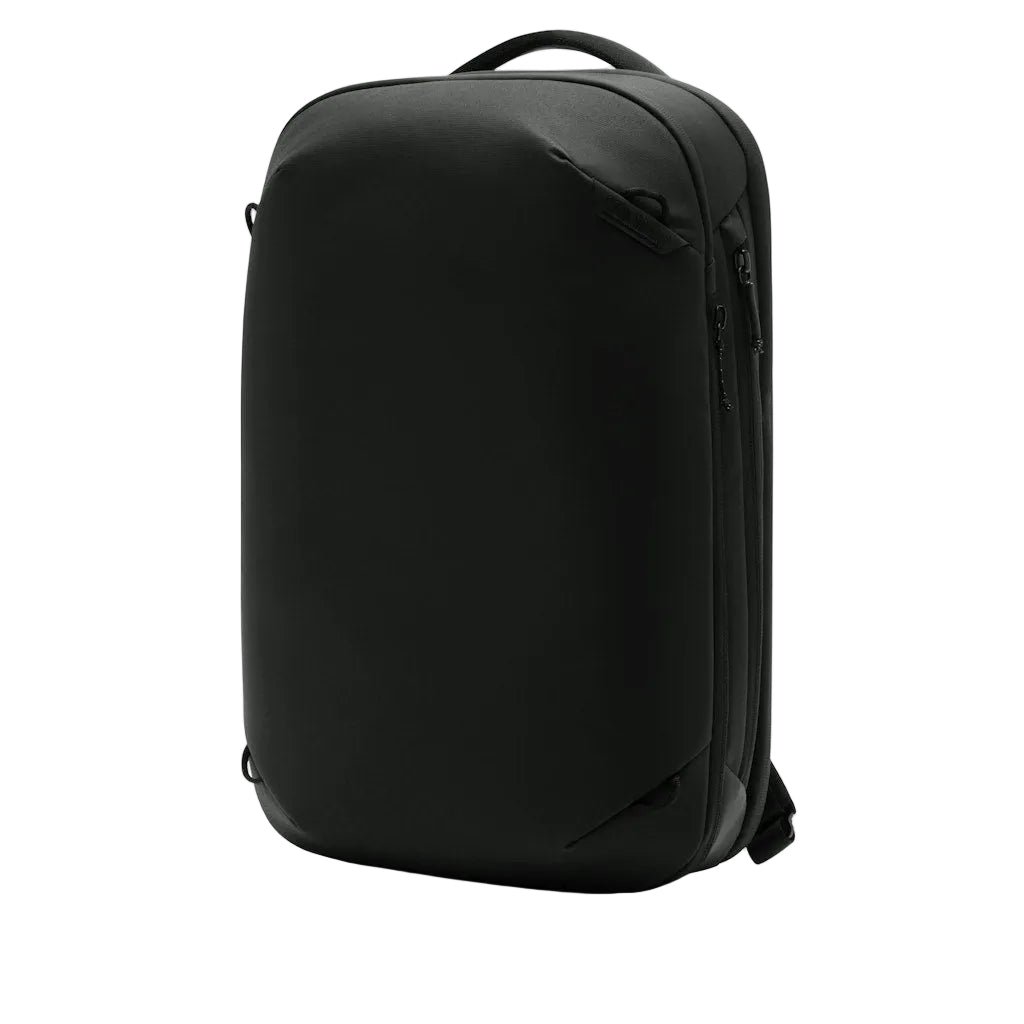
Peak Design Travel Backpack 45L ($299.95) — Expands from 35L to 45L via roll-top style side compression, with a padded laptop sleeve that fits up to a 16-inch laptop plus a divider for a tablet or keyboard. Weatherproof 400D recycled nylon shell. Good if you want one bag that also works well as an everyday city pack once you land.
Tortuga Pro Backpack 40L ($350) — Carry-on sized at 22 x 14 x 8 inches with a full clamshell opening that unzips around three sides, so you can see and access your entire pack at once like a suitcase. The suspended electronics compartment has padded, fleece-lined sleeves for a 16-inch laptop and a 12.9-inch tablet, plus a separate zip pocket for cables. Best for nomads who hate digging through a top-loader.
Aer Travel Pack 4 35L ($259 standard / $289 X-Pac water-resistant) — Aer’s current flagship travel backpack, the successor to the now-discontinued Travel Pack 3, also available in a smaller 28L size. It keeps the same core layout that made the previous generation popular: a full clamshell main compartment that lies flat for packing, a padded, suspended laptop pocket fitting up to 16 inches with a false-bottom design to absorb impact if the bag is set down hard, gusseted front pockets that stay accessible even when the main compartment is packed tight, and a luggage handle pass-through for stacking on a rolling suitcase. A strong middle-ground pick on price and organization.
Nomatic 30L Travel Bag ($309.99) — Converts between backpack and duffel using a built-in strap system, with a TSA-ready laptop compartment fitting laptops up to 16 inches, 11 internal organizational pockets, a ventilated shoe compartment for two pairs, and water-resistant tarpaulin construction. A solid choice if you want backpack/duffel flexibility in one bag.
Tips / Common Mistakes
Don’t buy on capacity alone. A 45L bag that’s over your airline’s linear-dimension limit will get flagged at the gate even if it ‘feels’ carry-on sized — check the exact inches, not just the liter count.
Test the laptop sleeve with your actual laptop before a trip, not after. Sleeve depth and width vary enough between brands that a 16-inch-rated compartment can still feel tight for larger 16-inch MacBook Pros or gaming laptops.
Prioritize a bag with a dedicated, separate laptop access point over sheer pocket count. Extra organization is nice, but the single biggest daily friction point for nomads is security-line laptop removal — a bag that handles that badly will annoy you every single flight.
If you’ll be checking the bag occasionally (over-packed trips, gift-buying, gear runs), don’t max out your carry-on size from day one — leave a little room to compress or you’ll be forced to gate-check on tighter flights.
Explore more: more travel gear guides.
Carry-On Backpacks With a Laptop Compartment for Digital Nomads FAQs
What size backpack counts as a carry-on?
Most full-service airlines allow carry-ons up to roughly 22 x 14 x 9 inches (about 55 x 35 x 23 cm), but budget and regional carriers are often smaller — always check your specific airline’s current policy before you fly, since limits vary and change.
How many liters is best for a digital nomad backpack?
30–40L is the most common range for one-bag travel of a week or more, since it fits clothing, tech, and toiletries without going over most carry-on size limits. Minimalists or those pairing the backpack with a rolling carry-on often go smaller, around 20–28L.
Should the laptop compartment open separately from the main bag?
Yes, ideally. A laptop compartment that unzips on its own — without opening your entire main compartment — is faster at security checkpoints and keeps your laptop from getting jostled by clothes or shoes packed elsewhere in the bag.
Make Your Digital Life Better
More practical tech how-tos, tool picks, and guides to upgrade your everyday digital life. More on GTWebs.
Images: Peakdesign.