

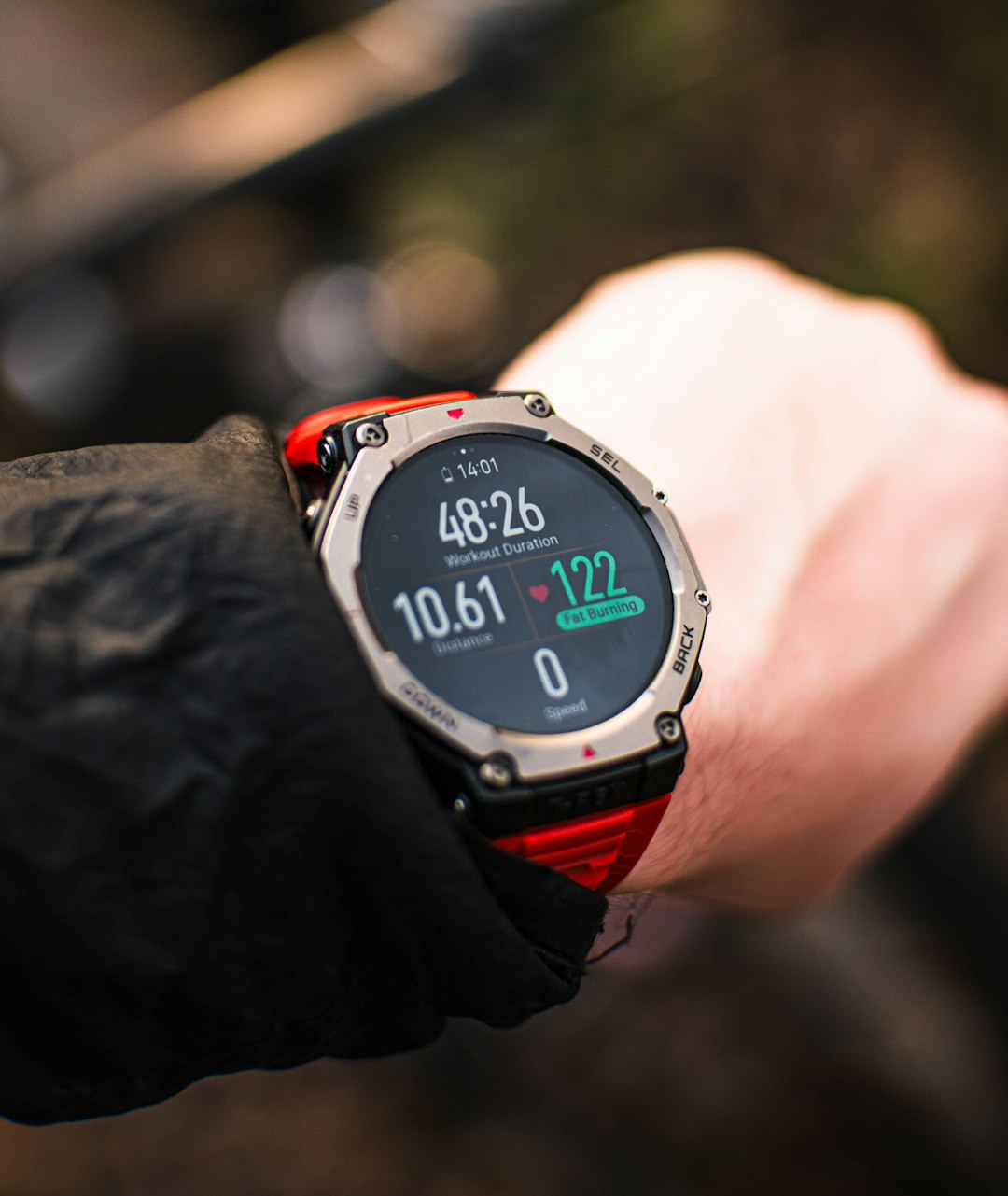
Your watch tells you your VO2 max improved by two points this month. Should you believe it? Wearable VO2 max estimates have gotten good enough to be genuinely useful for tracking fitness trends, but they are not lab measurements, and the gap between the two varies a lot by brand, fitness level, and how you use the device.
Table of Contents
This guide breaks down what the actual validation research says about Garmin, Apple Watch, and other wrist-based estimates, why the numbers drift, and how to get the most reliable reading out of whatever you’re wearing.
Quick Answer
Wearable VO2 max is a heart-rate-and-pace-based estimate, not a direct measurement — only a lab test with a breathing mask (a CPET, or cardiopulmonary exercise test) actually measures oxygen uptake. In validation studies, exercise-based algorithms like Garmin’s (powered by Firstbeat) typically land within roughly 5% of lab values under good conditions, while Apple Watch has shown larger average errors, including one 2025 study that found it underestimated VO2 max by about 6 mL/kg/min (a mean error near 13%). Accuracy is best for moderately trained adults and gets shakier at the high and low ends of the fitness spectrum.
What Your Watch Is Actually Measuring
No consumer wearable measures oxygen consumption directly. Instead, most estimate it by comparing your ‘internal workload’ (heart rate as a percentage of your max) against your ‘external workload’ (running pace from GPS, or power from a paired meter). Garmin’s algorithm, built on Firstbeat Analytics, looks for short, clean segments of steady-state running — typically around 20-30 seconds where your heart rate is elevated and your pace is consistent — and uses established physiological formulas to back-calculate an oxygen-cost estimate from that relationship.
This is why a single easy jog often won’t update your number, and why the estimate needs at least about 10 minutes of running near 70% of max heart rate (or roughly 20 minutes of steady cycling with a power meter) to compute a fresh reading. Apple Watch and other platforms use similar heart-rate-and-motion-based approaches, though the exact algorithms are proprietary and not published in detail, which is one reason independent researchers have struggled to fully audit them.
A 2025 systematic review in Frontiers in Sports and Active Living found that most validation studies on Garmin devices reported acceptable accuracy, with mean absolute percentage errors ranging from under 5% up to about 10% compared to lab-measured VO2 max in healthy untrained adults, recreational athletes, and team-sport athletes. The same review flagged a real limitation: manufacturers don’t disclose their algorithms, so independent researchers can’t fully explain why estimates sometimes diverge from lab results.
How the Major Brands Compare
Garmin (Firstbeat): Generally the most validated and most accurate of the mainstream wearables in published research, with reported errors in the roughly 3-5% range under controlled conditions — chest strap heart rate, an accurate max-HR setting, and steady outdoor runs. Accuracy tends to hold up well for moderately trained users but can drift more for highly trained athletes with very high VO2 max values, since the algorithm’s formulas were built around more typical fitness ranges.
Apple Watch: A 2025 PLOS ONE validation study (28 participants, mostly high-fitness adults) found Apple Watch underestimated lab-measured VO2 max by an average of about 6 mL/kg/min, with a mean absolute percentage error around 13% and wide individual variability — some readings were off by much more, some by less. The researchers concluded it’s promising as a general fitness-monitoring tool but not precise enough to rely on for any single reading.
Fitbit, Whoop, Oura, and Polar: These estimate cardio fitness using similar heart-rate-based logic (Fitbit calls its version ‘Cardio Fitness Score’), but have less independent, peer-reviewed validation published than Garmin or Apple. Anecdotal and smaller studies suggest wider error margins, especially outside typical fitness ranges — treat these more as a trend indicator than a number to compare against a lab result.
Across every brand, the pattern researchers keep finding is the same: wearables tend to overestimate VO2 max in people with low fitness and underestimate it in people with high fitness, because the underlying formulas are calibrated toward the middle of the distribution.
Tips to Get a More Reliable Reading
Set your max heart rate accurately. Most watches default to an age-based formula (220 minus age) that can be off by 10-20 beats for many people; a true max from a hard effort or lab test makes every downstream estimate more reliable.
Use a chest strap when you can. Wrist-based heart rate is more prone to motion artifacts and lag, especially during intervals or in cold weather, and heart-rate error feeds directly into VO2 max error.
Run outdoors with good GPS, not on a treadmill. Algorithms rely on pace data, and treadmill runs (or poor GPS signal in cities/canyons) reduce the accuracy of the external-workload half of the equation.
Give it steady-state effort. A 15-20 minute run at a consistent, moderately hard pace (not intervals, not an all-out race) is closer to what these algorithms are built to read.
Don’t chase single-run swings. Look at the trend over weeks, not the number after one workout — that’s what the underlying research actually supports these devices for.
Remember it’s an estimate of a moving target. VO2 max itself shifts with training, sleep, heat, altitude, and fatigue, so some week-to-week variation is expected even from a perfectly calibrated device.
Explore more: more fitness tech guides.
Wearable VO2 max accuracy FAQs
Is Garmin or Apple Watch more accurate for VO2 max?
Published validation research generally favors Garmin’s Firstbeat-based estimate, with typical errors around 3-5% under good conditions, versus Apple Watch studies showing larger average errors (one 2025 study found roughly 13% mean error). Both are estimates, not lab measurements, and individual results vary.
How can I get a truly accurate VO2 max?
Only a lab-based cardiopulmonary exercise test (CPET), where you exercise to exhaustion while breathing through a mask that measures oxygen and carbon dioxide exchange, gives a direct, precise VO2 max measurement. These are available at exercise physiology labs, some hospitals, and specialty fitness testing centers.
Why did my VO2 max estimate suddenly drop or jump?
Big swings are usually caused by GPS or heart-rate noise (bad signal, a missed strap connection), an outlier run (very hot weather, treadmill, intervals), or a recent max-heart-rate change rather than a real fitness change — check the conditions of the specific run before trusting the new number.
Do wearable VO2 max estimates get less accurate for very fit athletes?
Yes. Multiple studies note that algorithms tend to underestimate VO2 max in highly trained individuals with elevated fitness levels, likely because the formulas are calibrated around more typical fitness ranges rather than elite endurance athletes.
Make Your Digital Life Better
More practical tech how-tos, tool picks, and guides to upgrade your everyday digital life. More on GTWebs.
Photo by streetsh on Unsplash.