

No-code and low-code platforms have matured from simple drag-and-drop builders into powerful development environments that handle enterprise-scale applications. In 2026, no-code and low-code platforms are responsible for a growing share of all software development, enabling business teams to build applications without waiting months for engineering capacity. Whether you’re a developer or a non-technical professional, understanding no-code and low-code platforms shapes how you think about building software.
Table of Contents
What Are No-Code and Low-Code Platforms?
No-code and low-code platforms are development environments that minimize or eliminate traditional hand-coded programming:
- No-code platforms use entirely visual interfaces — drag-and-drop components, form builders, workflow designers, and pre-built integrations. No programming knowledge required
- Low-code platforms combine visual development with the ability to add custom code when needed. They accelerate development for programmers while remaining accessible to semi-technical users
The line between no-code and low-code platforms continues to blur as no-code tools add scripting capabilities and low-code tools improve their visual builders.
The 8 Best No-Code and Low-Code Platforms in 2026
No-Code Leaders
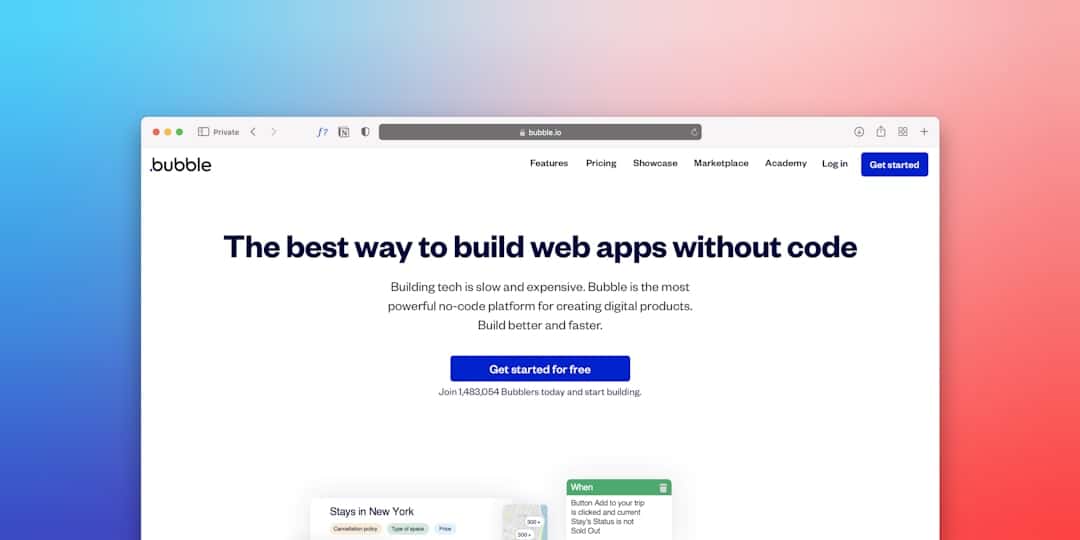
1. Bubble Bubble is the most powerful no-code platform for building full-stack web applications. It handles databases, user authentication, API integrations, responsive design, and complex business logic — all visually. Startups have built and launched products generating millions in revenue entirely on Bubble.
2. Webflow Webflow dominates no-code website and CMS development. It produces clean, production-quality HTML/CSS/JS and provides visual control that rivals hand-coded sites. For marketing sites, content platforms, and e-commerce, Webflow is the industry standard no-code platform.
3. Airtable Airtable combines spreadsheet simplicity with database power. It’s the foundation for thousands of internal tools, project management systems, and lightweight applications that previously required custom development.
4. Zapier and Make These automation platforms connect services without code. Build workflows that trigger across 5,000+ apps — when a form is submitted, create a CRM entry, send a Slack notification, and update a spreadsheet automatically.
Low-Code Leaders
5. Retool Retool is the dominant low-code platform for building internal tools. It provides pre-built components for tables, forms, charts, and wizards that connect directly to databases and APIs. Developers build in hours what previously took weeks.
6. Supabase Supabase provides a complete backend (database, auth, storage, functions) with a low-code dashboard and full API access. It’s the open-source Firebase alternative that bridges no-code convenience with developer flexibility.
7. OutSystems The enterprise low-code platform for large-scale applications. OutSystems handles complex business processes, legacy system integration, and applications serving millions of users.
8. Appsmith An open-source low-code platform for building internal tools. Appsmith provides drag-and-drop UI components with full JavaScript customization, making it ideal for developer teams who want speed without vendor lock-in.

Why No-Code and Low-Code Platforms Are Accelerating in 2026
Several forces are driving adoption of no-code and low-code platforms:
AI Integration
No-code and low-code platforms now include AI capabilities — generate UI from descriptions, auto-create database schemas, build workflows from natural language. AI makes these platforms even more accessible and dramatically faster to use.
Developer
Shortage The global demand for software continues to outpace the supply of developers. No-code and low-code platforms enable non-developers to build applications that would otherwise sit in a backlog for months, and they help developers build faster when demand exceeds capacity.
Enterprise
Adoption Fortune 500 companies now standardize on no-code and low-code platforms for internal tools, workflows, and departmental applications. Gartner predicts that over 70% of new enterprise applications will use low-code or no-code technologies by 2027.
Cost Efficiency
Building an application on a no-code platform costs a fraction of custom development. A tool that takes a developer two weeks to build can often be created in two days on the right no-code or low-code platform.
When to Use No-Code vs Low-Code vs Custom Code
No-code is best for:
- MVPs and prototypes
- Marketing websites and landing pages
- Internal databases and simple CRUD apps
- Workflow automation between existing tools
- Non-technical teams who need to build without engineering support
Low-code is best for:
- Internal tools with complex business logic
- Applications needing database and API integration
- Semi-technical teams with some coding capability
- Projects where speed matters but customization is needed
Custom code is best for:
- Consumer-facing products needing unique UX
- Applications with complex algorithms or AI integration
- Performance-critical systems
- Products requiring deep platform-specific capabilities
The smartest teams in 2026 use all three approaches strategically — no-code for quick wins, low-code for internal tools, and custom code for core product differentiators.
Frequently Asked Questions
What is the difference between no-code and low-code?
No-code platforms use entirely visual interfaces requiring zero programming knowledge. Low-code platforms combine visual development with the ability to add custom code for advanced functionality. No-code is more accessible while low-code offers more flexibility and customization.
Can you build a real business on a no-code platform?
Yes. Companies have built products generating millions in revenue on no-code platforms like Bubble and Webflow. No-code and low-code platforms in 2026 handle production-scale applications with thousands of users, complex business logic, and enterprise integrations.
Are no-code platforms replacing developers?
No. No-code and low-code platforms shift what developers work on, not whether developers are needed. They handle routine application building, freeing developers to focus on complex, custom, and performance-critical work. Developer demand continues to grow alongside no-code adoption.
What are the limitations of no-code platforms?
No-code platforms have limitations in performance optimization, complex algorithms, unique UI/UX design, deep platform integrations, and vendor lock-in. For most internal tools, MVPs, and content sites, these limitations are irrelevant, but consumer products often outgrow no-code as they scale.