

Cell towers can’t cover every canyon, coastline, or backroad, which is why phone carriers are racing to fill those gaps with satellites instead. Two competing approaches are leading that race: T-Mobile’s T-Satellite service, built on SpaceX’s Starlink direct-to-cell satellites, and AST SpaceMobile’s BlueBird constellation, which is partnering with AT&T and Verizon.
Table of Contents
Both let an ordinary smartphone connect straight to a satellite with no special hardware, but they’re at very different stages and take different technical approaches. This guide breaks down what each service actually does today, who it works with, and how to think about choosing between them if your carrier offers one.
Quick Answer
T-Mobile’s T-Satellite (powered by Starlink) is the one you can use right now — it’s commercially live for texting, emergency SOS, and limited data on most modern phones. AST SpaceMobile is further behind: it has FCC authorization to test its service and is preparing a non-commercial beta with AT&T and Verizon later in 2026, but full commercial service isn’t expected until early 2027.
How Each Service Works
T-Satellite runs on SpaceX’s Starlink ‘direct to cell’ satellites, which act like a cell tower in orbit that talks to T-Mobile’s network on the ground. It launched commercially in July 2025 with two-way texting (including apps like iMessage and Google Messages), location sharing, and text-to-911, and later added support for select satellite-ready apps with limited data speeds. It’s included free on T-Mobile’s Experience Beyond and Better Value plans, or available as a paid add-on for other T-Mobile customers — and it also works as a fallback for people on other carriers who need to text 911.
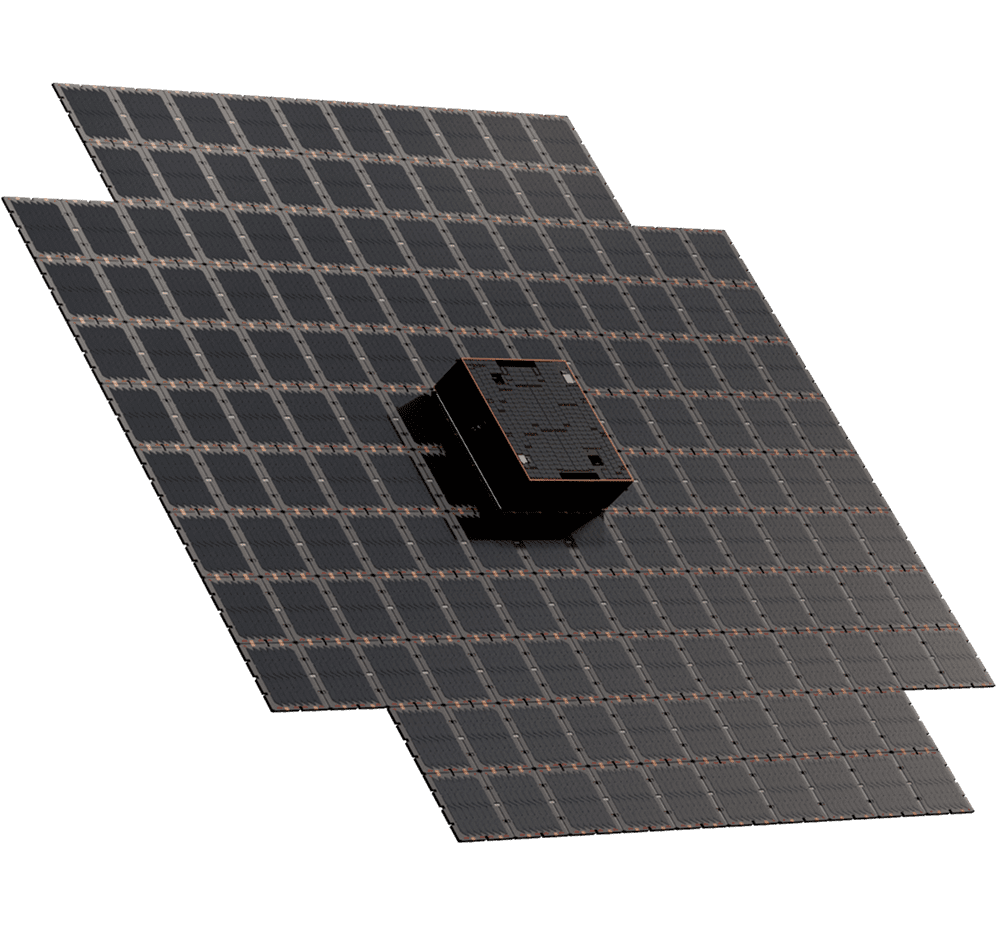
AST SpaceMobile is building its own constellation of large BlueBird satellites designed to connect directly to unmodified phones using carriers’ existing low-band spectrum (700/800/850 MHz). Rather than partnering with one carrier, AST has commercial agreements with both AT&T and Verizon in the U.S. (plus FirstNet for first responders), and international deals including one with Saudi Arabia’s stc. The company has FCC authorization to test its direct-to-device service and has been steadily launching batches of BlueBird satellites — including a group of three launched in early August 2026, bringing its total in-orbit fleet to 13 — to build out coverage ahead of a planned beta.
Coverage, Compatibility, and Timeline
T-Satellite works with most smartphones from roughly the last four years, on Apple, Samsung, Google, and other Android devices, without any special app or setting beyond enabling satellite messaging. Coverage spans the continental U.S. (plus Puerto Rico, Hawaii, and parts of southern Alaska), with international roaming support added for Canada, New Zealand, and Japan.
AST SpaceMobile’s timeline has slipped: the company had targeted a full commercial launch by late 2026 but pushed that back to early 2027, citing launch-vehicle delays affecting its BlueBird deployment schedule. As of mid-2026, AT&T and Verizon customers have not yet gotten access — AST says it’s still preparing a non-commercial beta with those two carriers for later in 2026, and has cautioned that early coverage will be intermittent, with gaps between satellite passes measured in hours rather than continuous signal, until more BlueBird satellites are in orbit. AST’s approach is also carrier-agnostic in spirit — it’s built to work with any partner network using standard spectrum — which is why it’s landed deals with two major U.S. carriers instead of just one.
The core distinction for consumers: T-Satellite is a shipping product you can turn on today if you’re on T-Mobile (or need emergency texting from any carrier). AST SpaceMobile is a network still being built, with no customer beta running yet — a limited, non-commercial beta for AT&T and Verizon customers is expected later in 2026, ahead of a broader commercial rollout in early 2027.
Tips / Common Mistakes
Don’t expect either service to replace home or office Wi-Fi calling — both are designed for basic connectivity (texts, emergency alerts, light data) when you have no normal signal, not for streaming or video calls. Check your specific phone model against your carrier’s official compatibility list before relying on satellite service in an emergency, since not every device from the ‘last few years’ is automatically supported. You’ll also need a clear view of the sky — trees, canyon walls, and being indoors will block the connection on either network. If you’re on AT&T or Verizon, don’t assume satellite service is active on your account: as of mid-2026, AST SpaceMobile hasn’t started customer beta service with either carrier yet — it’s still preparing a non-commercial beta for later in 2026.
Explore more: More space and satellite technology coverage.
T-Mobile Starlink vs AST SpaceMobile FAQs
Is T-Mobile’s satellite service the same as Starlink?
T-Satellite is T-Mobile’s branded service, but it runs on SpaceX’s Starlink direct-to-cell satellites — so functionally, yes, it’s Starlink’s satellite network powering T-Mobile’s feature.
Can I use AST SpaceMobile if I’m not on AT&T or Verizon?
Not currently. AST SpaceMobile’s U.S. commercial agreements are with AT&T, Verizon, and FirstNet, so its service is tied to those networks rather than being carrier-agnostic for consumers.
Does either service support phone calls?
As of mid-2026, T-Satellite focuses on texting, location sharing, text-to-911, and limited data/app access rather than full voice calls. AST SpaceMobile has demonstrated voice capability in tests, but its service is still pre-commercial, with a beta for AT&T and Verizon customers expected later in 2026.
Is AST SpaceMobile’s beta with AT&T and Verizon live yet?
No, not as of mid-2026. AST SpaceMobile has FCC authorization to test its network and has said it’s still preparing a non-commercial beta with AT&T and Verizon for later in 2026, with intermittent (not continuous) coverage, ahead of a full commercial launch targeted for early 2027.
Make Your Digital Life Better
More practical tech how-tos, tool picks, and guides to upgrade your everyday digital life. More on GTWebs.
Want web tips in your inbox? Subscribe to the free newsletter.
Images: AST SpaceMobile.