

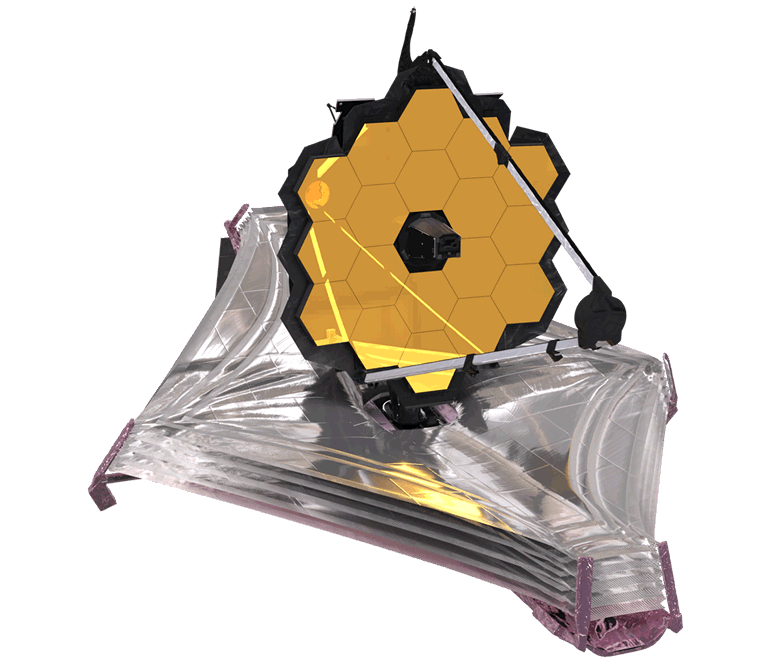
The James Webb Space Telescope has been quietly upending everything astronomers thought they knew about the cosmos. Since beginning science operations, JWST has peered deeper into space — and further back in time — than any instrument before it, and the results from 2025 and 2026 have been nothing short of extraordinary.
Table of Contents
Whether you’re a dedicated space enthusiast or just catching up on the biggest science headlines, this guide breaks down JWST’s most significant recent findings: what was actually discovered, why it matters, and what researchers are watching next.

Quick Answer
JWST’s biggest 2025–2026 breakthroughs include the detection of unexpectedly massive ancient galaxies that challenge standard cosmological models, the first confirmed observation of a planet whose clouds are made of vaporized rock and dissolve every evening, and the first-ever mid-infrared chemical fingerprint of an interstellar comet. Together, these findings are actively reshaping how scientists understand galaxy formation, planetary weather, and the potential for life beyond Earth.
Early Universe: Galaxies That Shouldn’t Exist
One of JWST’s most disruptive discoveries is that the early universe looked nothing like standard models predicted. The telescope has captured light from ultra-bright, compact galaxies blazing with intense star formation within the first billion years after the Big Bang — objects researchers have nicknamed ‘Blue Monsters.’ These galaxies are far more luminous and massive than cosmological theory suggested could form so quickly, and their existence has sent theorists scrambling to revise models of early structure formation.
In 2025, JWST revealed a system of at least five interacting galaxies that existed just 800 million years after the Big Bang, showing that galaxy mergers began far earlier than expected. Adding to the puzzle, some of these ancient galaxies appear to host supermassive black holes — detected as early as 500 to 700 million years after the Big Bang — that are far larger than should be possible given their age. Astronomers are still debating whether our current cosmological models need a fundamental rethink, or whether some exotic early-universe process explains the discrepancy.
A related class of mysterious objects called ‘Little Red Dots’ — compact reddish sources seen only by JWST — have fueled further debate about whether they represent extremely dense young galaxies, highly active galactic nuclei, or something else entirely.
Alien Weather: Rock Clouds and Exoplanet Atmosphere Breakthroughs
In May 2026, JWST delivered one of its most vivid exoplanet findings yet. A study published in the journal Science, led by David Sing at Johns Hopkins University, detailed observations of WASP-94A b — a hot gas giant located nearly 700 light-years away in the constellation Microscopium. JWST found that the planet’s morning side is blanketed by clouds made of magnesium silicate, a rock-forming mineral, while the evening side is strikingly clear. The rock-mineral clouds form as the planet cycles through extreme day-night temperature swings, condensing out of the atmosphere in cooler regions and vaporizing again as the planet rotates into hotter territory. The same cloud pattern was subsequently identified on two other hot Jupiters, WASP-39b and WASP-17b, suggesting this rock-cloud cycle may be common among a class of worlds.
JWST has also been systematically studying the seven Earth-sized planets of the TRAPPIST-1 system — one of the most scrutinized collections of potentially habitable worlds. Observations have ruled out thick hydrogen-rich atmospheres on the innermost planets, narrowing down which worlds could plausibly sustain surface conditions amenable to life. On the sub-Neptune exoplanet K2-18b, JWST data has hinted at the presence of dimethyl disulfide, a sulfur compound associated with biological processes on Earth. Researchers have been careful to emphasize that the detection is tentative and that non-biological explanations must be thoroughly ruled out first.
Separately, in June 2026, JWST revealed a striking dawn-dusk atmospheric split on the ultra-hot Jupiter WASP-121b, further demonstrating the telescope’s unmatched ability to map three-dimensional weather systems on worlds orbiting distant stars.
An Ancient Interstellar Visitor — and Organic Chemistry Beyond the Milky Way
Late 2025 brought a rare opportunity: comet 3I/ATLAS, only the third interstellar object ever detected passing through our solar system, swept close enough for JWST to capture its chemical fingerprint. The telescope’s mid-infrared instruments revealed a coma dominated by carbon dioxide — released at a ratio to water far higher than seen in typical solar system comets — alongside methane (the first-ever detection of methane on an interstellar visitor), water, carbon monoxide, and the sulfur compound OCS. Nickel vapor was also detected, an unexpected finding that suggests certain compounds on the comet’s surface are breaking apart under solar radiation. Separately, the ALMA radio telescope detected exceptionally abundant methanol in the same comet — a richness unlike anything previously measured in solar system comets. Isotopic analysis suggests 3I/ATLAS may have formed around 10 to 12 billion years ago, potentially making it one of the oldest objects ever directly studied.
In February 2026, JWST made headlines for a different kind of chemistry. Deep inside a nearby ultraluminous infrared galaxy shrouded in thick dust, astronomers detected a rich collection of organic molecules — including benzene, methane, and the highly reactive methyl radical. These were the first confirmed detections of several of these compounds outside the Milky Way, opening a new frontier in understanding how complex chemistry spreads across the universe.
Tips: How to Stay Current on JWST Discoveries
Bookmark NASA’s official Webb telescope news page (webb.nasa.gov) and the ESA/Webb press release archive at esawebb.org — both publish plain-language summaries alongside the technical findings, usually on the same day as major announcements. For deeper reading without needing journal access, the preprint server arXiv (arxiv.org) hosts JWST research papers the same day they are submitted, often before or alongside press coverage.
For exoplanet-specific results, follow the JWST Transiting Exoplanet Community Early Release Science program, which has been producing a steady stream of atmospheric characterization results for dozens of worlds. For early-universe findings, search for updates from the JWST Advanced Deep Extragalactic Survey (JADES) team. Twitter/X accounts of scientists on the Webb teams — easily found by searching for JWST on the platform — often give real-time reaction and context that press releases miss.
One practical tip: be cautious about early headlines claiming ‘signs of life’ or ‘impossible’ discoveries. JWST results often take months of follow-up analysis to confirm, and many initial findings come with significant caveats. Reading the official press release or the abstract of the paper before sharing gives a much clearer picture of what was actually found versus what was speculated.
Explore more: Explore more space news and discoveries.
James Webb Space Telescope discoveries 2026 FAQs
What is the most groundbreaking JWST discovery so far?
Many astronomers point to the unexpectedly massive, ultra-bright galaxies detected within the first billion years after the Big Bang as the finding most likely to require a fundamental update to standard cosmological models. These galaxies — far more developed than theory predicted — challenge our understanding of how the universe evolved.
Has JWST actually found signs of life on another planet?
Not definitively. JWST detected a candidate biosignature molecule (dimethyl disulfide) in the atmosphere of the sub-Neptune exoplanet K2-18b, but scientists stress the detection is tentative and that non-biological sources must be thoroughly ruled out before any life-related conclusion can be drawn. No confirmed detection of life has been announced.
How much longer will JWST keep operating?
The precision of JWST’s December 2021 launch used significantly less fuel than planned, giving the telescope a much longer expected lifespan than its original design minimum of ten years. Mission systems engineers have estimated it could operate into the mid-2040s, meaning many of JWST’s most significant discoveries may still be ahead.
Make Your Digital Life Better
More practical tech how-tos, tool picks, and guides to upgrade your everyday digital life. More on GTWebs.
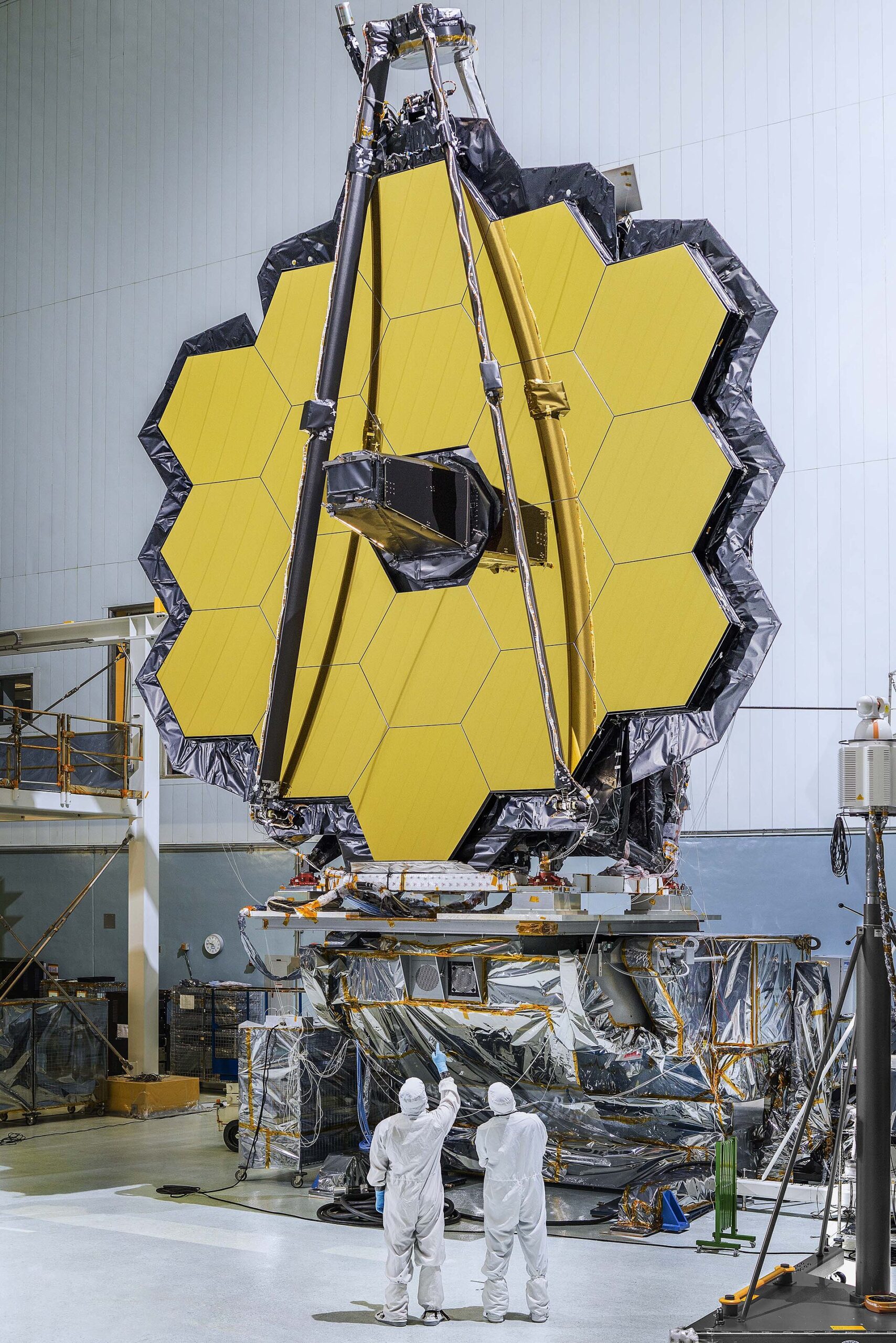
Photo: NASA / Public domain, via Wikimedia Commons.