

It’s one of the first questions that trips people up about spaceflight: a car steers by pushing against the road, a plane by pushing against air, a boat by pushing against water. In space there’s nothing to push against — no air, no water, no ground. So how does a rocket or spacecraft change direction once it’s off the launch pad?
Table of Contents
The short version is that rockets don’t need an external medium at all. They carry their own “something to push against” in the form of expelled mass, and Newton’s third law does the rest. This guide walks through the actual hardware — gimbaled engines, reaction control thrusters, and reaction wheels — that spacecraft use to point themselves and change course.
Quick Answer
Rockets steer in space mainly by expelling mass (exhaust gas from the main engine or small thrusters) in one direction, which pushes the spacecraft the opposite direction — that’s Newton’s third law in action, and it works with or without air. In practice this is done three main ways: tilting (gimbaling) the main engine to redirect thrust, firing small reaction control system (RCS) thrusters mounted around the vehicle, and spinning internal reaction wheels, which rotate the spacecraft by exchanging angular momentum with a motor-driven flywheel rather than by expelling anything.
The Physics: Why You Don’t Need Air to Turn
Steering on Earth relies on a third party — wheels grip pavement, wings grip air, rudders grip water — to redirect a vehicle’s motion. A rocket in space has no such partner. Instead it relies purely on Newton’s third law: for every action there’s an equal and opposite reaction. When a rocket engine burns propellant and shoots exhaust out the back at high speed, the spacecraft is pushed forward with equal and opposite force. The ‘thing to push against’ isn’t the vacuum of space — it’s the exhaust mass itself, which the rocket carries along with it.
The same principle explains how a spacecraft can rotate, not just accelerate. If mass is expelled slightly off-center from the vehicle’s center of mass, it creates torque instead of (or in addition to) straight-line thrust, and torque is what spins or tilts the craft. That covers gimbaled engines and RCS thrusters. Reaction wheels work on a related but distinct principle — conservation of angular momentum — without expelling any mass at all, as explained below.
The Three Main Steering Systems
Gimbaled main engines handle big steering moves during powered flight. The engine nozzle is mounted on a pivot (a gimbal) so it can tilt a few degrees away from the rocket’s central axis, typically enough for pitch and yaw control. When the nozzle swivels, the thrust vector no longer points straight through the vehicle’s center of mass, which generates torque and rotates the rocket. This is how boosters like SpaceX’s Falcon 9 steer during ascent, and it’s often called thrust vector control (TVC). Multi-engine vehicles can also throttle individual engines up or down to steer, which is how some boosters manage roll control when a single gimbaled nozzle can’t produce it alone.
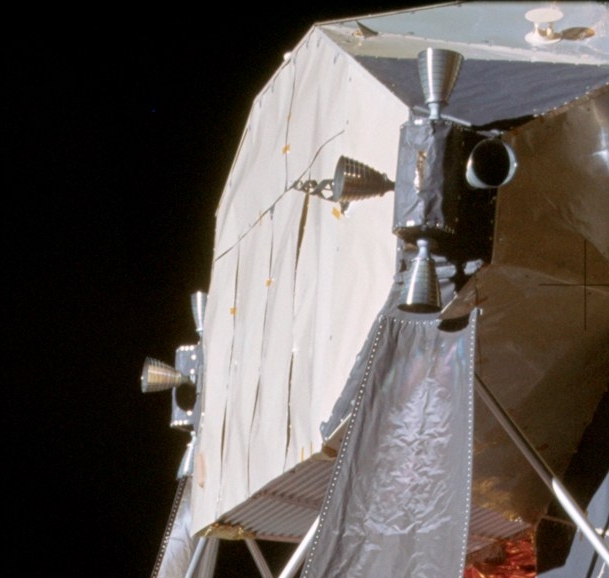
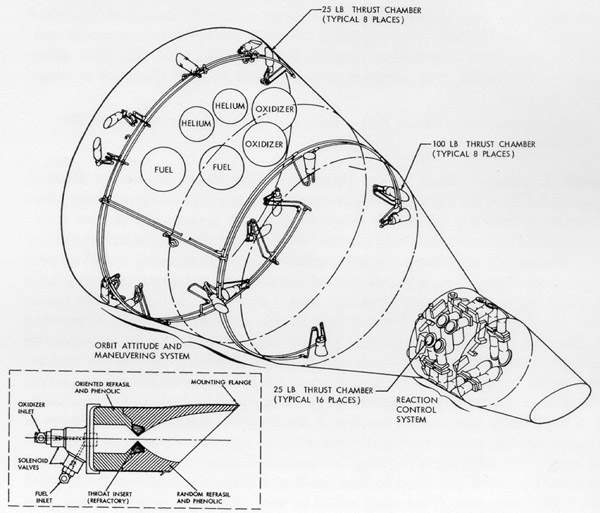
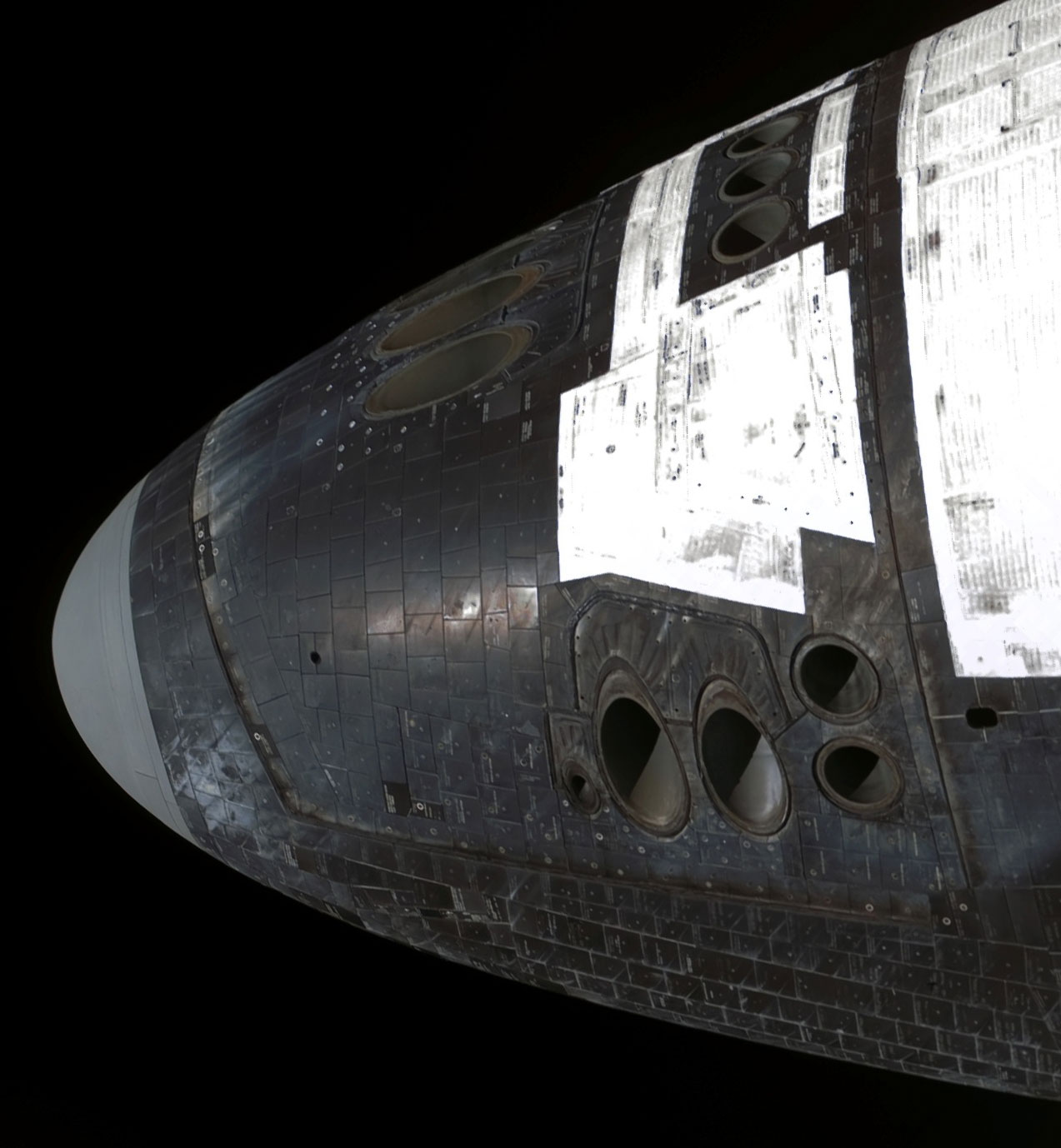
Reaction control system (RCS) thrusters take over for fine adjustments, especially once the main engine is off or the vehicle needs small nudges rather than a full burn. RCS is a cluster of small thrusters positioned around the spacecraft’s hull, usually in pairs pointed in opposing directions. Firing one set rotates the craft along roll, pitch, or yaw; firing opposing pairs together can translate the vehicle sideways without rotating it at all. RCS is what the Space Shuttle, Apollo capsules, and the Dragon and Starliner capsules used and use for docking, orientation changes, and reentry attitude control. The tradeoff is that RCS burns dedicated propellant, so its use is limited by how much fuel the mission budgets for it.
Reaction wheels (also called momentum wheels) solve the fuel problem for satellites and space telescopes that need to point precisely for long periods, like Hubble. A reaction wheel is an internal flywheel spun by an electric motor — it never leaves the spacecraft and nothing is expelled. Speeding the wheel up in one direction causes the spacecraft body to rotate slightly in the opposite direction, because the total angular momentum of the wheel-plus-spacecraft system has to stay constant; the motor just transfers momentum back and forth between the wheel and the hull. That means no propellant is required, just electricity, which solar panels can supply indefinitely. The catch is that reaction wheels can only store so much momentum before they ‘saturate’ (spin at their maximum rate) and stop being useful for further correction. When that happens, the spacecraft has to ‘desaturate’ or ‘dump’ the excess momentum, usually by firing RCS thrusters or, in Earth orbit, pushing against Earth’s magnetic field with magnetic torquers. The International Space Station uses large versions of this idea called control moment gyroscopes (CMGs) as its primary attitude control, with RCS thrusters as backup.
Other Steering Tricks Worth Knowing
Grid fins, the crosshatched panels visible on SpaceX Falcon 9 boosters as they fall back to Earth, aren’t a space-steering trick — they only work in atmosphere. They deploy after stage separation and steer the booster during descent by deflecting air, the same aerodynamic principle a plane’s control surfaces use, just in a grid shape that stays stable at high speed.
Differential throttling is another option on vehicles with multiple engines: firing engines on one side of the vehicle harder than the other creates torque without needing any of them to gimbal. This is a secondary or backup steering method on some launch vehicles rather than the primary one.
It’s worth separating ‘steering’ (changing orientation, or attitude) from ‘maneuvering’ (changing orbit, or trajectory). Reaction wheels and small RCS thrusters generally only rotate a spacecraft — they don’t have enough force to meaningfully change its orbital path. Actually changing course in orbit requires a real propulsive burn, typically from the main engine or dedicated maneuvering thrusters, applied at the right point and duration to raise, lower, or shift the orbit.
Tips / Common Mistakes
A common misconception is that rockets ‘push against’ space itself, or against the launch pad after liftoff, the way a swimmer pushes off a wall. Neither is true — thrust works identically in a vacuum as in atmosphere, and in fact a rocket engine is slightly more efficient in vacuum because there’s no outside air pressure pushing back on the exhaust.
Don’t confuse RCS thrusters with the main engine — they’re a completely separate, much smaller propulsion system built specifically for fine attitude control and small translational moves, not for accelerating the vehicle along its main flight path.
Don’t assume reaction wheels throw or eject any mass — they don’t. They spin an internal flywheel and rotate the spacecraft by conservation of angular momentum, which is exactly why they’re propellant-free day to day. The catch is that this momentum has to be ‘dumped’ eventually, usually with thruster fuel, which is why spacecraft attitude control is typically engineered as a hybrid of wheels for everyday pointing and thrusters for occasional desaturation and big moves.
Explore more: More space explainers.
How rockets steer in space FAQs
How do rockets steer with no air to push against?
They push against their own exhaust instead of air. Expelling mass in one direction (from the engine or a small thruster) pushes the vehicle in the opposite direction, per Newton’s third law — this works the same in vacuum as in atmosphere.
What’s the difference between gimbaled engines and RCS thrusters?
A gimbaled engine tilts the main engine nozzle to redirect the rocket’s primary thrust and is used for large steering moves during powered flight. RCS thrusters are a separate cluster of small thrusters used for fine attitude adjustments and orientation changes when the main engine isn’t firing.
Do reaction wheels expel mass to turn a spacecraft?
No. A reaction wheel is a flywheel that stays inside the spacecraft; spinning it up in one direction makes the spacecraft body rotate the opposite way to conserve total angular momentum. Nothing is thrown overboard, which is why wheels can run on electricity alone rather than propellant.
Can a spacecraft steer without using any fuel?
Only partially. Reaction wheels can rotate a spacecraft using just electricity, with no propellant, but they eventually saturate and need to be ‘desaturated’ using thrusters or magnetic torquers, so fuel or another external torque source is still needed periodically.
Do grid fins help rockets steer in space?
No — grid fins, like those on Falcon 9 boosters, only work by deflecting air, so they’re an atmospheric-descent steering tool, not a space-steering system.
Make Your Digital Life Better
More practical tech how-tos, tool picks, and guides to upgrade your everyday digital life. More on GTWebs.
Photo: Alan Shepard/NASA / Public domain, via Wikimedia Commons.