

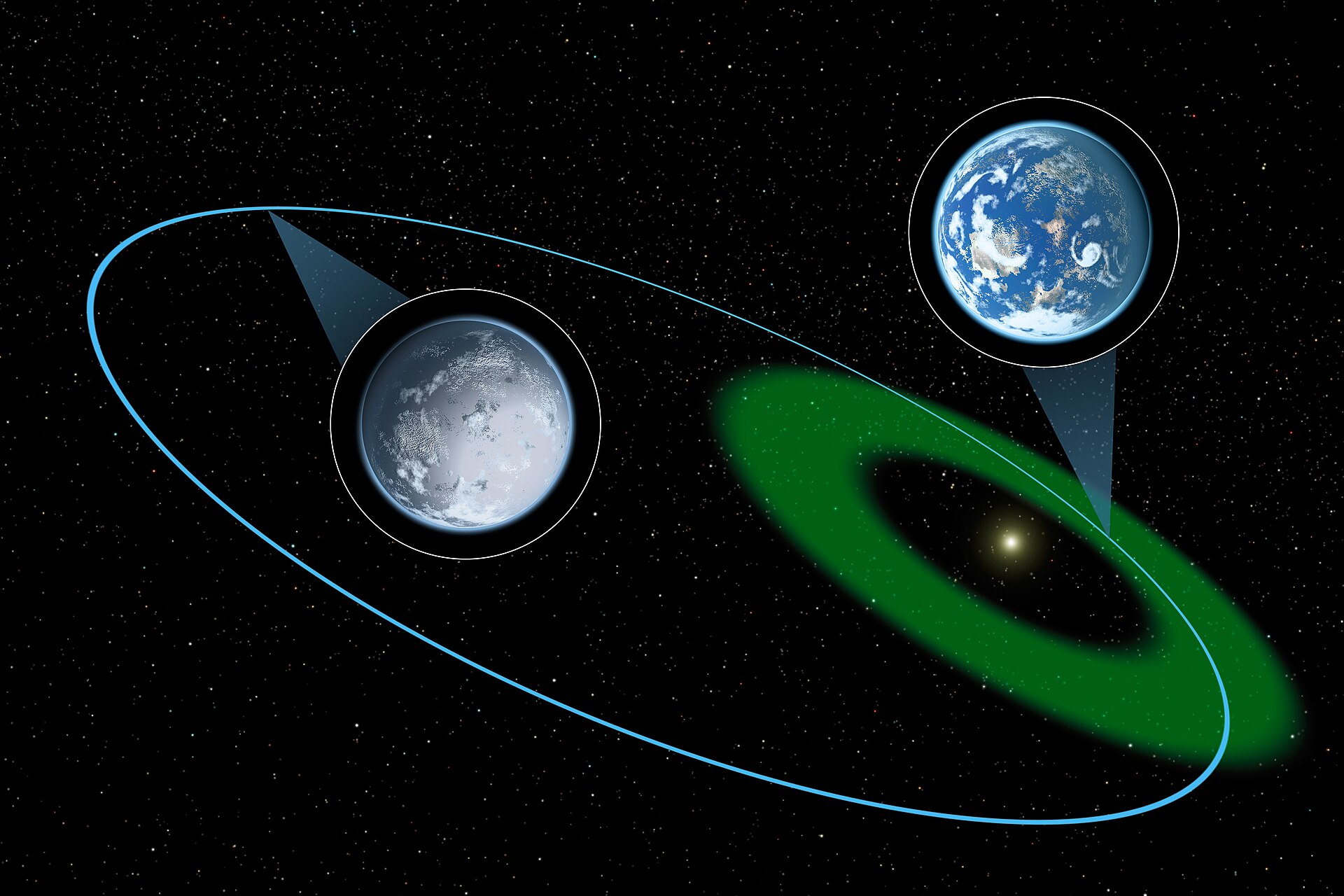
Of the thousands of exoplanets astronomers have confirmed beyond our solar system, only a fraction orbit in the narrow sweet spot where surface temperatures could allow liquid water — the ingredient scientists consider most essential for life as we know it. That region is called the habitable zone, and finding planets inside it is one of the central missions of modern astronomy.
Table of Contents
This guide explains exactly what the habitable zone is, how astronomers calculate it, and which exoplanets discovered so far sit inside one — including several that have made headlines in recent years.
Quick Answer
The habitable zone — also called the Goldilocks zone — is the range of orbital distances from a star where conditions are neither too hot nor too cold for liquid water to exist on a rocky planet’s surface. Earth sits inside our Sun’s habitable zone at 1 astronomical unit (AU). Confirmed exoplanets in or near habitable zones include worlds in the TRAPPIST-1 system, Proxima Centauri b, Kepler-186f, Kepler-452b, and Wolf 1069 b, among dozens of others.
How the Habitable Zone Works
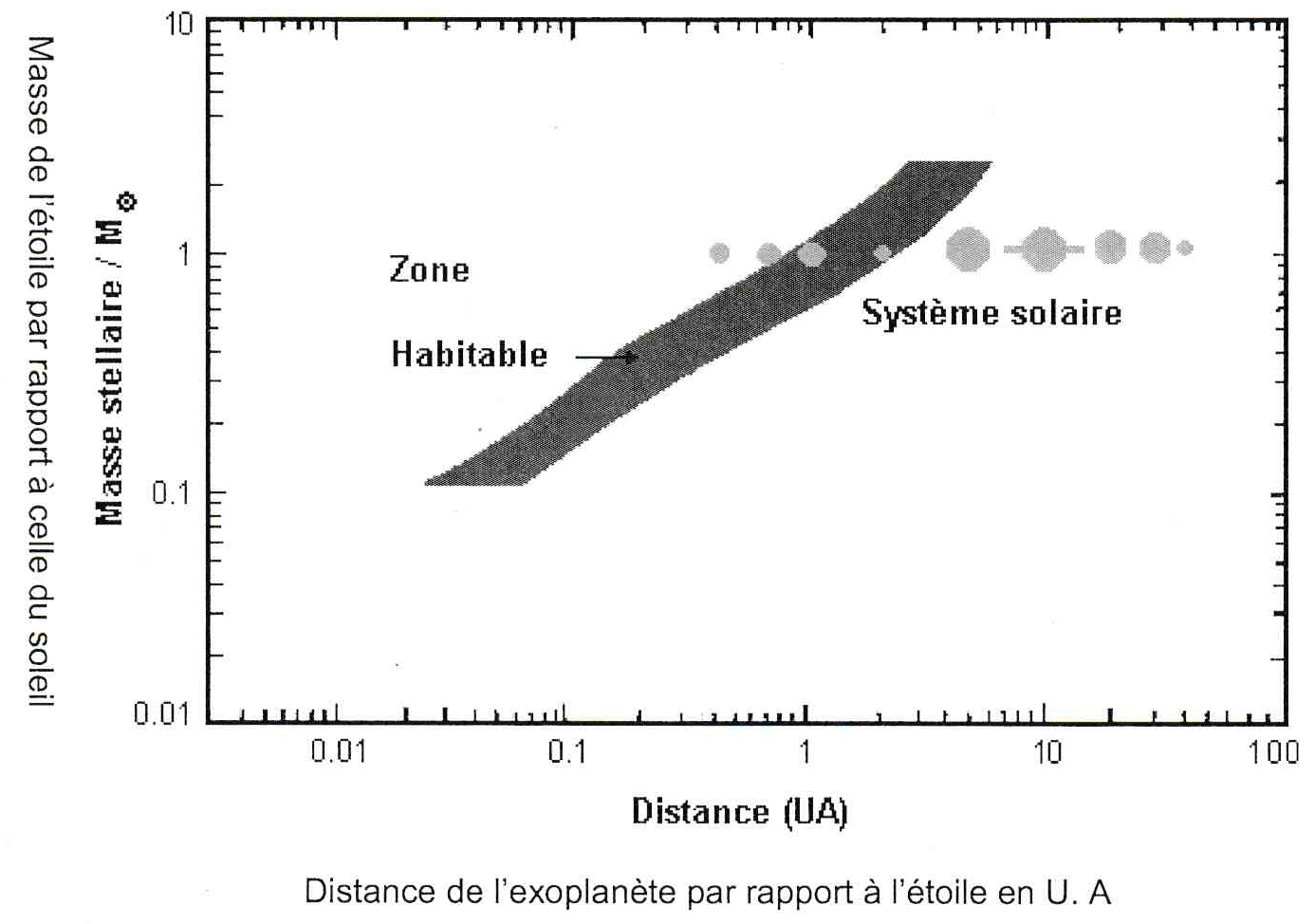
The habitable zone is not a fixed ring in space — it shifts depending on how bright and hot a star is. More luminous, hotter stars push their habitable zones much farther out; cooler, dimmer stars (like red dwarfs) have their habitable zones located extremely close in, sometimes just a small fraction of Earth’s distance from the Sun. The underlying physics is straightforward: a planet must receive enough stellar energy to keep water liquid, but not so much that it triggers a runaway greenhouse effect.
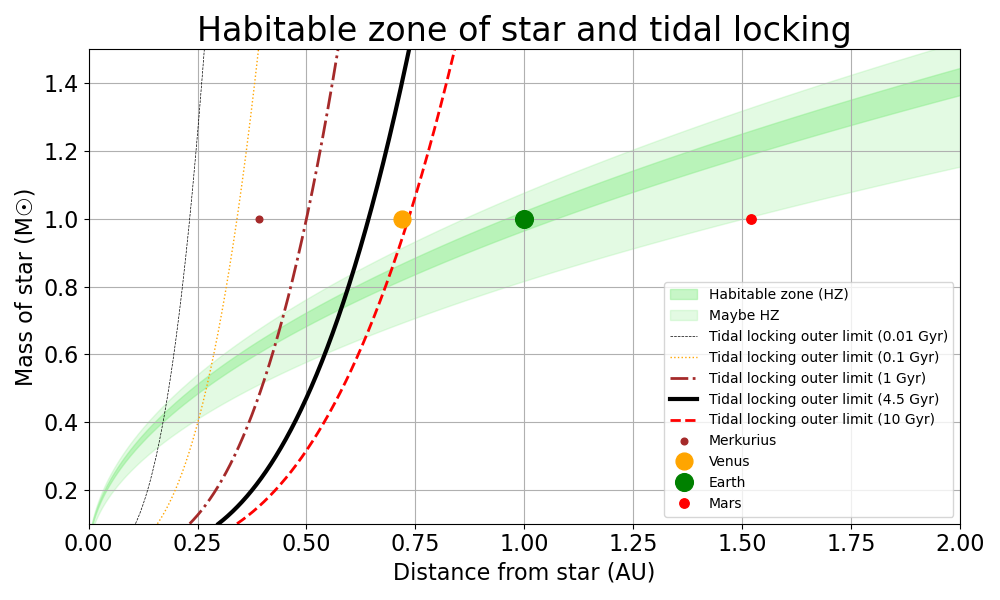
For our own Sun — a medium-sized yellow dwarf — the habitable zone runs roughly from about 0.95 AU to 1.37 AU. Earth at exactly 1 AU sits comfortably inside it. Mars at about 1.5 AU is just past the outer edge, which is part of why scientists think early Mars may have had liquid water when it still had a thicker atmosphere.
Astronomers also distinguish between a conservative habitable zone and an optimistic habitable zone. The conservative definition uses stricter climate-model limits: the inner edge is where a runaway greenhouse effect would evaporate all surface water (as happened on Venus), and the outer edge is where a CO₂-rich atmosphere can no longer keep a planet above freezing. The optimistic definition expands those boundaries based on historical evidence — Venus was likely habitable until roughly a billion years ago, and Mars showed signs of liquid water billions of years before that, even though both planets orbit outside the conservative zone.
Notable Exoplanets Inside the Habitable Zone
TRAPPIST-1 system — This ultracool red dwarf about 40 light-years away hosts seven known rocky planets, several of which fall within the habitable zone. TRAPPIST-1e in particular receives a similar amount of stellar energy to what Earth gets from the Sun, making it one of the most discussed candidates for potential habitability. All seven planets are roughly Earth-sized, which is remarkable for a single system.
Proxima Centauri b — At just 4.2 light-years away, Proxima b is the closest known exoplanet to Earth and sits in its star’s habitable zone. The catch: Proxima Centauri is an active red dwarf that frequently blasts its planets with intense ultraviolet radiation and powerful stellar flares, which could strip away any atmosphere. Whether Proxima b can hold on to liquid water is still an open question.
Kepler-186f — This was the first confirmed Earth-sized planet found in the habitable zone of another star, orbiting an M-dwarf. It receives roughly 30% of the energy Earth gets from the Sun, placing it near the cooler outer edge of the habitable zone, and is about 10% larger than Earth. Its discovery in 2014 was a landmark moment in the search for Earth-like worlds.
Kepler-452b — Often called Earth’s ‘older cousin,’ this planet orbits a G-type star similar to our Sun with a year lasting about 385 days. It’s around 50% larger than Earth in diameter. Its host star is older and slightly brighter than the Sun, so the habitable zone has shifted outward over time — conditions may be slowly growing warmer.
Wolf 1069 b — A more recent confirmed find located around 31 light-years away, Wolf 1069 b is an Earth-sized, Earth-mass planet orbiting in its star’s habitable zone. It is one of the best mass-matched rocky candidates found to date, making it a target of significant scientific interest.
HD 20794 d — Confirmed in 2025, this super-Earth orbits a nearby Sun-like star within its habitable zone. Its confirmation was notable because Sun-like host stars are considered more stable and therefore more promising for habitability than active red dwarfs.
K2-18 b — This sub-Neptune world drew major scientific attention when the James Webb Space Telescope confirmed the presence of methane and carbon dioxide in its atmosphere in 2023 — the first detection of carbon-bearing molecules in a habitable-zone exoplanet. Researchers also found hints of a hydrogen-rich atmosphere and possible signatures of a global water ocean beneath it. It is considerably larger and gassier than Earth, and its habitability is actively debated, but it remains one of the most scientifically rich habitable-zone finds of recent years.
Being in the Habitable Zone Does Not Guarantee Habitability
A planet in the habitable zone is a promising starting point, not a confirmed home for life. Several factors can work against actual habitability even when a planet orbits at the right distance. Tidally locked planets — where one face permanently points at the star — are common around cool red dwarfs. They experience extreme temperature contrasts between their day and night sides, though atmospheric circulation may distribute enough heat to support liquid water somewhere on the surface. Stellar flares from active red dwarfs can batter atmospheres and destroy surface conditions even for planets within the habitable zone.
A planet also needs the right atmospheric composition, sufficient internal geological activity, and the right chemistry. Detecting atmospheric molecules at interstellar distances is no longer entirely beyond reach: JWST confirmed the presence of methane and carbon dioxide in the atmosphere of the habitable-zone sub-Neptune K2-18 b in 2023, marking a genuine breakthrough. However, probing the atmospheres of smaller, truly Earth-sized rocky worlds remains extremely challenging even for JWST, and TRAPPIST-1 observations have so far yielded inconclusive results due in part to stellar contamination. Internal geological activity and detailed surface chemistry remain out of reach with current instruments. Scientists are careful to point out that ‘habitable zone’ means the zone where habitability is possible, not guaranteed. Earth remains the only world in the universe confirmed to host life.
Tips and Common Misconceptions
Do not confuse ‘in the habitable zone’ with ‘Earth-like.’ A gas giant can orbit in the habitable zone and that alone doesn’t make it habitable — though large moons orbiting such a giant potentially could be, warmed by both stellar light and tidal forces. Conversely, a rocky world can orbit outside the habitable zone and still harbor liquid water beneath an icy crust through geothermal or tidal heating. Europa and Enceladus in our own solar system are examples of this ‘subsurface habitability’ concept — both orbit far outside the Sun’s habitable zone yet likely have liquid-water oceans.
Red dwarfs host the largest share of habitable-zone candidates discovered so far, partly because their close-in habitable zones make planet detection easier, and partly because red dwarfs vastly outnumber any other star type. However, their tendency toward intense flares makes them less hospitable hosts than sun-like stars. Quiet K-dwarf stars — slightly cooler than the Sun but far more stable than red dwarfs — are increasingly seen as a particularly promising sweet spot for finding genuinely habitable worlds.
Explore more: Explore more space articles.
Habitable zone FAQs
How many exoplanets are currently confirmed in the habitable zone?
As of the mid-2020s, the NASA Exoplanet Archive tracks hundreds of habitable-zone candidates, with dozens of rocky-planet candidates confirmed. The count grows steadily as missions like TESS and ground-based radial-velocity surveys continue to find and confirm new worlds.
Is the habitable zone the only place life could exist?
Not necessarily. Life could theoretically use solvents other than liquid water, and even water-based life might survive in subsurface oceans on icy moons well outside the classical habitable zone — kept warm by tidal heating rather than starlight. The traditional habitable zone is a useful first filter, not the final word on where life is or isn’t possible.
Could humans ever travel to a habitable-zone exoplanet?
The distances involved put any human visit far beyond current or near-future technology. Even the closest habitable-zone candidate, Proxima Centauri b, is 4.2 light-years away — roughly 40 trillion kilometers. For now, astronomers focus on detecting potential biosignatures remotely using space telescopes rather than any form of direct exploration.
Make Your Digital Life Better
More practical tech how-tos, tool picks, and guides to upgrade your everyday digital life. More on GTWebs.
Photo: NASA/JPL-Caltech / Public domain, via Wikimedia Commons.