

If you’ve ever taken off your fitness tracker to charge it and missed a night of sleep tracking, you know why battery life matters as much as step counts or heart-rate accuracy. The good news: you don’t have to choose between smart features and long runtime anymore — several trackers now go two, three, or even four-plus weeks between charges.
Table of Contents
This guide breaks down which trackers actually deliver on long battery life claims, what drives the difference between a 7-day watch and a 30-day one, and how to squeeze more days out of whatever you’re already wearing.

Quick Answer
Among rechargeable, smartwatch-style trackers, the Withings ScanWatch 2 is a standout with up to 30 days per charge (and up to 35 days for many users after a software update), followed by the Garmin Instinct 2 Solar (28 days in smartwatch mode, longer outdoors thanks to solar charging), the Xiaomi Smart Band 9 (up to 21 days), and the Amazfit Band 7 (up to 18 days). But rechargeable trackers still can’t match battery-replaceable ones: Garmin’s vívofit line uses swappable coin-cell batteries rated for roughly a year with zero charging at all. The now-discontinued vívofit 4 carried that year-long rating for adult users, and today’s vívofit jr. 3 (aimed at kids) uses the same coin-cell approach. Trackers with always-on AMOLED color displays and built-in GPS, like most Apple Watch and many Fitbit models, top out around 5–7 days because those features draw far more power.
Trackers That Actually Last Two Weeks or More
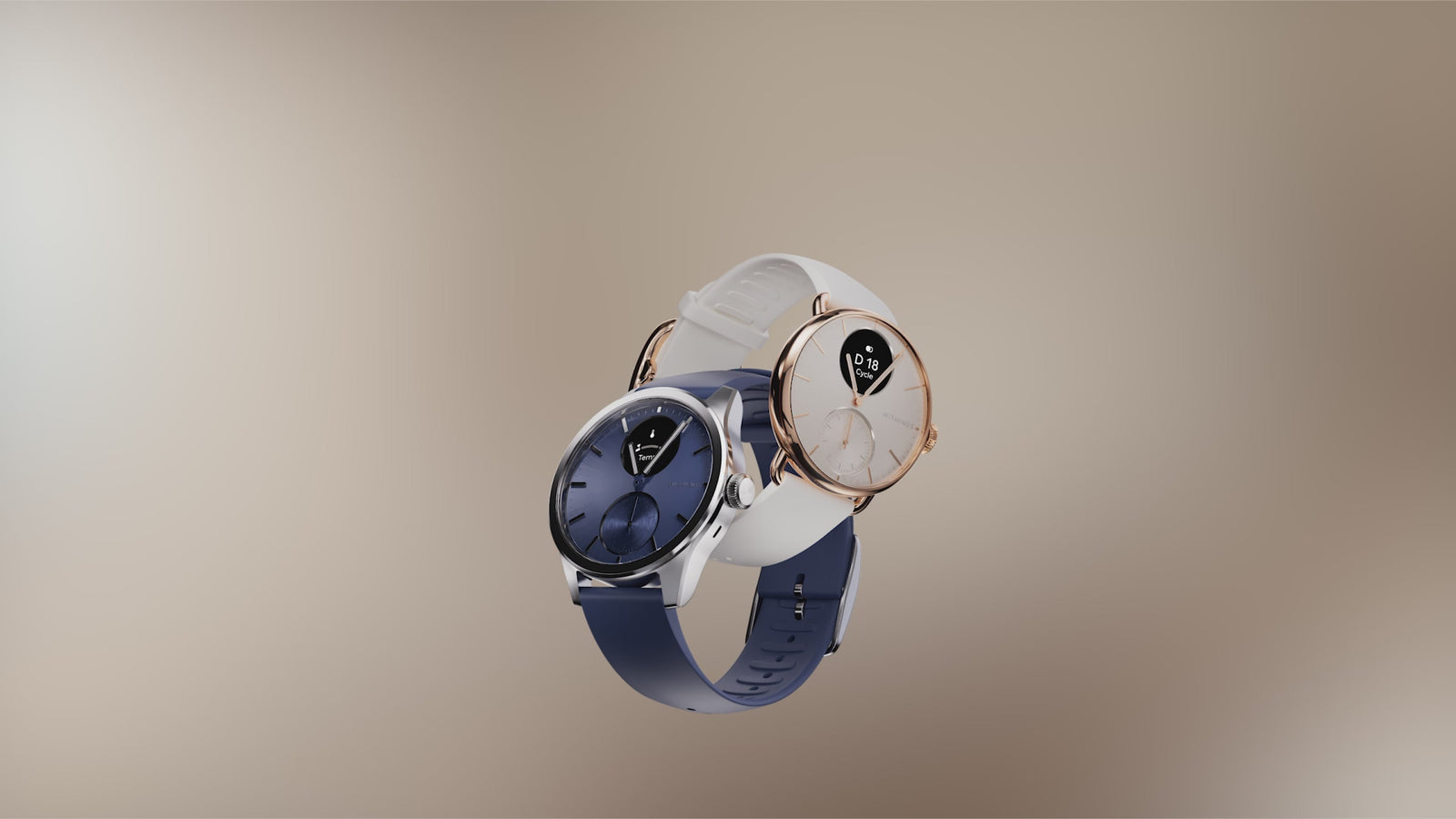
Withings ScanWatch 2 is the standout among rechargeable trackers if runtime is your top priority. It uses a hybrid design — a real analog watch face with a small hidden display for stats — which is far more power-efficient than a full-time screen. Withings rates it at 30 days of typical use (5,000 steps a day, some workouts, always-on display turned off), and a software update pushed that to 35 days for many users.
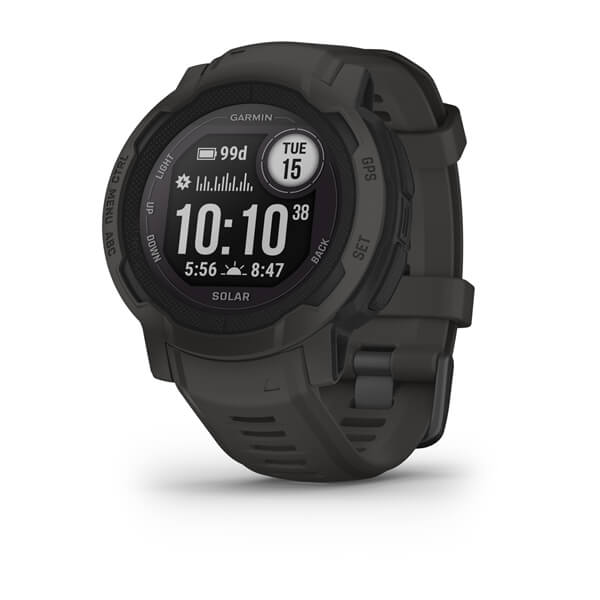
Garmin Instinct 2 Solar is built for people who spend time outdoors. Garmin rates the non-solar Instinct 2 at 28 days in smartwatch mode, and the solar version can stretch well beyond that — Garmin markets it as effectively unlimited in smartwatch mode with a few hours of daily sunlight, since the solar panel keeps trickle-charging the battery. GPS use during workouts still drains it faster, so treat solar as a bonus for daily wear, not a way to avoid charging entirely during heavy GPS use.
Amazfit Band 7 and Xiaomi Smart Band 9 represent the budget-friendly, band-style option. Amazfit rates the Band 7 at up to 18 days of typical use (about 12 days with heavy workout tracking, or up to 28 days in battery-saver mode), while Xiaomi rates the Smart Band 9 at up to 21 days — dropping to roughly 8–9 days if you enable the always-on display. Both use small AMOLED touchscreens rather than hybrid analog faces, so battery life is good but not in ScanWatch territory.
If you want the longest battery life of all and don’t need a touchscreen, look at trackers with user-replaceable batteries instead of rechargeable ones. Garmin’s vívofit line runs on swappable coin-cell batteries rated for roughly a year per set — well beyond even the best rechargeable trackers. The vívofit 4 carried that same year-long rating as Garmin’s mainstream adult model in the line before it was discontinued, and it remains a useful reference point for how far a basic-display, no-charging-circuit design can stretch battery life. Garmin’s current model in the line, the vívofit jr. 3, is aimed at kids but uses the same swappable-battery approach: you pop in a new coin-cell battery about once a year instead of plugging in a cable every few weeks.
By contrast, feature-heavy smartwatches with color touchscreens, built-in GPS, cellular radios, and always-on displays — Apple Watch, Samsung Galaxy Watch, and most Fitbit Charge and Sense models — typically land in the 1–7 day range because those components are simply more power-hungry, no matter how efficient the chipset.
What Actually Drives Battery Life
Display type is the single biggest factor. Hybrid watches with analog hands and a tiny secondary display (like the ScanWatch line) sip power because the screen is rarely fully lit. Full AMOLED touchscreens use far more energy, especially with an always-on display (AOD) enabled — turning AOD off is usually good for several extra days on any tracker that offers it. Trackers with basic segment or no displays at all, like the replaceable-battery vívofit line, go even further because there’s no touchscreen or backlight cycle to power at all.
GPS and continuous heart-rate tracking are the next biggest drains. A rated “smartwatch mode” battery figure (the number brands usually advertise) assumes GPS is off and heart-rate sampling is at a normal interval — not continuous, high-frequency tracking during a logged workout. If you run GPS-tracked workouts daily, expect real-world battery life to land well below the advertised number.
Notifications, vibration alerts, and third-party apps also add up. A tracker buzzing for every text and app notification all day will drain noticeably faster than one set to essential alerts only.
Tips to Get the Most Out of Your Tracker’s Battery
Turn off the always-on display if you don’t need it — this is the single biggest lever on any AMOLED-screen tracker. Lower the screen brightness and shorten the screen timeout in the companion app’s display settings.
Limit continuous heart-rate monitoring to “during workouts” rather than 24/7 if your tracker allows it, and turn off GPS for indoor workouts like treadmill runs or strength training where it isn’t needed.
Trim notifications down to calls, texts, and calendar alerts instead of every app on your phone, and disable features you don’t use, like blood-oxygen (SpO2) monitoring or stress tracking, since background sensors run even when you’re not looking at them.
A common mistake is comparing advertised battery numbers directly across brands without checking what “typical use” means for each one — some brands assume AOD off and no GPS, others test under lighter conditions. Read the fine print on the spec sheet, or better yet, check independent reviews that report real-world battery drain.
Explore more: more fitness tech guides.
Fitness tracker battery life FAQs
Which fitness tracker has the longest battery life?
It depends on whether you want a rechargeable smart tracker or are open to a simpler, battery-replaceable one. Among rechargeable trackers, the Withings ScanWatch 2 stands out with a manufacturer rating of up to 30–35 days, thanks to its hybrid analog design. But trackers with user-replaceable coin-cell batteries last even longer — roughly a year per battery. Garmin’s vívofit line is the clearest example: the now-discontinued vívofit 4 carried that year-long rating for adult users, and today’s kids-focused vívofit jr. 3 uses the same coin-cell approach, skipping rechargeable circuitry and touchscreens entirely.
Why do smartwatches have worse battery life than fitness trackers?
Smartwatches like the Apple Watch and Galaxy Watch run full-color always-on displays, built-in GPS, cellular radios, and more processing power for apps, all of which use far more energy than the simpler hybrid or basic AMOLED screens found on dedicated fitness trackers.
Does using GPS or heart-rate tracking drain the battery faster?
Yes. Advertised battery life figures are almost always based on a low-power ‘smartwatch mode’ with GPS off and heart-rate sampling at a normal interval. Logging GPS-tracked workouts or using continuous high-frequency heart-rate monitoring will shorten real-world battery life, sometimes significantly.
Can I improve battery life on a tracker I already own?
Usually, yes. Turning off the always-on display, reducing screen brightness, limiting notifications, and switching heart-rate monitoring to workout-only mode are the most effective changes on most trackers, often adding several extra days per charge.
Make Your Digital Life Better
More practical tech how-tos, tool picks, and guides to upgrade your everyday digital life. More on GTWebs.
Want web tips in your inbox? Subscribe to the free newsletter.
Images: Withings.