


Pack the wrong adapter and you’ll find that out the hard way — standing in a hotel room in Lisbon or Bangkok with a phone at 2% and a plug that just won’t fit. A good universal travel adapter solves this once, for every future trip, by covering the handful of plug shapes used across nearly every country on earth.
Table of Contents
This guide breaks down which adapters are actually worth buying for 2026, what “works in 150+ countries” really means in practice, and the setup mistakes that trip up even experienced travelers.
Quick Answer
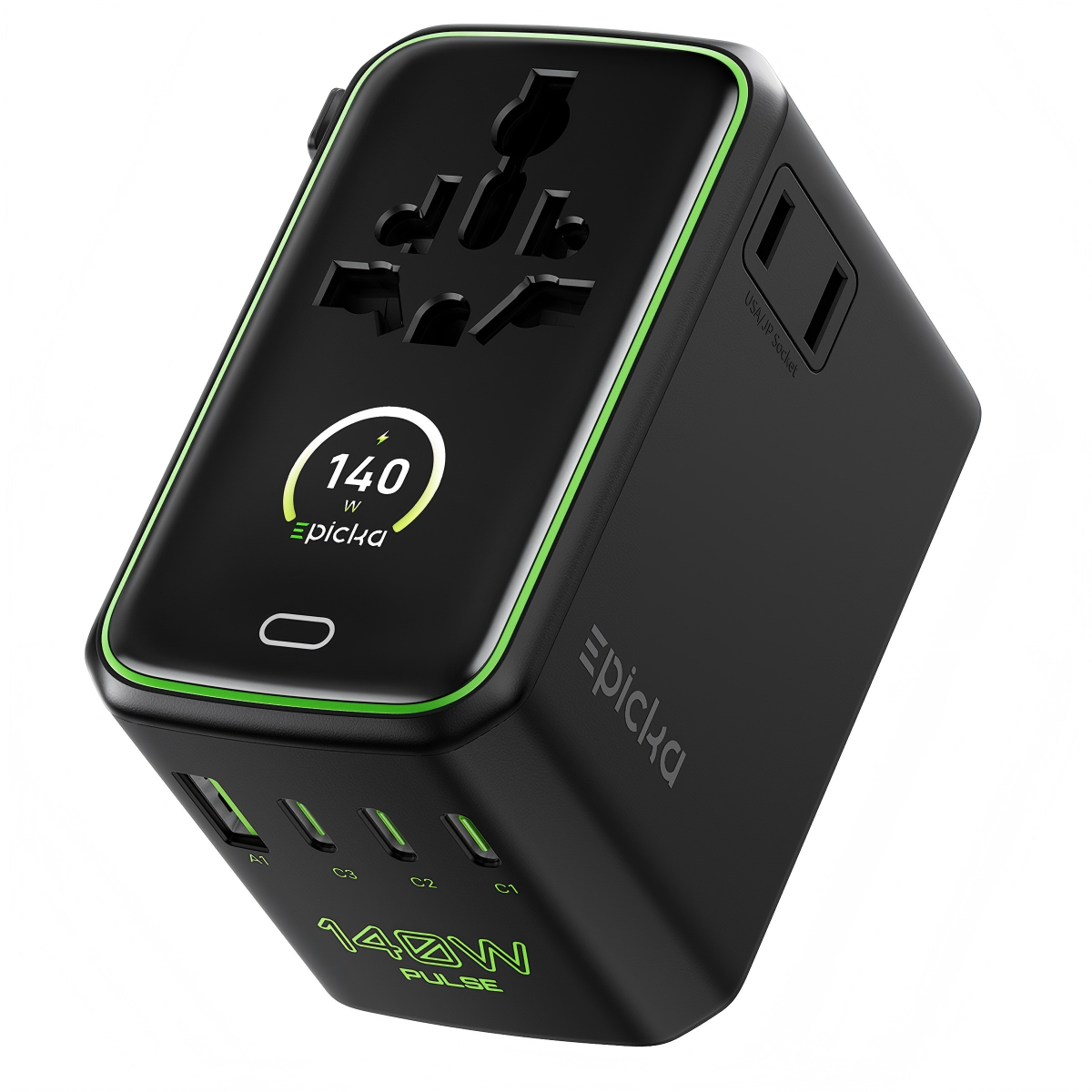
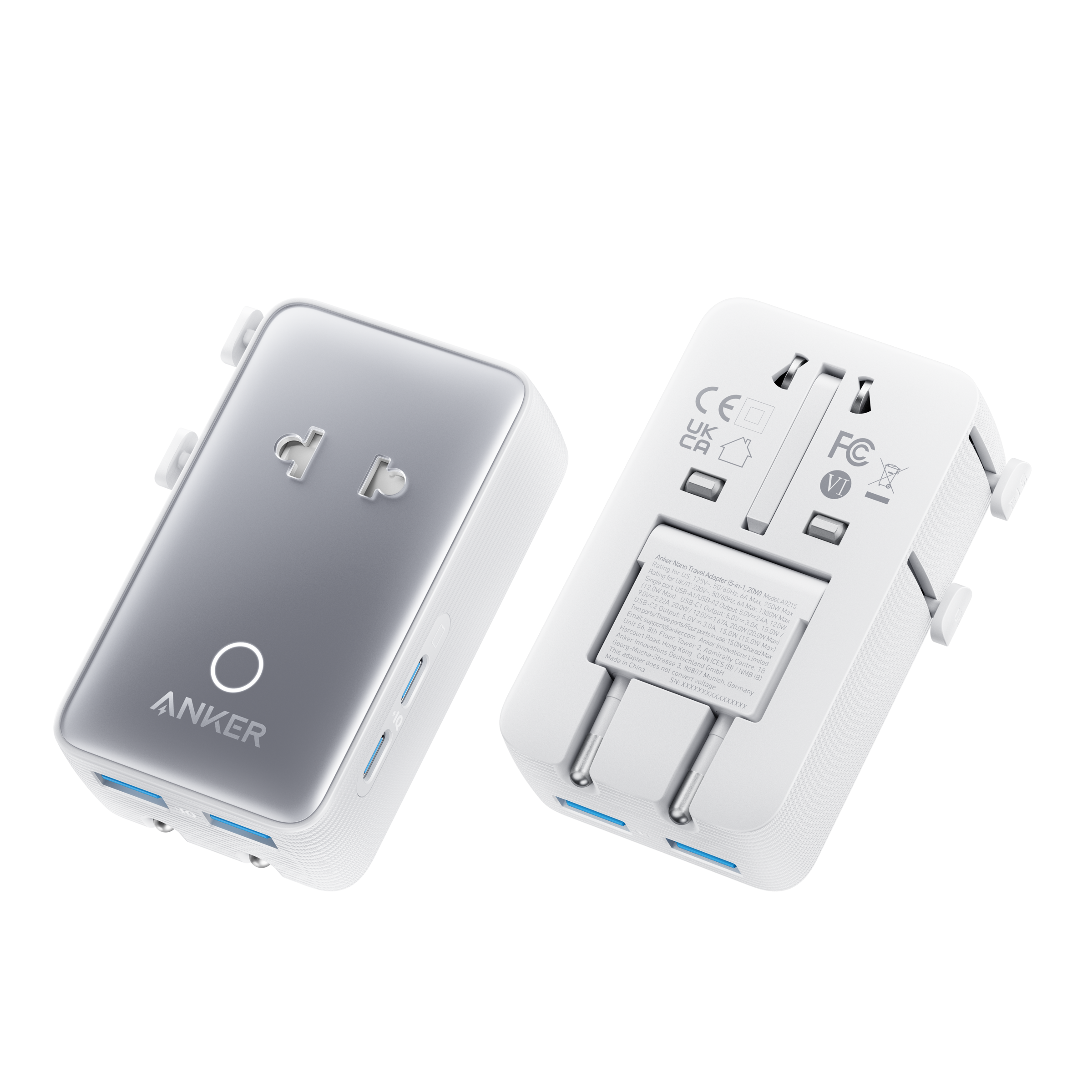
For most travelers, a compact universal adapter with slide-out plugs for Type A, C, G, and I — like the EPICKA Universal Travel Adapter, which lists compatibility across 200+ countries and regions — covers essentially every popular destination in one unit. Slimmer non-GaN options like the Anker Nano Travel Adapter (rated by Anker for 146 countries) trade a bit of coverage and charging speed for a smaller footprint. Neither converts voltage, so always check that your device charger is rated 100–240V before you plug in.
What “150+ Countries” Actually Means
Nearly every country in the world uses one of just a handful of plug shapes: Type A/B (North America, Japan), Type C/E/F (most of Europe), Type G (UK, Ireland, Hong Kong, Malaysia, Singapore), and Type I (Australia, New Zealand, China, Argentina). A single adapter that includes all four of these covers the vast majority of popular destinations, which is where that “150+” or “200+ countries” marketing claim comes from — though the exact number varies by brand and model, so it’s worth checking the specific product listing rather than assuming every universal adapter covers the same count.
The gap is the outliers: India and Nepal mostly use Type D, and South Africa (plus parts of southern Africa) uses Type M. Most universal adapters, including the popular EPICKA and Anker models, don’t include these — so if you’re headed to India or South Africa specifically, check the box or product listing for Type D/M coverage before you buy, or pack a dedicated adapter for that leg of the trip.
Also remember: a travel adapter changes the plug shape, not the electrical current. It does not convert voltage. Check the fine print on your charger’s brick (laptop chargers, phone chargers, and most modern electronics list “100-240V” — that means it’s safe to use worldwide). Devices without that label, like some hair dryers, straighteners, or older electronics, need a separate voltage converter, not just an adapter.
Top Picks for 2026
All-around pick: The EPICKA Universal Travel Adapter line includes GaN models (like the TA-105 Max) with slide-out plugs, multiple USB-C and USB-A ports, and fast charging up to 75W on the higher-end version — enough to top up a phone and a couple of accessories at once without carrying extra cables. EPICKA’s product pages list compatibility across 200+ countries and regions.
More power for laptops: If you need to charge a laptop directly from the adapter, EPICKA’s higher-wattage TA-105 Max or Pulse Duo models step up the output (70-140W depending on the model) while keeping the same plug coverage.
Smallest footprint: The Anker Nano Travel Adapter is one of the thinnest quality options available, with built-in USB-A and USB-C ports (up to 20W combined USB output) and coverage across the same core set of plug types. It’s not a GaN charger, and Anker’s own product page rates it for 146 countries rather than 150+ — still broad coverage, but worth knowing if you’re comparing it directly to a GaN model on charging speed or country count.
Budget option: If you only need to charge a phone and don’t care about USB ports, a basic single-socket universal adapter (no built-in USB) from a brand like Road Warrior covers a similarly broad range of countries for a fraction of the price of a GaN charger.
Cruise travel: If you’re sailing rather than flying, look specifically for a “cruise-compliant” adapter — many cruise lines restrict adapters with surge protectors or multiple outlets, so a simpler, cruise-approved model avoids confiscation at check-in.
Tips / Common Mistakes
Don’t assume USB ports are unlimited power: most universal adapters share a single power budget across all ports, so charging four devices at once means each one charges slower than it would alone.
Check the fuse rating before using high-draw appliances: many universal adapters cap out around 5-10A total, which is fine for electronics but too low for a hair dryer or clothes iron — check the adapter’s wattage limit against the appliance, not just the plug shape.
Buy a model with a plug-lock or slide-lock mechanism: cheaper adapters can wobble loose in older or non-standard sockets found in budget hotels and hostels, which is a common source of one-star reviews.
Test it before you leave: plug your actual devices into the adapter at home first. It’s far easier to return a faulty unit from your living room than to troubleshoot it in an airport lounge.
Pack one adapter per bag if traveling with others: if everyone shares a single universal adapter, someone’s phone is charging in the hallway outlet while everyone waits.
Explore more: more travel packing guides.
Universal travel adapters FAQs
Does a universal travel adapter also convert voltage?
No. A universal adapter only changes the plug shape so it fits foreign outlets — it does not step voltage up or down. Check that your device charger is rated for 100-240V (most modern electronics are) before using it abroad; if it isn’t, you need a separate voltage converter, not just an adapter.
Will one universal adapter really work in every country?
Most universal adapters cover the four plug types used across roughly 150-200+ countries (Type A, C, G, and I), but the exact count varies by brand — Anker’s Nano Travel Adapter lists 146 countries, while EPICKA’s line lists 200+. Nearly all exclude South Africa’s Type M and India/Nepal’s Type D, so check the specific product listing if you’re traveling to one of those countries.
Do I need a different adapter for a laptop versus a phone?
Not necessarily — the plug shape is the same. The difference is wattage: phones charge fine on a basic adapter, but laptops draw more power, so you’ll want a higher-wattage GaN model (45W or more) if you plan to charge a laptop directly through the adapter.
Make Your Digital Life Better
More practical tech how-tos, tool picks, and guides to upgrade your everyday digital life. More on GTWebs.
Images: EPICKA.