

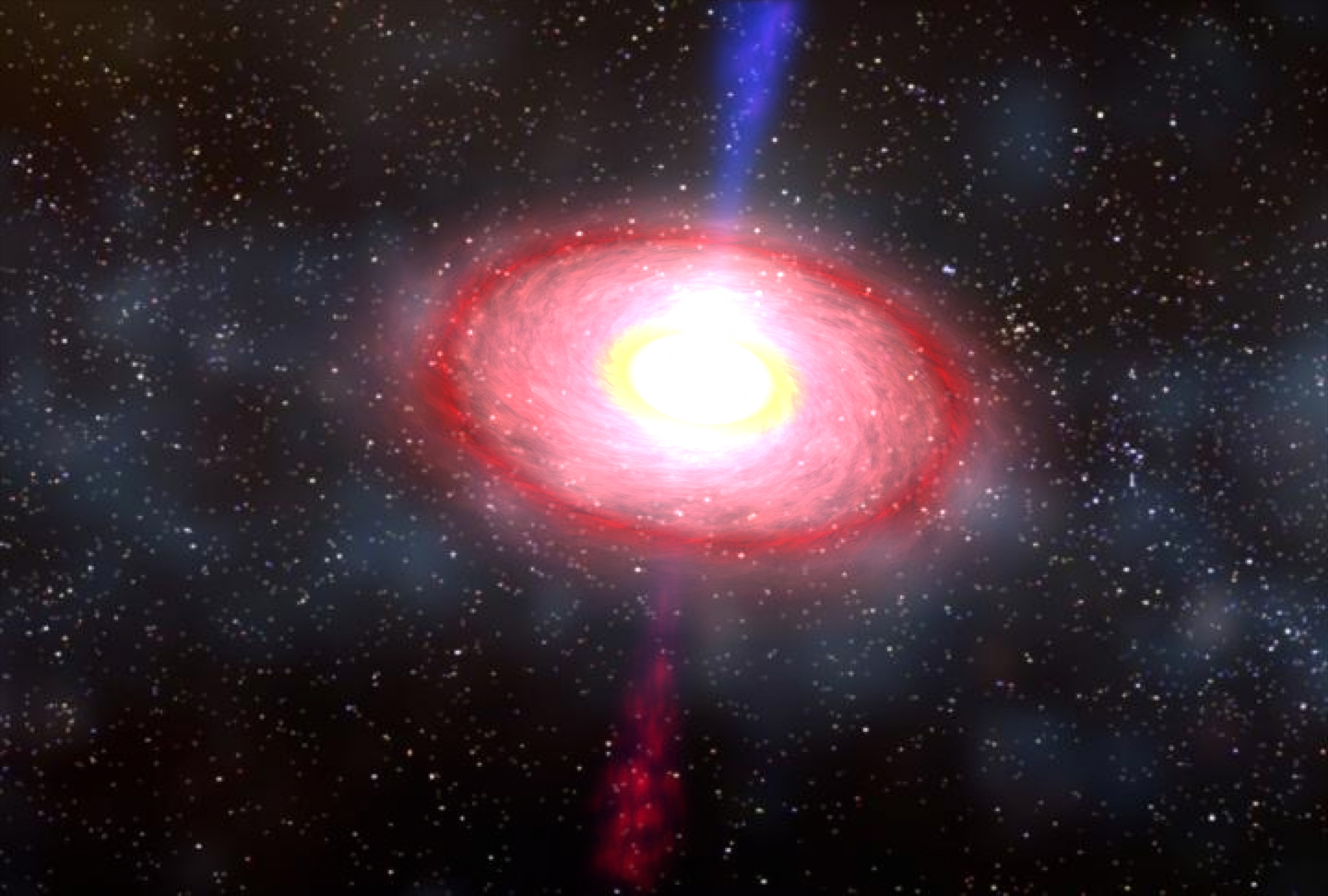
When a massive star exhausts its fuel and collapses, it doesn’t simply vanish — it leaves behind one of the most extreme objects in the universe. Depending on how much mass that dying star had, the implosion produces either a neutron star or a black hole. Both are bizarre beyond imagination, yet they are fundamentally different in structure, behavior, and what the laws of physics can even say about them.
Table of Contents
This guide breaks down exactly what separates a neutron star from a black hole, which one is denser (with a nuanced answer you might not expect), and what types of each object astronomers have discovered and continue to study.
Quick Answer
Neutron stars are the densest objects in the universe with a physical surface — a sugar-cube-sized piece of one would weigh roughly as much as a billion tons. Black holes technically have infinite density at their singularity, but that singularity is a mathematical point with no real surface to measure. For actual, observable matter with physical extent: neutron stars are the density champions. Interestingly, the largest black holes have far lower average densities than you might expect — even lower than water.
How Both Objects Form: Same Origin, Different Fates
Both neutron stars and black holes are born the same way: a massive star runs out of nuclear fuel, its core collapses under its own gravity, and the outer layers blast outward in a supernova explosion. What happens next depends almost entirely on how much mass the collapsing core retains.
When a star with roughly 8 to 20 solar masses of initial mass dies, gravity crushes the core so hard that electrons and protons merge into neutrons. The resulting object — a neutron star — is held up by neutron degeneracy pressure, a quantum mechanical resistance to further compression. Once the remnant core exceeds roughly 3 solar masses, even that force gives way and the collapse continues without limit, forming a black hole. Very massive stars (generally above around 30 solar masses) can skip the neutron star stage entirely, collapsing directly to a black hole in under a second.
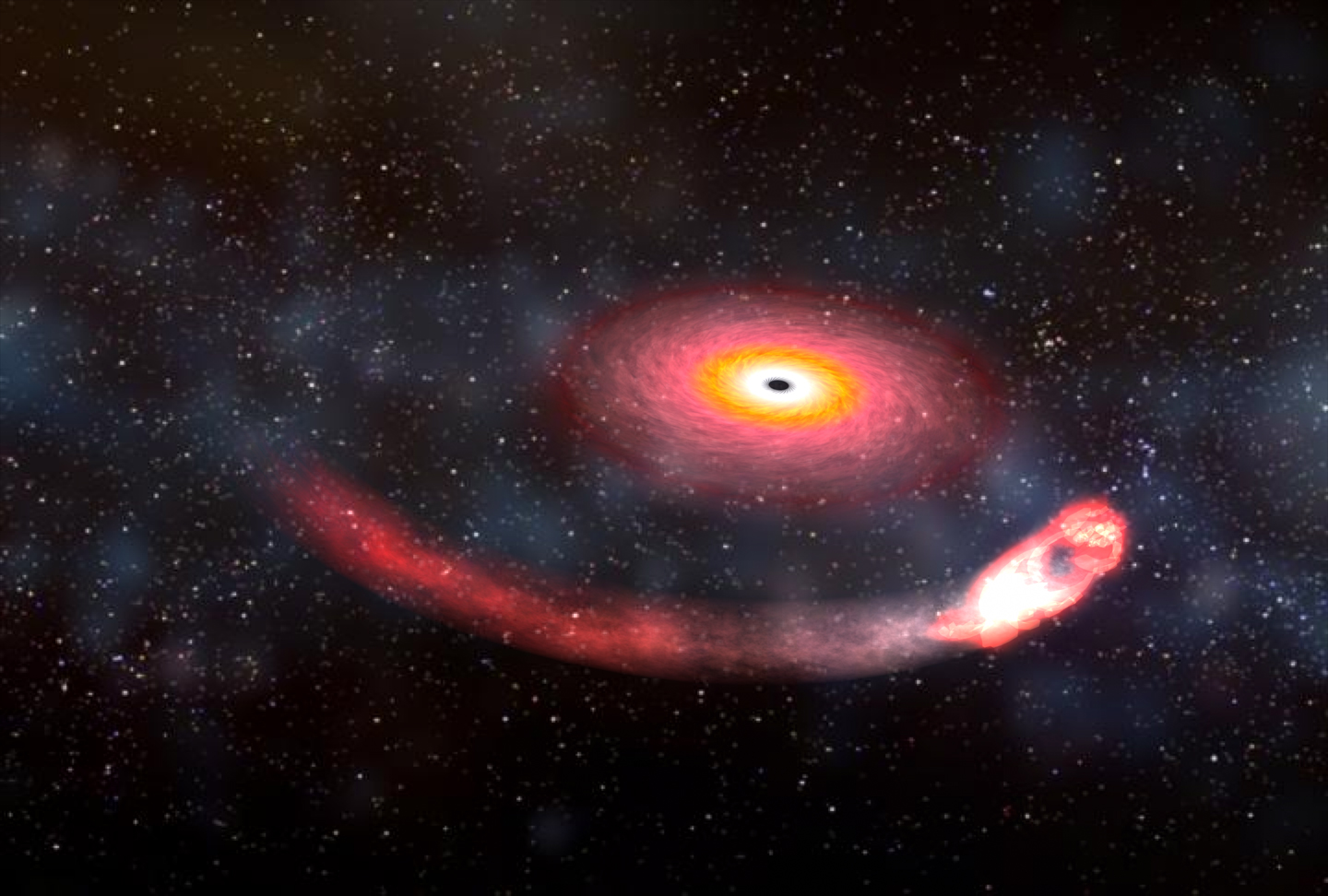
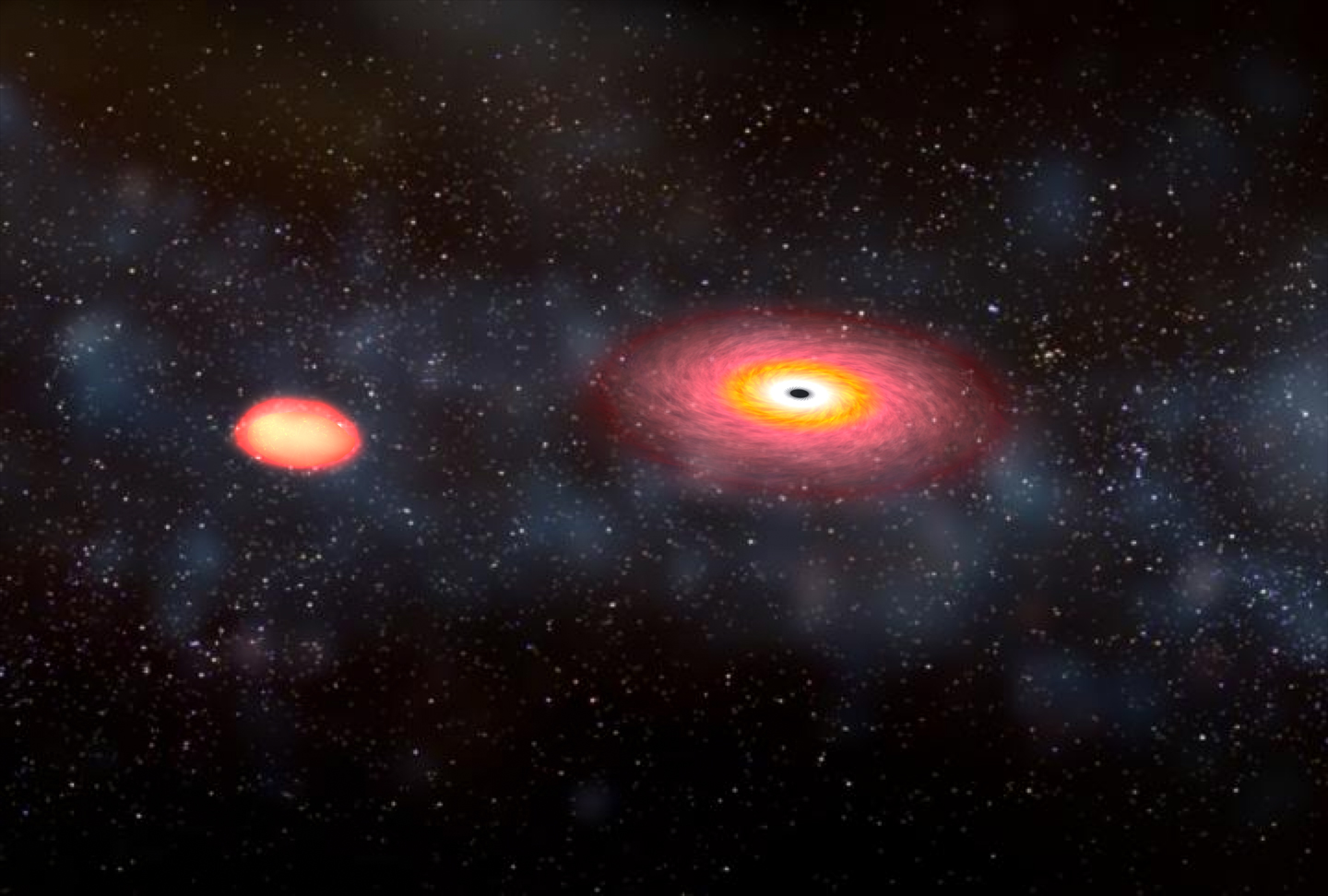
There is also a slower path: a neutron star in a binary system can pull material from a companion star over millions of years. Once it accumulates enough mass to breach the neutron star mass limit, it tips into black hole collapse — again in less than a second, even after a million-year buildup.
What Each Object Actually Is
A neutron star is an incredibly dense sphere composed almost entirely of neutrons. Most are roughly 20 to 30 kilometers across — about the size of a city — yet contain more mass than our Sun. They have a hard physical surface, crushing gravity, and escape velocities that can exceed half the speed of light. Because neutron stars often spin rapidly and emit tight beams of radiation, many are detected as pulsars — cosmic lighthouses that sweep radio waves past Earth up to hundreds of times per second with remarkable clockwork precision. A rarer subclass called magnetars carry magnetic fields roughly a thousand times stronger than typical neutron stars and periodically release violent bursts of X-rays and gamma rays.
A black hole is a fundamentally different kind of object — it has no physical surface at all. At its center sits a singularity, a point where general relativity predicts mass is crushed to zero volume and density becomes theoretically infinite. Surrounding that singularity is the event horizon: an invisible boundary at which escape velocity equals the speed of light. Anything crossing it, including light itself, cannot return. Black holes emit no light of their own; astronomers detect them indirectly via the superheated accretion disks of material spiraling inward, gravitational lensing of background objects, and gravitational waves generated when two compact objects collide.
Which Is Denser? The Nuanced Answer
Neutron stars pack matter to several times the density of an atomic nucleus — roughly comparable to squeezing the entire human population into the volume of a sugar cube. That level of compression cannot be replicated in any Earth laboratory. That makes neutron stars the densest objects in the universe with a real, measurable physical extent.
Black holes appear to win on density because general relativity predicts a singularity of infinite density. But that singularity is a mathematical point — it has zero volume and no physical surface. If you instead calculate a black hole’s average density by dividing its mass by the volume enclosed within its event horizon, you get a surprising result: a small stellar-mass black hole rivals or exceeds neutron star densities, but a supermassive black hole billions of times the mass of the Sun can be less dense than water — or even air. Here’s why: the event horizon radius (Schwarzschild radius) grows linearly with mass, but volume scales as the cube of that radius, meaning volume grows as mass cubed. So as mass increases, volume outpaces mass dramatically, and average density falls as the inverse square of mass. The bigger the black hole, the more dilute its average interior density becomes.
The honest summary: neutron stars are the densest objects with real physical substance. Black holes have theoretically infinite density at the singularity, but that figure represents a breakdown of classical physics at a mathematical point rather than a property of a measurable body — and for stellar-mass black holes, average density within the event horizon is in a similar ballpark to neutron stars, while supermassive black holes are surprisingly sparse by this measure.
Common Misconceptions Worth Clearing Up
Black holes do not vacuum up everything around them. At any given distance, a black hole exerts the same gravitational pull as a regular star of equal mass. If the Sun were somehow compressed into a black hole without losing mass, Earth’s orbit would remain completely unchanged. The difference is simply that you can get far closer to a black hole before reaching the point of no return.
Neutron stars are not failed black holes — they are stable, long-lived objects in their own right. Many spin and radiate energy as pulsars for hundreds of millions to billions of years. The transition to a black hole only occurs if additional mass pushes a neutron star past its upper mass limit, which is not a given fate.
Black holes are not undetectable. The swirling accretion disk of material falling toward a black hole glows intensely across the electromagnetic spectrum, making some black hole systems among the brightest persistent sources of X-rays in the galaxy. The first direct image of a black hole’s shadow — the supermassive black hole at the center of galaxy M87 — was captured by the Event Horizon Telescope collaboration.
Explore more: Explore more space guides.
Neutron Star vs Black Hole FAQs
Can a neutron star turn into a black hole?
Yes. If a neutron star accumulates enough mass — by pulling material from a companion star or merging with another neutron star — to exceed roughly 3 solar masses, it collapses into a black hole almost instantaneously. The buildup can take millions of years; the collapse itself takes less than a second.
Which is more massive, a neutron star or a black hole?
Black holes win at the high end. Neutron stars typically range from about 1.4 to around 2.5 solar masses. Stellar-mass black holes start at a few solar masses and scale up, while supermassive black holes at galactic centers can reach billions of solar masses. There is an overlap zone between the heaviest neutron stars and the lightest black holes where the observational distinction gets tricky.
Why are supermassive black holes less dense than water?
Because the event horizon radius grows linearly with mass while volume grows as the cube of that radius. So a black hole a billion times the Sun’s mass has a volume so enormous that its average interior density — mass divided by the sphere enclosed by the event horizon — can fall below the density of water or even air. Density at the singularity is still theoretically infinite; average density across the full interior is another matter entirely.
Make Your Digital Life Better
More practical tech how-tos, tool picks, and guides to upgrade your everyday digital life. More on GTWebs.
Photo: Dana Berry/NASA / Public domain, via Wikimedia Commons.