

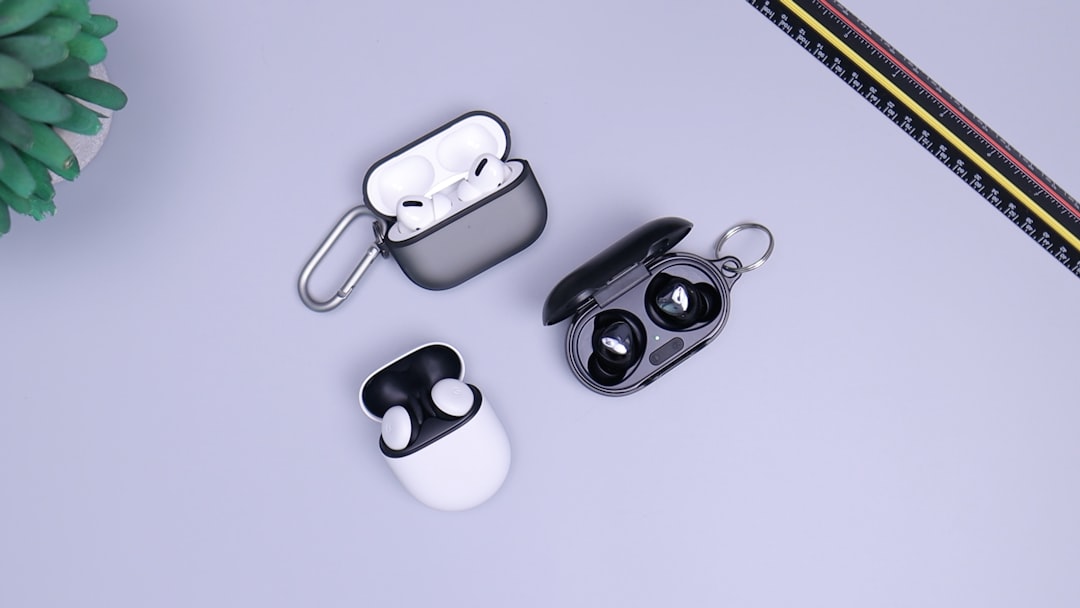
Not long ago, spending under $50 on wireless earbuds meant accepting tinny sound, flimsy cases, and a connection that dropped mid-song. That era is over. The budget earbud market in 2026 has quietly become one of the best deals in consumer tech — you can now find true wireless earbuds with active noise cancellation, long battery life, and genuinely enjoyable audio for well under fifty dollars.
Table of Contents
This guide covers five earbuds that have been hands-on tested and consistently recommended by audio reviewers — not just spec-sheet warriors, but options that hold up in daily use. Whether you want the best pure sound, the most features, or the smallest possible form factor, there is a solid pick here for under $50.
Quick Answer
The CMF Buds 2 (often available around $30–$50) is the best value pick for most people — it offers 48dB ANC, spatial audio, and 55 hours of total battery life for its price. If you want the best-sounding option with thoughtful tuning, the Sony WF-C510 (around $60 retail, frequently on sale under $50) is hard to beat. For all-day battery with wireless charging, the Soundcore P40i (around $48) stands out.
5 Wireless Earbuds Under $50 Worth Buying in 2026
CMF Buds 2 (~$30–$50): Made by Nothing’s sub-brand CMF, these earbuds punch far above their price. You get 48dB hybrid active noise cancellation, spatial audio, and a custom 3-band EQ (bass, mids, treble) alongside six preset modes — including Dirac Opteo, Pop, Rock, Classical, Electronic, and Enhance Vocals — in the Nothing X companion app. Total battery life with the case reaches 55 hours, and a quick 10-minute charge delivers around 7.5 hours of playback. The sound leans bass-heavy out of the box, but the EQ presets and Ultra Bass control help you dial it in. The main trade-off is no wireless charging.
Sony WF-C510 (~$60 retail, often on sale under $50): Sony brings its audio heritage to the budget tier with the WF-C510. Reviewers describe the sound as having airy, natural treble and realistic instrument reproduction — qualities often absent from cheap earbuds. Physical buttons rather than touch controls make it easy to operate in motion, and battery life per earbud charge leads the field among sub-$60 options. A ‘Find Your Equalizer’ feature walks you through a short process to create a custom EQ setting. If pure sound quality is your priority, this is your pick.
Soundcore P40i (~$48): Anker’s Soundcore line has earned a reputation for solid budget audio, and the P40i delivers ANC, wireless charging, and nearly 10 hours of battery with ANC active — a strong number for this price. The case also doubles as a phone stand. Sound leans V-shaped with boosted bass and treble, which suits pop and hip-hop listeners well.
Moondrop Space Travel (~$25): Moondrop is a brand beloved in the audiophile community for its careful tuning, and the Space Travel brings that philosophy to the true wireless space. It targets a more neutral, accurate frequency response rather than the bass-heavy default common at this price. Reviewers praise it for genuine sound quality and strong ANC performance. The case has no lid and battery life per charge is modest, but for pure sound fidelity at this price it is hard to match.
JLab JBuds Mini (~$40): If you have ever lost a charging case or want earbuds that go anywhere without a second thought, the JBuds Mini solves that with a built-in keychain attachment on the case. Each earbud is extremely lightweight, making them comfortable for extended wear. They carry an IP55 rating and stand out in this price range for including a genuine 10-band EQ in the JLab app, plus three preset modes. They skip ANC, but for commuters and workout listeners who want something nearly forgettable in the ear, these are excellent.
What to Look For When Buying Budget Earbuds
Bluetooth version matters more than many buyers realize. Most earbuds in this price range now use Bluetooth 5.3 or 5.4, which provides more stable connections and lower latency than older versions. It is worth checking if an earbud you are considering has caught up to current standards.
Water resistance is worth verifying before you buy. A rating of IPX4 or higher means the earbuds can handle sweat and light rain without issue. If you plan to use them at the gym or outdoors, at least IPX4 is a reasonable baseline to require.
The companion app is often the difference between average sound and genuinely good sound. Budget earbuds tend to ship with a bass-heavy tuning meant to impress in a quick store demo. EQ controls in the app — whether a simple 3-band bass/mids/treble slider or a full 10-band equalizer — let you correct this and can dramatically transform how your music sounds day to day. Prioritize picks that include at least some form of EQ app.
Fit and eartip options affect both comfort and passive noise isolation. Many budget earbuds ship with silicone tips in only a couple of sizes. Aftermarket foam tips are inexpensive and can improve bass response and isolation noticeably by creating a better seal — worth knowing if you find the stock tips do not seal well in your ears.
Tips and Common Mistakes
Do not judge by the default sound. Nearly every budget earbud sounds better after a few minutes in the EQ app. Bass-heavy default tuning is standard because it sounds impressive on a quick demo, but boosted bass makes vocals muddy. A slight bass reduction and a small treble lift often reveal a much more balanced and enjoyable sound.
Check for multipoint connectivity if you switch between devices. Some earbuds in this price range now support connecting to two devices simultaneously — a laptop and a phone, for instance — which used to be a premium-only feature. It is worth checking the specs if you regularly switch between devices throughout the day.
Do not overlook microphone quality. Budget earbuds are often weak here, and if you take calls or use voice assistants frequently that matters. Look for reviews that specifically address call quality, since most marketing specs focus only on music playback.
ANC on budget earbuds will not match a $250 pair of over-ear headphones, but it is real and useful for consistent low-frequency noise like airplane cabin rumble or office HVAC hum. Do not dismiss it — at this price range, getting meaningful noise reduction is a genuine value-add that was not available in the budget tier even a few years ago.
Buy from a seller with easy returns. Fit is deeply personal. An earbud that seals perfectly for one ear shape may not work at all for another, and fit directly determines bass response and isolation. Buying somewhere with free returns lets you test the fit without financial risk.
Explore more: Technology guides and reviews.
wireless earbuds under $50 FAQs
Do wireless earbuds under $50 actually have active noise cancellation?
Yes — ANC is now common at the $25–$50 price point. Options like the CMF Buds 2, Soundcore P40i, and Moondrop Space Travel all include it. It will not completely eliminate noise the way a $300 pair of headphones does, but it meaningfully reduces consistent background noise like office hum, airplane cabin noise, and street traffic.
How long do sub-$50 earbuds last on a single charge?
Most solid budget earbuds deliver somewhere between 6 and 13 hours per charge from the earbuds themselves, with the charging case adding additional full charges for a combined total that often reaches 30 to 55-plus hours. Enabling ANC reduces those numbers, so check the ANC-on rating separately when comparing models.
Is it worth spending more than $50 on wireless earbuds?
It depends on your use case. Spending $100–$150 gets you more consistent ANC, better microphone quality for calls, premium materials, and more refined factory tuning. But for casual listening, commuting, and workouts, the gap between a well-chosen $40 earbud and a $120 one has narrowed considerably. Start with a budget pick and upgrade only if you identify a specific limitation that actually bothers you.
Make Your Digital Life Better
More practical tech how-tos, tool picks, and guides to upgrade your everyday digital life. More on GTWebs.
Photo by Daniel Romero on Unsplash.