

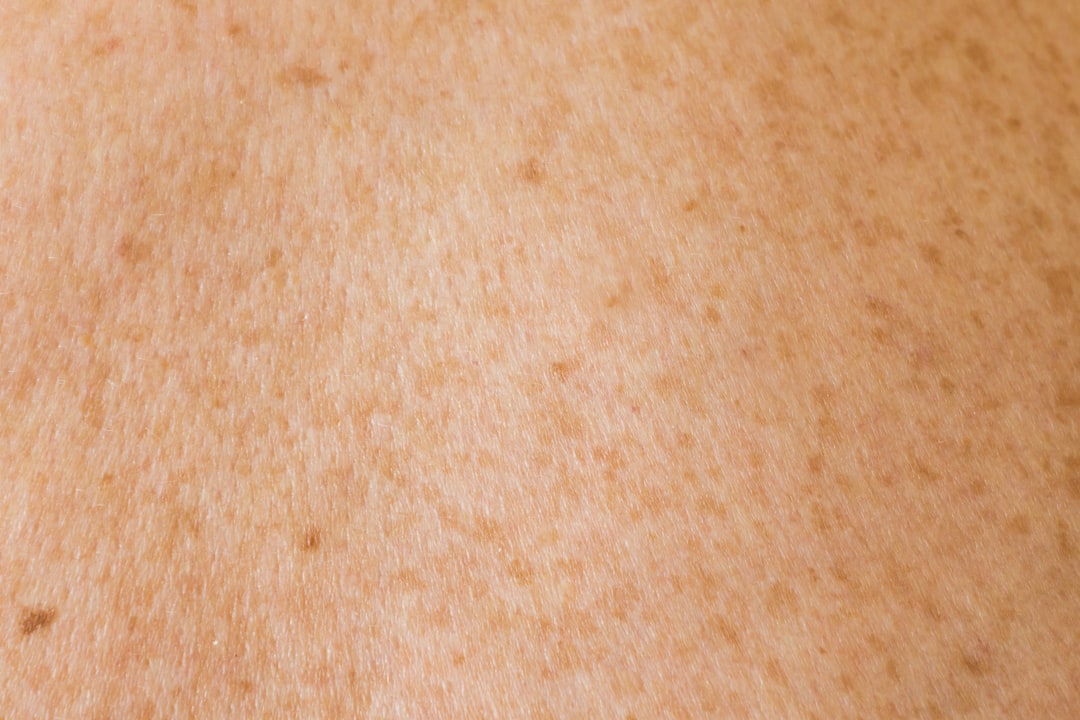
That sudden ripple of tiny bumps across your skin — when the air turns cold, a horror movie peaks, or a piece of music hits just right — is one of the most recognizable sensations in the human body. But if you stop to think about it, goosebumps seem almost pointless. We are not particularly furry animals, and raising a few sparse hairs does nothing obvious to protect us. So why does it still happen?
Table of Contents
The answer lies deep in our evolutionary past, in a reflex inherited from ancestors who were far hairier than we are. Understanding goosebumps means understanding how evolution works: it does not always clean up old machinery when it stops being useful. Sometimes it just leaves the switch in place.
Quick Answer
Goosebumps are a vestigial reflex — a leftover from when our ancestors had thick body hair. Tiny muscles at the base of each hair follicle contract, raising the hair and creating bumps on the skin. In hairier mammals this serves two real purposes: trapping warm air for insulation and puffing up the body to look larger and more threatening. Humans kept the reflex even though our sparse hair makes it largely ineffective.
The Biology: What Is Actually Happening in Your Skin
Each hair on your body is anchored inside a follicle, and attached to that follicle is a tiny smooth muscle called the arrector pili (plural: arrectores pilorum). ‘Smooth muscle’ means it operates automatically, outside conscious control in most people — the same category of muscle that moves food through your digestive tract or adjusts the diameter of blood vessels.
When your brain’s sympathetic nervous system — the branch responsible for the fight-or-flight response — sends a signal, it triggers a surge of adrenaline. That adrenaline causes the arrector pili muscles to contract simultaneously across large areas of skin. Each contracting muscle tugs its hair upright and creates a small raised mound around the follicle base. The medical term for the resulting skin texture is cutis anserina, Latin for ‘goose skin,’ and piloerection describes the hair-raising itself.
For the vast majority of people, the process is entirely involuntary — triggered by cold, strong emotion, or a startle, but not consciously commanded.
The Evolutionary Story: Two Ancient Jobs
To understand why this reflex exists, you have to go back roughly 66 million years to early primates — and further back still to our mammalian ancestors — when the body was covered in far denser hair than modern humans carry. In that context, the arrector pili reflex had two genuinely useful jobs.
The first was insulation. When temperatures dropped, raising thousands of hairs at once created a layer of trapped air close to the skin, acting like a biological down jacket. The fur did not get thicker, but it got puffier — and that pocket of still air slowed heat loss significantly. Many mammals still use this mechanism today. A cat in the cold, a bird fluffing its feathers — the same principle at work.
The second function was threat display. When an animal felt threatened or needed to appear dominant, piloerection made it look physically larger. A dog’s raised hackles, a porcupine’s quills fanning out, a frightened cat arching its back with fur on end — all variations on the same strategy. For our ancestors, puffing up a coat of thick hair could deter a predator or signal aggression to a rival without risking a physical fight.
Humans lost most of their body hair over millions of years of evolution — likely because of changes in environment, thermoregulation through sweating, and other pressures — but the neural wiring and the arrector pili muscles remained. Evolution rarely dismantles old machinery cleanly; it tends to leave parts in place long after their original purpose fades. Goosebumps sit in the same category as the tailbone (a vestige of a tail) and the palmaris longus tendon in the wrist (present in most but not all people, used by ancestors who climbed).
Why Emotions and Music Trigger Goosebumps Too
Cold and fear make obvious sense as triggers — both historically signaled danger or environmental stress. But many people also get goosebumps from a soaring piece of music, a moment of awe, intense pride, or deep sadness. This seems strange until you consider that those emotional states share the same underlying machinery: the sympathetic nervous system and adrenaline release.
Strong emotions activate the same fight-or-flight pathways that cold and threat do. When you feel a wave of awe or are moved by something beautiful, your brain interprets the intensity of the feeling as significant — something worth responding to physically. The arrector pili fire as a side effect. Researchers sometimes call these ‘aesthetic chills’ or frissons, and they appear to be particularly common in people who score high on openness to experience. The exact neurological reason these emotional states piggyback on a threat-response reflex is still an area of active scientific curiosity.
There is also a recent and intriguing research thread: scientists studying the arrector pili muscles found they are physically connected to hair follicle stem cells. In cold conditions over longer timescales, repeated activation of these muscles appears to stimulate those stem cells, potentially triggering the growth of thicker, denser hair. This suggests the reflex may have served a longer-term cold-adaptation role in addition to the immediate insulation effect — though in modern humans, with our minimal body hair, this downstream effect is minimal.
Key Takeaways and Common Misconceptions
Goosebumps are not a malfunction. They are a perfectly normal, healthy reflex — your body running old code it inherited and never deleted. The fact that the response is mostly useless in hairless humans does not mean something is wrong; it simply means evolution is slower than it sometimes looks.
They are not always a sign of being cold. Emotional goosebumps are just as physiologically real as cold-triggered ones and share the same mechanism. If you get chills from a piece of music, your sympathetic nervous system is genuinely firing — not just metaphorically.
Most people cannot consciously produce goosebumps on demand — the arrector pili muscles are smooth muscles controlled by the autonomic nervous system, which generally operates outside voluntary control. However, a small number of people genuinely can trigger piloerection at will, a documented phenomenon called voluntarily generated piloerection (VGP). A 2018 study published in PeerJ gathered dozens of such individuals and found they typically describe the action as a deliberate physical act, often initiated from the back of the neck or scalp. This rare ability appears to involve unusual learned or innate access to autonomic pathways rather than simply forcing an emotional state.
In rare cases, persistent or unprovoked goosebumps can indicate a medical issue, including temporal lobe epilepsy or disorders of the sympathetic nervous system — and goosebumps are a well-known symptom during opioid withdrawal, reflecting the nervous system in acute dysregulation. But for the vast majority of people, the occasional wave of piloerection is simply evolution saying hello from a few million years ago.
Explore more: Explore more science articles.
Human goosebumps evolution FAQs
Are goosebumps completely useless in modern humans?
Largely, yes — at least in the immediate sense. Our body hair is too sparse for piloerection to trap meaningful warmth or make us look meaningfully larger. However, the arrector pili muscles are also connected to hair follicle stem cells, and some research suggests repeated activation may influence hair growth over longer periods. But as an in-the-moment survival tool, the reflex does very little for us today.
Why do I get goosebumps when I hear a great song?
Strong emotional states — awe, excitement, deep feeling — activate the same sympathetic nervous system pathways that cold and fear do. Your brain treats the intensity of the emotion as something significant and triggers adrenaline, which fires the arrector pili muscles as a side effect. These ‘aesthetic chills’ are a genuine physiological response, not just a figure of speech.
Can some people really produce goosebumps on purpose?
Yes — a small number of people have what researchers call voluntarily generated piloerection (VGP), the ability to consciously trigger goosebumps. This is rare, but it has been documented in published research. A 2018 study in PeerJ examined dozens of individuals with this ability and found most described it as a deliberate, physical act rather than something they faked or induced purely through emotion.
Do other animals get goosebumps?
Yes — piloerection is widespread across mammals and birds. In animals with dense fur or feathers, it still serves its original purposes: insulation in the cold and threat display when confronting a predator or rival. A dog’s raised hackles, a cat’s arched back with puffed fur, and a bird fluffing its feathers are all the same reflex in action. Humans are unusual in that the reflex persists without the hair coverage to make it effective.
Make Your Digital Life Better
More practical tech how-tos, tool picks, and guides to upgrade your everyday digital life. More on GTWebs.
Photo by Olga Thelavart on Unsplash.