

Imagine trying to fall asleep with no bed, no pillow, and no gravity — where drifting off means you could literally drift away, bumping into equipment or crewmates in the dark. That’s the starting point for every astronaut who boards the International Space Station. Far from being a sci-fi novelty, sleeping in microgravity is a carefully engineered daily routine with real physiological stakes.
Table of Contents
From specialized tethered sleeping bags to adjustable lighting designed to cue the body clock, the ISS crew has developed a layered set of solutions to get adequate rest in one of the most unusual environments humans have ever occupied. Here’s exactly how it works — and why it’s harder than it looks.
Quick Answer
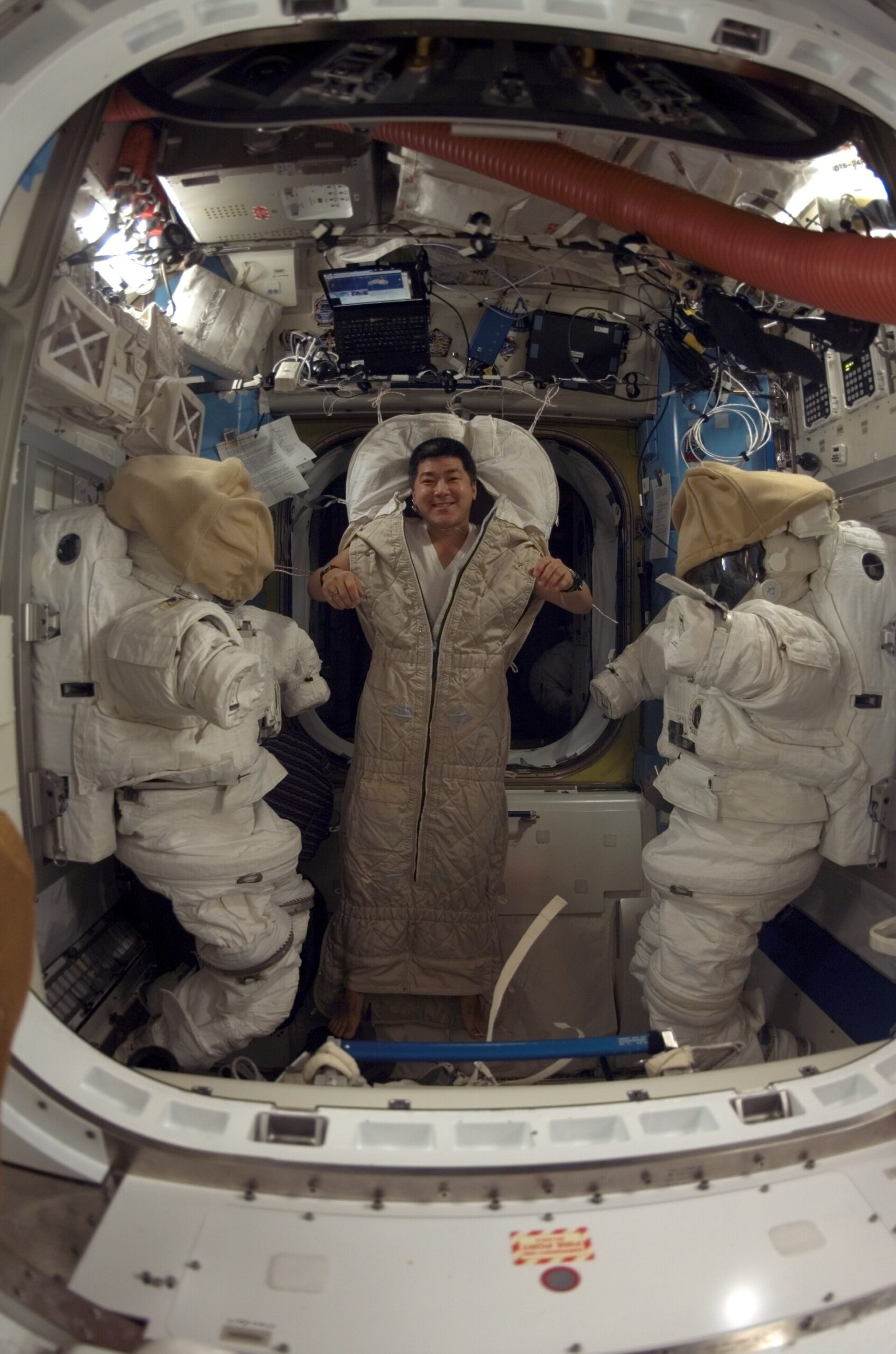
Astronauts on the ISS sleep inside compact, private crew quarters roughly the size of a phone booth. They zip into specialized sleeping bags anchored to a wall, the floor, or the ceiling — the direction doesn’t matter without gravity — which keeps them from floating into equipment or other crew members during the night. Ventilation fans run continuously to prevent exhaled CO2 from pooling around the sleeper’s face, and eye masks and earplugs handle the constant light and spacecraft noise.
The Sleeping Setup: Bags, Tethers, and Tiny Cabins
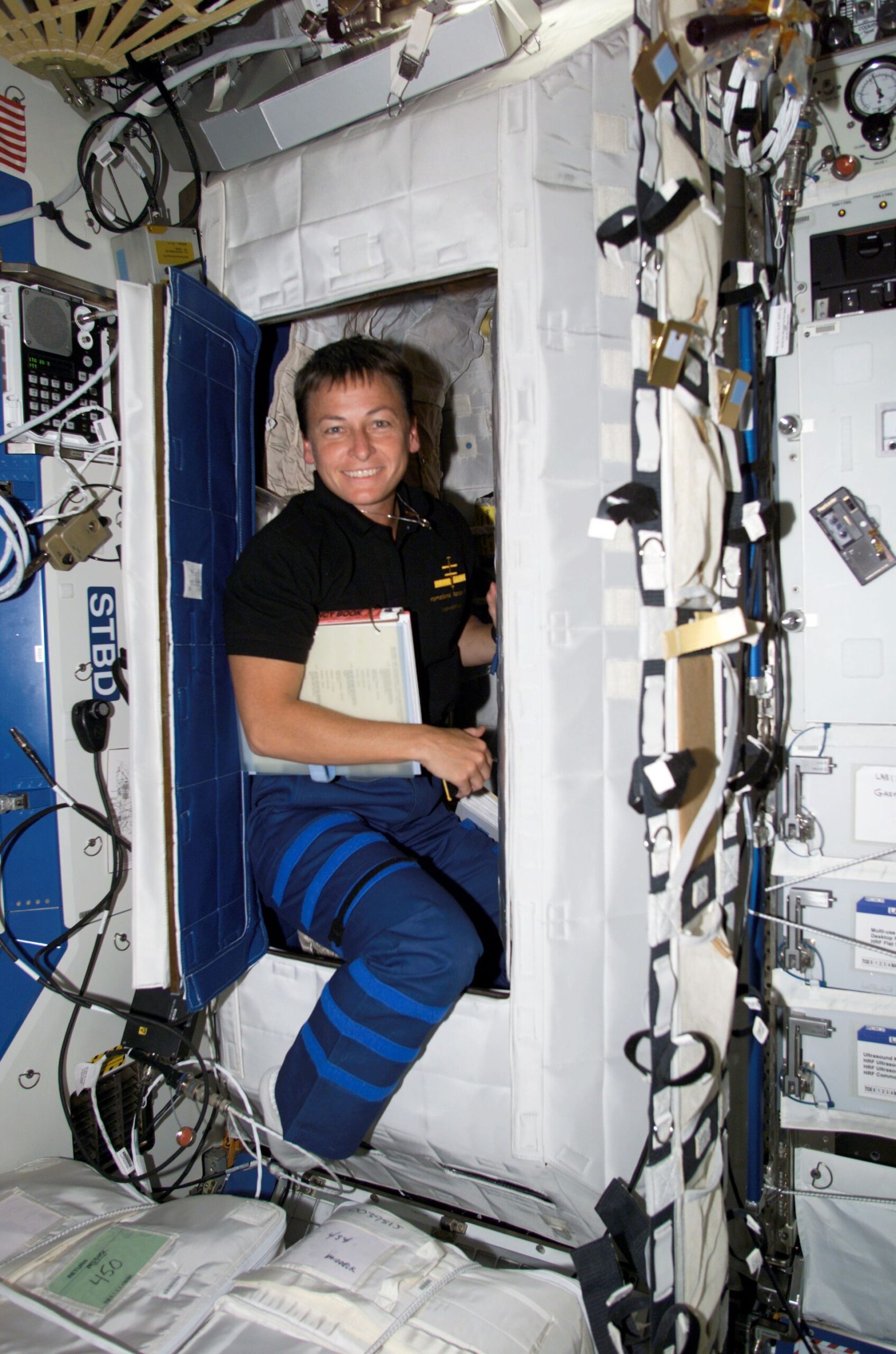
Each ISS crew member gets a private crew quarter — a small, enclosed compartment with a door for privacy and noise reduction. These cabins are compact enough that astronauts describe them as phone-booth-sized, but they include a light, a laptop mount, and Velcro surfaces for stowing personal items.
The sleeping bag is anchored directly to one of the compartment’s surfaces. In microgravity, there’s no preferred orientation, so attaching it to the wall, ceiling, or floor is equally valid — astronauts pick whichever feels most intuitive. No mattress or pillow is needed because there’s no body weight pressing down on joints or the spine. In fact, many astronauts report that their back pain from Earth disappears in orbit. Some crew members Velcro a small cushion near their head to recreate the sensation of a pillow against their face.
Once inside the bag, the body naturally settles into what NASA calls the ‘neutral body posture’: arms drift slightly forward, knees bend gently, and the spine decompresses and straightens. It’s a position you can’t fully achieve on Earth because gravity is always pulling something flat. Many astronauts say this posture feels surprisingly restful once they adjust to it.
Why Sleeping in Space Is Harder Than It Sounds
The biggest challenge isn’t floating — it’s light. The ISS orbits Earth roughly every 90 minutes, which means the crew experiences around 16 sunrises and 16 sunsets every 24 hours. Without proper shielding, that relentless cycle of blinding brightness and darkness wrecks the body’s circadian rhythm, causing a kind of extreme jet lag that never fully resolves. Astronauts wear eye masks and close their cabin doors to block it out.
Ventilation is not optional. In microgravity, exhaled carbon dioxide doesn’t rise and disperse the way it does on Earth — it forms a cloud that hovers around the sleeper’s head. Without a fan running to keep fresh air moving across the face, that CO2 buildup can become a genuine health risk within minutes. Every ISS crew quarter has a continuous airflow system for exactly this reason.
To help astronauts regulate their body clocks, the ISS uses tunable LED lighting. In the morning, lights shift toward blue-toned wavelengths that promote alertness; in the hours before sleep, the system transitions to warmer, red-shifted tones that support melatonin production. NASA schedules 8 to 8.5 hours for sleep, but researchers studying ISS crews have found that astronauts typically average closer to 6 hours per night — a chronic shortfall that compounds over a long mission.

Tips Astronauts Use to Sleep Better in Orbit
Stick to a consistent schedule. Mission controllers coordinate astronaut sleep windows to a fixed UTC timetable, and keeping that schedule stable is one of the most effective tools against circadian disruption. Astronauts who shift their sleep times around for late-night experiments pay for it across multiple days.
Use the lighting system intentionally. Starting the blue-to-warm shift a couple of hours before the scheduled sleep window gives the body time to wind down, mimicking what a natural sunset does on Earth. Pairing this with an eye mask once in the sleeping bag blocks any remaining light bleed.
Earplugs are standard kit. The ISS is a working spacecraft — fans, pumps, and equipment hum constantly at noise levels that would prevent most people from sleeping without protection. Crew members treat earplugs the same way they treat toothbrushes: non-negotiable.
Give it time. Most astronauts report that the first few nights in orbit are disorienting — the sensation of floating even inside the bag, the unusual posture, the absence of the weight of blankets. By the end of the first week or two, the majority find that sleeping in microgravity feels natural, and many say it becomes more comfortable than sleeping on Earth once the learning curve passes.
Explore more: Explore more space articles.
astronaut sleep in zero gravity FAQs
Do astronauts float away if they don’t use a sleeping bag?
Yes — without being tethered or enclosed in a secured sleeping bag, an astronaut would slowly drift through the cabin during sleep, potentially bumping into sharp equipment or obstructing ventilation intakes. The sleeping bag anchored to a surface is the primary system keeping them in place.
What happens if the ventilation fan stops while an astronaut sleeps?
In microgravity, exhaled CO2 doesn’t rise or drift away the way it does on Earth. It forms a pocket around the sleeper’s head, gradually displacing oxygen. This is a genuine safety hazard, which is why ventilation fans in crew quarters run continuously and are treated as critical life-support equipment.
Do astronauts dream in space?
Yes. Astronauts report dreaming normally during space missions, and sleep architecture — the cycling through light sleep, deep sleep, and REM — appears to follow patterns similar to those on Earth. Sleep quality, however, is often reduced due to noise, light exposure, schedule disruptions, and the psychological stress of the mission environment.
Make Your Digital Life Better
More practical tech how-tos, tool picks, and guides to upgrade your everyday digital life. More on GTWebs.
Photo: NASA / Public domain, via Wikimedia Commons.