

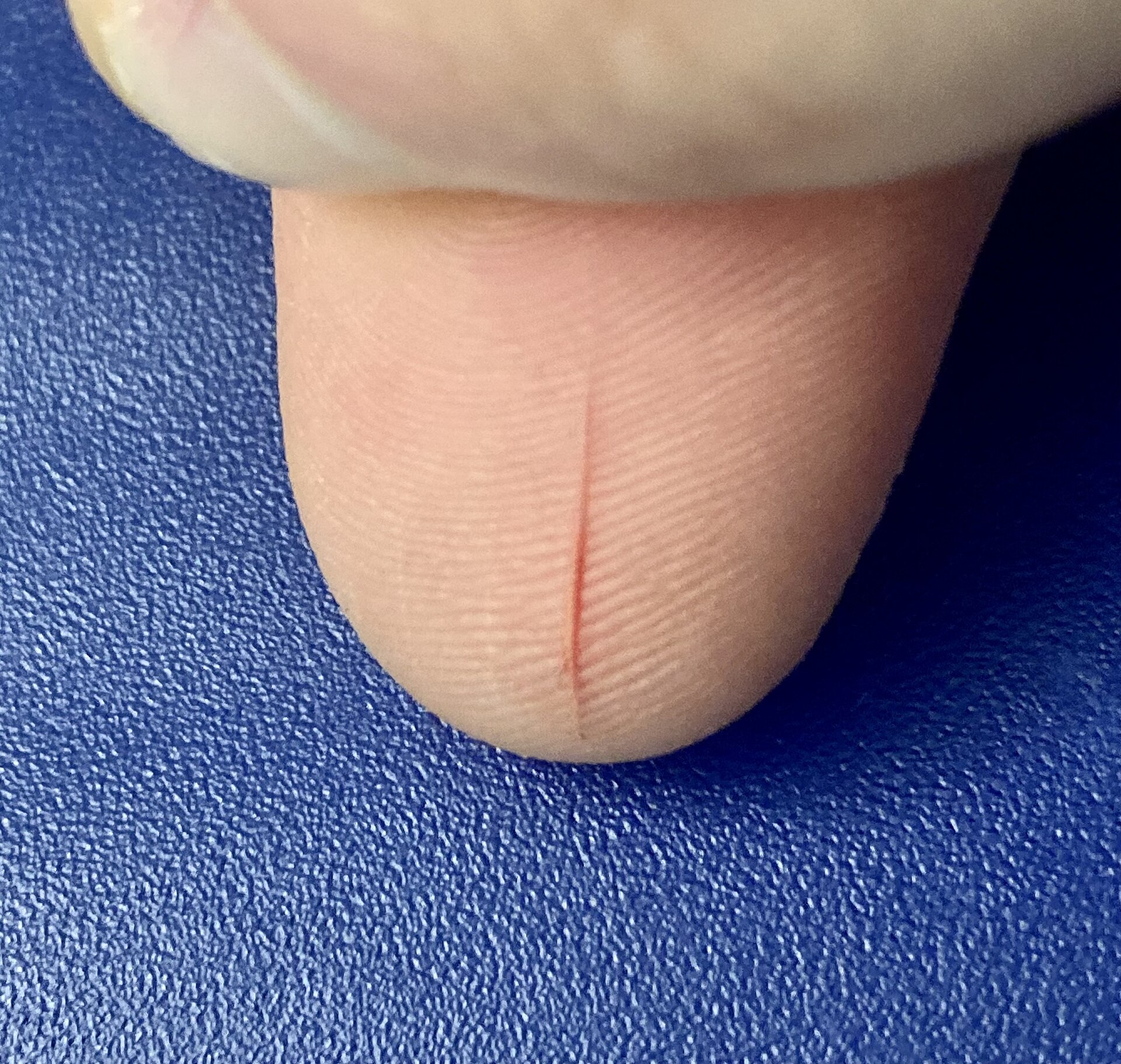
You slice open a finger on a sheet of office paper and it stings with an intensity that seems completely unfair. Meanwhile, a much larger scrape on your knee barely registers. It turns out there are several overlapping biological reasons why that tiny paper cut feels so vicious — and understanding them reveals a lot about how your body processes pain.
Table of Contents
From the nerve-packed geography of your fingertips to the peculiar physics of paper’s edge and the way shallow wounds stay stubbornly exposed, the science of paper cut pain is genuinely fascinating. Here’s exactly what’s happening under your skin.
Quick Answer
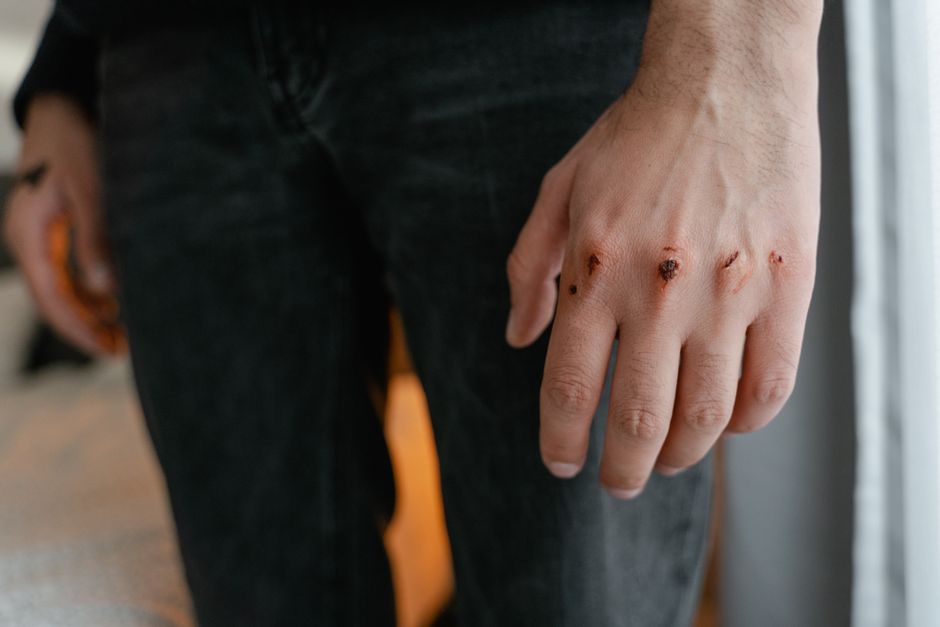
Paper cuts hurt disproportionately because they almost always land on your fingertips — one of the most nerve-dense patches of skin on your entire body — and because they’re too shallow to bleed enough to form a protective scab, leaving raw nerve endings continuously exposed to air, water, soap, and every other thing your hands touch.
The Fingertip Problem: You Cut in the Worst Possible Spot
Your fingertips are essentially the nervous system’s front line. The skin there contains an extraordinarily high density of nociceptors — the specialized nerve endings responsible for detecting tissue damage and triggering pain. One physician analogy describes the fingertip as resembling Manhattan, criss-crossed with dense cables, compared to the much sparser nerve landscape of, say, your thigh or your back.
This density exists for a good reason: your hands are how you interact with the world, so fine-grained sensory feedback is critical for survival and dexterity. But it also means that even a tiny breach of the skin there activates a huge number of pain receptors simultaneously, sending a disproportionately loud distress signal to your brain.
Paper cuts also frequently occur on the lips and tongue — two other nerve-dense areas — which explains why a lick of an envelope flap can feel just as brutal.
Why Shallow Wounds Hurt More Than Deep Ones
It seems counterintuitive, but depth actually works in your favor with larger wounds. A deeper cut bleeds freely and quickly forms a clot, which seals off the wound and shields the exposed nerve endings beneath a crust of dried blood. That biological bandage mutes the ongoing pain signal significantly.
Paper cuts rarely go deep enough to trigger that response. The wound sits squarely in the zone where nociceptors are most concentrated but doesn’t bleed enough to clot properly. The result is an unsealed breach that stays open, exposing raw nerve endings directly to the outside world — air currents, soap, hand sanitizer, water, and whatever else your fingers encounter dozens of times a day.
Every contact re-stimulates those sensitized nerve endings, resetting the pain clock and preventing the wound from desensitizing. This is why a paper cut that seemed to ease off can light up all over again the moment you wash your hands.
Paper Is More Like a Saw Than a Blade
At a microscopic level, the edge of a sheet of paper is not smooth. The cellulose fibers are compressed and layered, creating a jagged, serrated edge more similar to a tiny saw blade than a clean scalpel. When that edge passes across your skin, it doesn’t slice cleanly — it tears and shreds tissue, damaging a wider swath of surrounding cells than a proper blade would.
That wider tissue damage means more nociceptors are activated at once. The torn cells also release chemical messengers — including bradykinin and prostaglandins — as part of the inflammatory response. These chemicals don’t just signal damage; they actively lower the activation threshold of nearby nerve endings in a process called peripheral sensitization, making the whole area hypersensitive so that stimuli that would normally be pain-free (a light touch, a change in temperature) now register as painful.
The Two Waves of Pain You Feel
The sting from a paper cut actually arrives in two distinct phases, carried by two different types of nerve fiber. The immediate sharp, well-localized jolt is transmitted by A-delta fibers — thin, lightly insulated nerve fibers that conduct signals quickly. That’s the instinctive ‘ouch’ the moment the cut happens.
A second, duller, throbbing ache follows, carried by C fibers, which are slower and unmyelinated. This lingering discomfort is what makes a paper cut keep nagging long after the initial moment of injury. The combination of both signals — plus the ongoing chemical sensitization and continuous re-exposure of the unsealed wound — is what gives paper cuts their particular staying power.
Tips for Easing the Pain and Speeding Healing
Rinse the cut gently with clean water to flush out any paper fiber debris, which can act as a continued irritant inside the wound. Pat dry and apply a small amount of antibiotic ointment — this serves double duty by guarding against infection and, more importantly for pain, keeping the nerve endings moist and less reactive to air exposure.
Cover it with a bandage, even a small one. The single biggest pain-relief step you can take is physically sealing that wound from the environment. The bandage creates the moist, protected environment the cut needs to start healing and stops the cycle of re-stimulation from every hand wash and doorknob. Most paper cuts heal fully within two to three days with this basic care. If you have diabetes or a compromised immune system, monitor the cut more closely as healing may take longer.
Avoid the temptation to repeatedly check the cut by pressing on it — every mechanical disturbance re-activates the sensitized nociceptors. Once it’s covered, leave it alone.
Explore more: Explore more science articles.
Paper cut pain FAQs
Why does a paper cut sting so much more when I put hand sanitizer on it?
Hand sanitizer contains alcohol, which is a chemical irritant. Because the paper cut is shallow and unsealed, the alcohol contacts the exposed nerve endings directly. Those nerve endings are already peripherally sensitized from the inflammatory response, meaning their pain threshold is lower than normal, so even mild chemical exposure registers as a sharp burn.
Are some people genuinely more sensitive to paper cuts than others?
Yes. Individual variation in nerve density, skin thickness, and pain sensitivity means some people find paper cuts barely noticeable while others find them genuinely debilitating. Dry or cracked skin — common in winter — also means the outer protective layer of skin is weaker, making it easier for paper to breach and exposing more nerve endings when it does.
Why don’t paper cuts hurt immediately sometimes — there’s a delay?
This is a well-documented quirk of acute pain. In moments of surprise or stress, the body can release endorphins that briefly suppress pain signaling. The fast A-delta fibers deliver the initial signal, but the brain’s full pain processing can lag by a second or two. By the time you look down and register the wound, the cascade of nociceptor activation and chemical sensitization is ramping up — and the pain follows.
Make Your Digital Life Better
More practical tech how-tos, tool picks, and guides to upgrade your everyday digital life. More on GTWebs.
Photo: ComprehensiveItem / CC BY-SA 4.0, via Wikimedia Commons.