

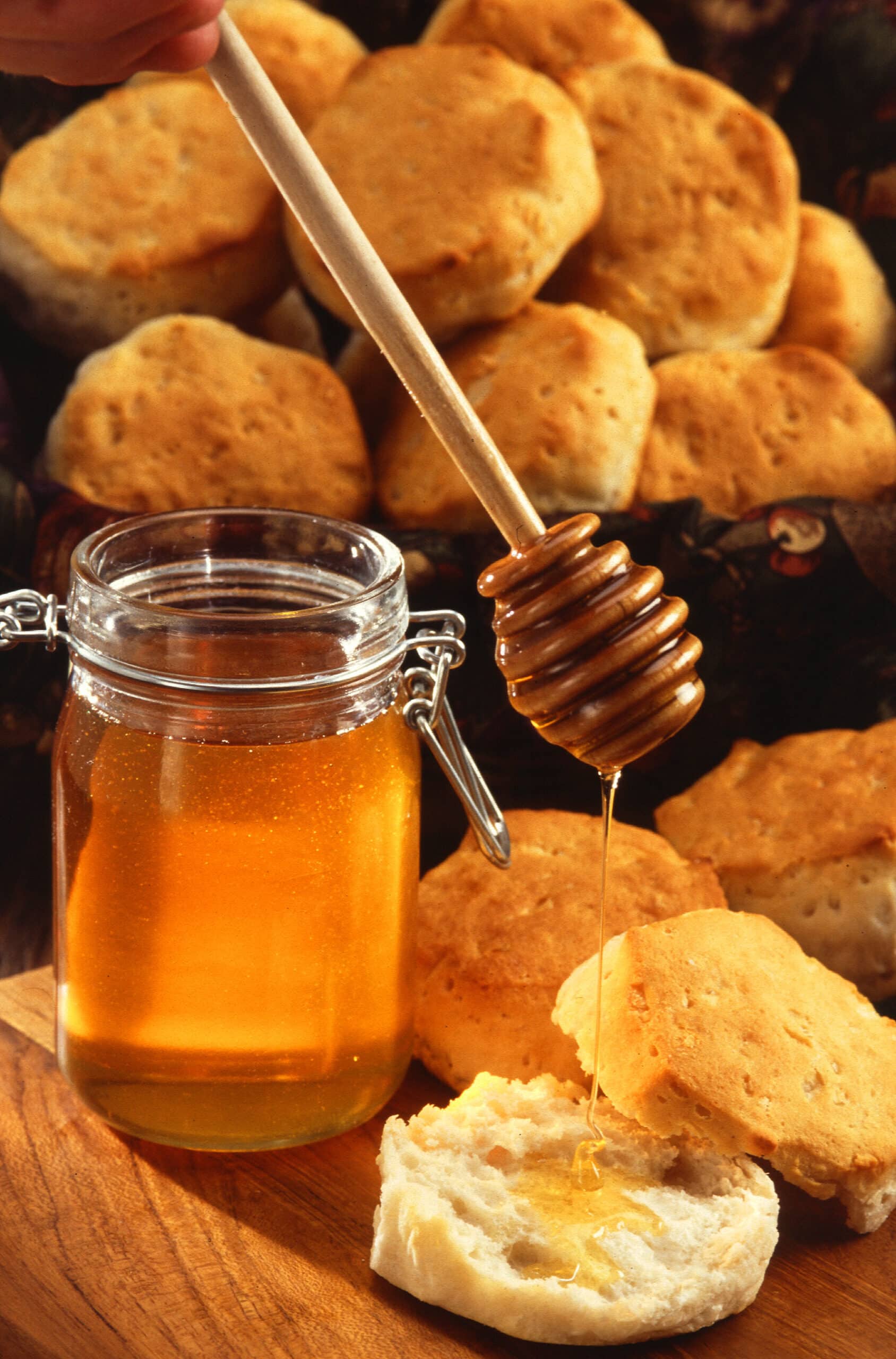
You’ve probably heard that archaeologists cracked open a jar of honey in an ancient Egyptian tomb and found it still soft and edible thousands of years later. That story gets repeated constantly online, but it’s more internet legend than documented archaeology — there’s no verified excavation report of anyone actually tasting millennia-old honey from a pharaoh’s burial site.
Table of Contents
What is real, and arguably more interesting than the legend, is the actual chemistry that makes honey one of the only foods on Earth that essentially never spoils when it’s stored properly. This guide breaks down the mechanisms that make honey nearly impossible for bacteria and mold to survive in, the storage habits that keep a jar in your pantry tasting good indefinitely, and the one situation where honey is genuinely unsafe.
Quick Answer
Honey resists spoiling because of a combination of very low water content, high acidity, and natural hydrogen peroxide produced by an enzyme bees add during nectar processing. Together these create an environment where bacteria and mold can’t survive or reproduce, so as long as honey is sealed and kept dry, it doesn’t spoil in any meaningful sense.
The Three Mechanisms That Keep Honey Stable
The biggest factor is water activity. Honey is roughly 80% sugar and only about 17-18% water, and that water is bound up tightly with the sugar molecules rather than sitting around freely. Microorganisms need free water to survive, and honey’s water activity sits well below the threshold most bacteria and molds need to grow. If a stray microbe does land in honey, the sugar-heavy environment actually pulls water out of its cells through osmosis, dehydrating and killing it.
Honey is also acidic, typically landing somewhere in the pH 3 to 4.5 range depending on the floral source, largely due to gluconic acid formed during nectar processing. Most spoilage bacteria thrive in more neutral conditions, so that acidity alone knocks out a lot of potential contaminants.
The third piece is hydrogen peroxide. Bees add an enzyme called glucose oxidase to nectar as they process it into honey. That enzyme reacts with glucose to slowly generate small amounts of hydrogen peroxide, which acts as a mild, ongoing antimicrobial agent throughout the honey. In thick, undiluted honey this reaction is slow, but it still adds another layer of protection on top of the low moisture and acidity.
What Actually Happens to Honey Over Time
‘Never spoils’ doesn’t mean ‘never changes.’ Left long enough, honey will darken, lose some of its lighter floral notes, and often crystallize into a grainy, semi-solid texture. Crystallization is a physical change, not spoilage — it happens because honey is a supersaturated sugar solution, meaning it holds more dissolved sugar (mainly glucose) than it can permanently keep in solution, so over time some of that glucose separates out as solid crystals. Crystallized honey is completely safe and can be returned to a liquid state.
The one real risk with old honey is moisture getting in. If a jar is left open, or a wet spoon is dipped into it repeatedly, the added water lowers that protective water activity in localized spots, which can let mold or fermentation-causing yeasts take hold. That’s a storage failure, not honey spoiling on its own.
Tips / Common Mistakes
Store honey in a sealed, airtight container at room temperature, away from direct sunlight and heat sources like the stovetop. Don’t refrigerate it — cold temperatures speed up crystallization dramatically rather than preventing it. Always use a clean, dry spoon or utensil, since introducing moisture or food particles is the main way honey actually goes bad. If honey crystallizes, don’t throw it out: set the jar in a bowl of warm (not boiling) water and let it sit, stirring occasionally, until it returns to liquid. Avoid microwaving honey in plastic or metal containers, and avoid overheating it, since high heat can degrade its flavor and some of its beneficial enzymes. One important exception to all of this: never give honey, in any form, to a baby under 12 months old. Honey can contain dormant bacterial spores that are harmless to older children and adults but can cause infant botulism in a baby’s immature digestive system.
Explore more: More science explainers.
Honey shelf life chemistry FAQs
Does honey ever actually expire?
Properly sealed, pure honey doesn’t spoil in the way perishable foods do. It may crystallize or darken over time, but it typically remains safe to eat indefinitely as long as moisture hasn’t gotten into the container.
Why did my honey turn hard and grainy?
That’s crystallization, a natural physical process where dissolved glucose comes out of solution and forms crystals. It’s not spoilage — gently warming the jar in warm water will return it to a liquid state.
Is it true archaeologists found edible honey in Egyptian tombs?
This is one of the most repeated food facts online, but it’s poorly sourced — there’s no verified excavation record of anyone tasting thousands-year-old honey from a pharaoh’s tomb. What is well established is the underlying chemistry: honey’s low water content, acidity, and natural hydrogen peroxide make it inhospitable to spoilage microbes, so a properly sealed jar can, in principle, last an extremely long time.
Can honey ever go bad or become unsafe?
It’s rare, but if water gets into the container, honey can ferment or develop mold. Always store it sealed with a clean, dry utensil. The other key exception is that honey should never be given to infants under one year old due to the risk of infant botulism.
Make Your Digital Life Better
More practical tech how-tos, tool picks, and guides to upgrade your everyday digital life. More on GTWebs.
Photo: Scott Bauer, USDA ARS / Public domain, via Wikimedia Commons.