

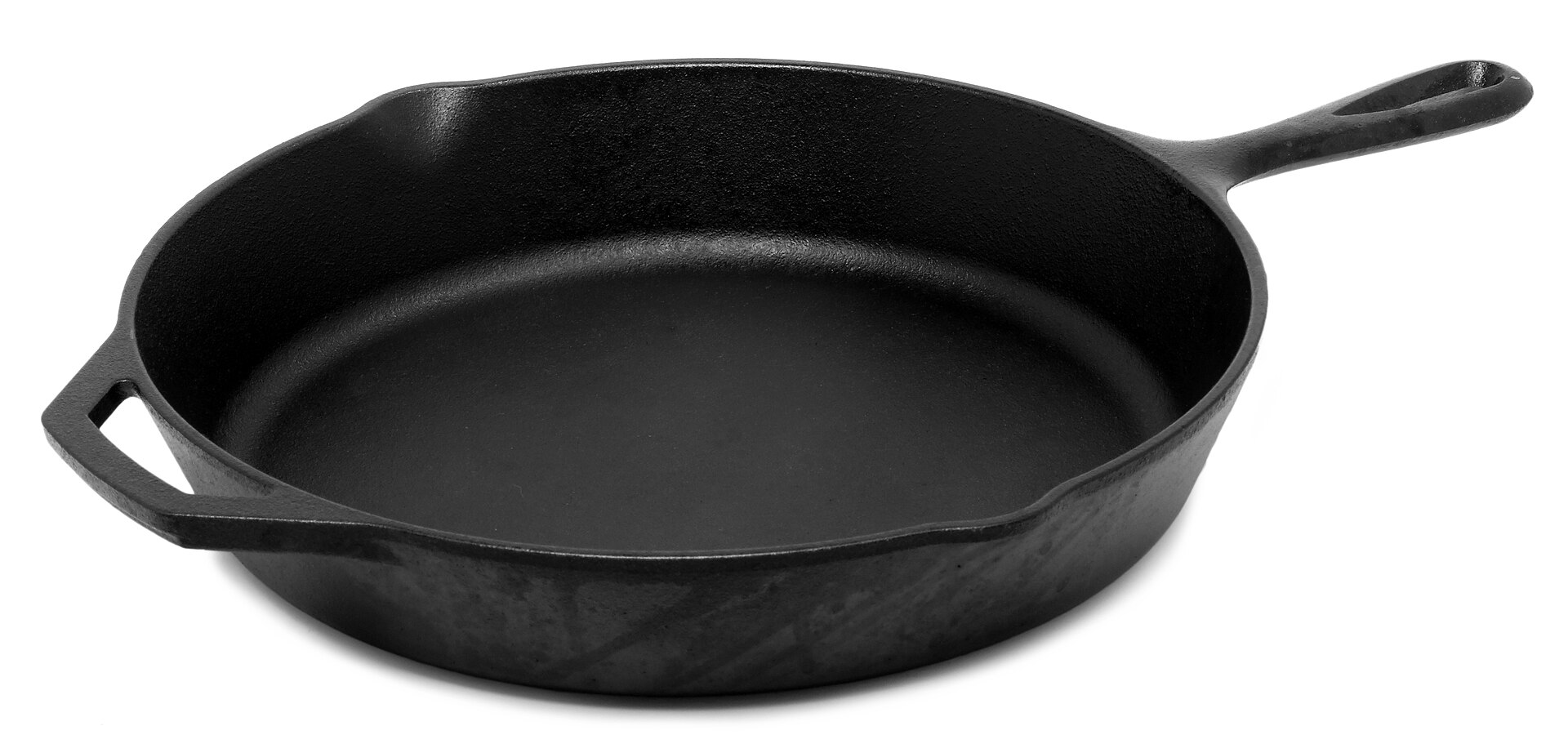
Bare cast iron is just porous, reactive metal — leave it wet for an hour and it starts to rust. Seasoning is what turns that raw iron into the smooth, dark, nonstick surface cooks prize, and the reason it works comes down to a real chemical reaction, not just built-up grease.
Table of Contents
This guide breaks down what’s actually happening at a molecular level when you season a pan, why oil choice and heat matter, and how to build (and keep) a seasoning layer that actually performs.
Quick Answer
Cast iron needs seasoning because raw iron is porous and reacts with oxygen and moisture, causing rust. Seasoning coats the metal in a thin layer of oil that’s been heated until it polymerizes — the fat molecules break apart and re-link into a hard, plastic-like film that’s molecularly bonded to the iron. That film seals the pores, blocks moisture and air from reaching the metal, and creates a naturally slick, semi-nonstick cooking surface.
The Chemistry: What Polymerization Actually Does
Unfinished cast iron has a rough, porous surface at the microscopic level, full of tiny pits left over from casting. Exposed to air and water, the iron oxidizes — that’s rust — and food sticks in every crevice.
Seasoning fixes this through polymerization: when a thin layer of oil is heated past its smoke point, the fat molecules break apart and reform into long polymer chains that cross-link with each other and bond directly to the iron surface. The result isn’t just oil sitting on top of the pan — it’s a hardened, plastic-like coating fused to the metal, similar in principle to how a factory-applied nonstick coating cures.
That cured layer does two jobs at once: it physically fills in the pan’s pores so food and moisture can’t reach the raw iron underneath, and it creates a hydrophobic (water-repelling) surface. Water beads up and runs off instead of sitting on bare metal, which is what keeps a well-seasoned pan from rusting between uses.
Why Oil Choice and Heat Matter
Not every oil polymerizes equally well. Oils higher in polyunsaturated fat cross-link more readily when heated, so they build a harder seasoning layer than oils that are mostly saturated fat. Flaxseed oil is very high in polyunsaturated fat and produces an especially hard, durable cure, though it can flake if applied too thickly. More practical everyday options — grapeseed oil, canola oil, and avocado oil — also have polyunsaturated content and, importantly, high smoke points, which matters because the pan needs to reach the oil’s smoke point for polymerization to actually happen.
Most guidance points to baking the oiled pan somewhere in the 400–500°F range, generally around an hour, so the oil gets hot enough to break down and re-bond rather than just staying gooey or burning off. Applying the oil in a very thin layer matters too — too much pooled oil cures into a sticky, tacky film instead of a hard one, since the excess never fully polymerizes.
Tips and Common Mistakes
Wipe on far less oil than feels right, then wipe again with a clean cloth until the pan looks almost dry — a thin coat cures hard, a thick coat stays gummy. Applying oil to a pan that’s still warm (not hot) also helps it spread into an even, ultra-thin film.
Building seasoning is cumulative: one bake-on cycle rarely gets a pan fully nonstick, so repeating the oil-and-bake process three or four times, or simply cooking with fat regularly, layers on more polymerized coating over time.
Skip harsh dish soap and scouring pads on a seasoned pan — they won’t strip a well-cured layer outright, but aggressive scrubbing thins it faster than it rebuilds. If the pan does go rusty or patchy, that’s not fatal: strip it back to bare metal and re-season from scratch.
Always dry a cast iron pan completely and give it a very light wipe of oil before storing, since lingering moisture is the fastest way to undo the seasoning’s whole purpose.
Explore more: More Science explainers.
Cast iron seasoning FAQs
What happens if you cook in an unseasoned cast iron pan?
Food will stick heavily to the porous, bare metal, and the pan is much more likely to rust if it’s exposed to any moisture, since there’s no polymerized layer sealing the iron.
How often do I need to re-season a cast iron pan?
A well-maintained pan used regularly with oil or fat can hold its seasoning for years without a dedicated re-seasoning session. Full re-seasoning is really only needed after rust, a hard scrub-down, or stripping the pan back to bare metal.
Is seasoning the same thing as a nonstick coating?
They work on a similar principle — a polymerized layer bonded to the cooking surface — but seasoning is built from cooking oil baked directly onto raw iron, while factory nonstick coatings (like PTFE) are synthetic materials applied during manufacturing.
Make Your Digital Life Better
More practical tech how-tos, tool picks, and guides to upgrade your everyday digital life. More on GTWebs.
Want web tips in your inbox? Subscribe to the free newsletter.
Photo: Evan-Amos / Public domain, via Wikimedia Commons.