

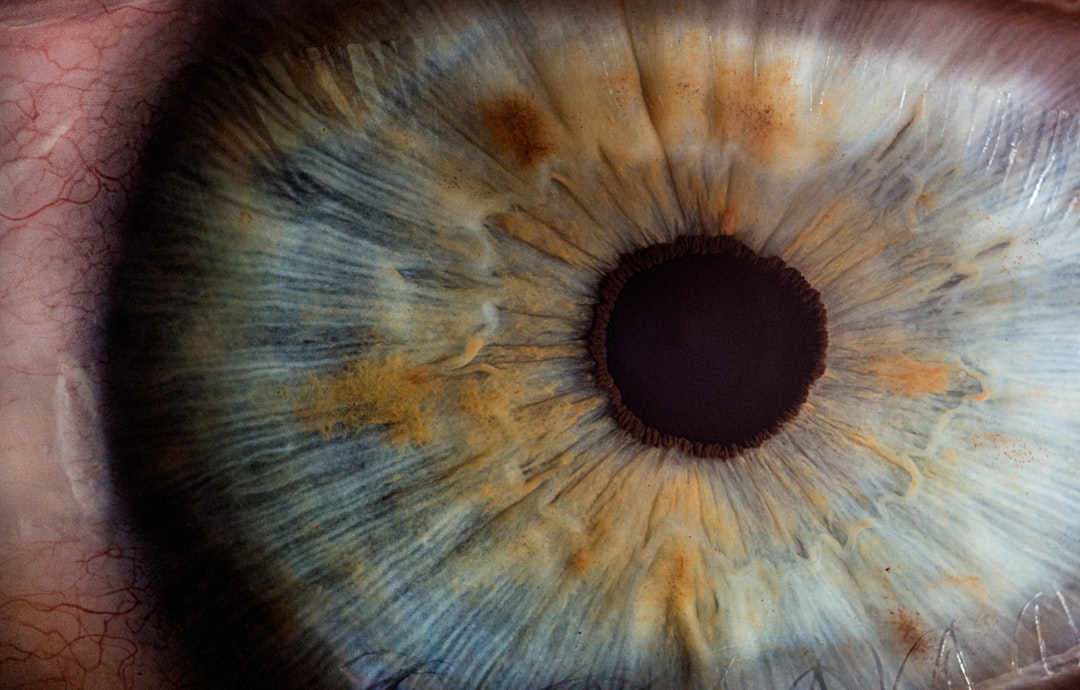
Look around the room you’re in right now. The warm amber of a lamp, the cool grey of a wall, the near-infinite gradations between a green leaf and a yellow one — your brain is processing all of it in real time, effortlessly sorting each hue into something meaningful. Yet the eye has no direct way to ‘read’ color the way a camera sensor reads pixels. Instead, it performs a kind of biological sleight of hand.
Table of Contents
Color vision is one of the most elegant examples of the brain building a rich experience from sparse data. This article breaks down exactly how your eyes detect light wavelengths, how three tiny cell types collaborate to generate the full spectrum you see, and why color is ultimately a construction of the mind rather than a property of the world.
Quick Answer
Your retina contains three types of cone cells, each sensitive to a different range of light wavelengths (loosely corresponding to blue, green, and red). Your brain compares the relative signals from all three to identify a color — and through that comparison, it can distinguish millions of distinct hues from just three inputs.
The Three Cone Types: Your Eye’s Color Sensors
The retina — the light-sensitive layer at the back of the eye — contains two major types of photoreceptor cells: rods and cones. Rods handle low-light, black-and-white vision. Cones, which cluster heavily in the fovea (the small central pit of the retina where your vision is sharpest), are responsible for color perception.
Cones come in three varieties, classified by the peak wavelength of light they absorb. Short-wavelength (S) cones respond most strongly to light around 420 nm — the violet-blue end of the spectrum. Medium-wavelength (M) cones peak around 530 nm (green). Long-wavelength (L) cones peak around 564 nm, which falls in the yellow-green range — despite being commonly called ‘red’ cones, they don’t actually peak at red wavelengths. Each cone type contains a specific photopigment that changes shape when it absorbs a photon, triggering an electrical signal that travels down the optic nerve toward the brain.
Crucially, these sensitivities overlap considerably. A single wavelength of light — say, 550 nm yellow-green — will stimulate all three cone types to varying degrees. The brain doesn’t read the output of one cone in isolation; it reads the ratio of activity across all three. That ratio is the fingerprint of a color.
Two Stages of Color Processing: Trichromacy and Opponent Channels
The first stage happens at the retina itself and is called trichromacy. Because you have three cone types, any color can in principle be matched by mixing three primary lights at appropriate intensities — the principle behind television screens and phone displays. This was first proposed by Thomas Young in the early 19th century and later refined by Hermann von Helmholtz.
The second stage kicks in as signals pass through retinal ganglion cells toward the visual cortex. Here the brain reorganizes color information into opponent channels: red vs. green, blue vs. yellow, and light vs. dark. Retinal ganglion cells are structured so that a signal from one color type actively suppresses its opponent — a red-excited cell is simultaneously inhibited by green input. This opponent wiring is why you cannot perceive a ‘reddish-green’ or a ‘yellowish-blue’: those pairs cancel each other at the neural level. It also explains color afterimages — stare at red long enough, and when you look away your fatigued red channel creates a ghostly green.
These two stages together — cone comparison plus opponent processing — allow an enormous range of distinguishable hues. Estimates of how many colors humans can distinguish vary widely by individual, lighting, and context, but the number is generally considered to be in the millions.
Color Is a Construction, Not a Copy
Here is where color vision gets philosophically interesting: there is no ‘color’ in the physical world. Objects have surface properties that reflect certain wavelengths more than others, but a wavelength has no color any more than a sound wave has a melody. Color is entirely generated by your visual system as an interpretation of that reflected light.
One consequence is color constancy. A lemon looks yellow whether you view it under noon sunlight, tungsten lamplight, or the blue cast of a cloudy sky — even though the actual wavelengths reaching your eye change dramatically in each case. Your brain continuously adjusts for the ambient light source, effectively ‘subtracting’ the illuminant to recover the object’s stable surface properties. This is a remarkable feat of real-time computation that no current camera system replicates perfectly.
Context also shapes perception. The same grey square will look lighter or darker depending on what surrounds it. Two patches of identical spectral composition can appear to be completely different colors if placed in different visual scenes. Color, in short, is a relationship, not an absolute measurement.
Tips and Common Misconceptions
Color blindness does not mean seeing in black and white. Most people with color vision deficiency have a malfunctioning or shifted M or L cone (red-green being the most common form), so they still see color — just with reduced ability to distinguish certain hues from one another. Total color blindness (achromatopsia) is rare and usually involves missing or non-functional cone cells entirely.
You see less color at night because cones require relatively bright light to activate. In dim conditions your rod cells dominate, and rods produce only a single signal (light vs. dark) with no color discrimination — which is why everything looks grey or blue-grey in moonlight.
A small proportion of people — mostly women — may carry a genetic mutation giving them a fourth cone type with a peak sensitivity between the standard M and L cones. Called tetrachromacy, this trait could theoretically allow discrimination of colors that appear identical to trichromats, though how often it produces a genuine perceptual advantage in everyday life is still actively studied.
Screens exploit trichromacy directly. Your monitor produces only red, green, and blue light, yet you perceive yellow, brown, purple, and thousands of other hues — because what matters to your visual system is not the physical composition of the light but the ratio of stimulation across your three cone types. The ‘yellow’ on your screen is not real yellow light at around 580 nm; it is a mixture of red and green that tricks your L and M cones into firing as if it were.
Explore more: Explore more science articles.
human eye color vision FAQs
Why do humans have three types of cone cells instead of more?
Three cone types are thought to be an evolutionary sweet spot for land animals: enough to distinguish ripe fruit, edible plants, and the skin tones of other people, without the metabolic cost of additional photopigment types. Some fish and birds have four or more cone types and can perceive ultraviolet light — a range completely invisible to the human eye.
Is it true some people can see more colors than others?
Yes, to a degree. People with tetrachromacy (a possible fourth cone type) may discriminate colors that look identical to most people. On the other end, those with color vision deficiencies have a reduced ability to tell certain hues apart. Even among typical trichromats there is individual variation in exactly where each cone type peaks, meaning two people with ‘normal’ color vision may still perceive some colors slightly differently.
Can the human eye see infrared or ultraviolet light?
Not under normal circumstances. The lens of the eye absorbs most ultraviolet light, protecting the retina but blocking UV perception. People who have had their lens removed surgically (and replaced with an artificial one) sometimes report being able to detect near-UV. Infrared wavelengths are simply too long to trigger the cone photopigments. The visible spectrum — roughly 400 nm to 700 nm — is the narrow band the human eye is tuned to.
Make Your Digital Life Better
More practical tech how-tos, tool picks, and guides to upgrade your everyday digital life. More on GTWebs.
Photo by v2osk on Unsplash.