

Bringing home a new dog or cat means a flood of decisions: how to housetrain them, whether that limp is nothing or something, and how much to feed them. A growing set of AI-powered apps now helps with all three, turning your phone into a training coach, a first-pass health checker, and a nutrition advisor you can consult between vet visits.
Table of Contents
This guide breaks down the most useful AI apps for new pet owners by category, so you can pick the right tool instead of downloading five and deleting four. It also covers where these apps fall short, because none of them replace an actual veterinarian.
Quick Answer
For training, apps like Woofz and Dogo pair structured lesson plans with AI chat support or trainer video feedback. For health, AI symptom-checker apps and smart collars like Fi can flag patterns worth a vet visit, but none of them diagnose. For diet, food-scanning apps like Kibble and nutrition chat tools like PawCo AI help you evaluate what you’re feeding your pet and build a feeding plan around their size, age, and health needs.
AI apps for training a new dog or puppy
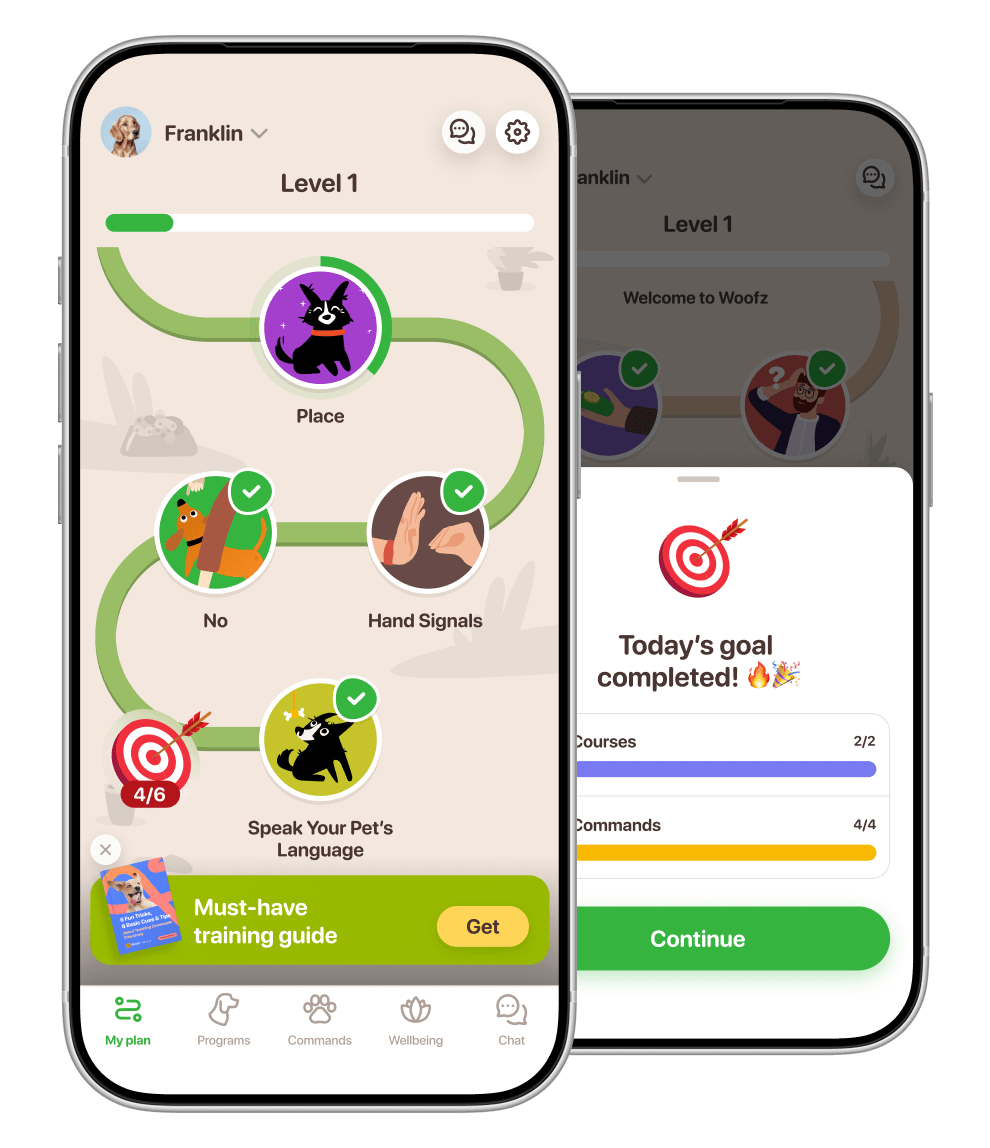
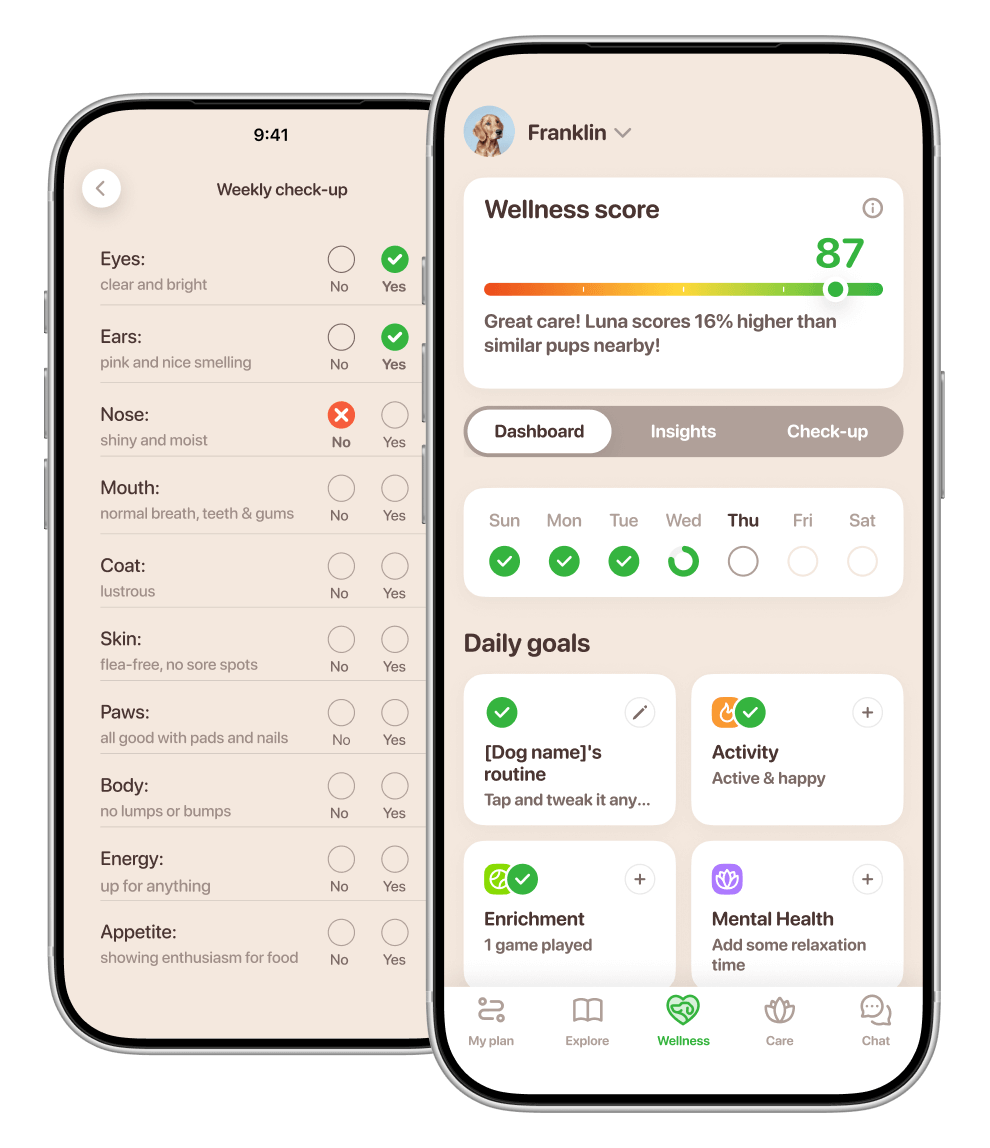
Woofz (woofz.com) is built around step-by-step video and audio lessons for basic commands plus a dedicated program for problem behaviors like barking, chewing, and leash pulling. It includes an in-app chat assistant for quick training questions and a wellness dashboard that tracks your dog’s daily activity alongside the lesson plan.
Dogo pairs you with an assigned dog trainer: you submit videos of your dog practicing a skill and get feedback back, plus an open chat thread with that trainer for questions between lessons. It also has a large library of guided tricks and exercises, vaccination and grooming reminders, and a built-in clicker and whistle, making it a solid pick if you want some human feedback without paying for live video sessions.
One heads-up: GoodPup, which used to offer live video sessions with a certified trainer, has been absorbed into Rover and is no longer accepting new users. Rover now runs its own in-app dog training: you search for a credentialed trainer in the app under Services, meet them, and then book and pay for either in-home or virtual private sessions, with cancellations handled through the app according to the trainer’s own policy. If you want a live human trainer rather than app-based coaching, booking through Rover or working directly with a local certified trainer are the more reliable routes right now.
All of these work best for everyday obedience, potty training, and mild behavior issues. If your dog shows real aggression or severe anxiety, use the app alongside, not instead of, an in-person trainer or veterinary behaviorist.
AI apps for monitoring your pet’s health
A newer category of apps uses AI chat models to give you a first read on symptoms: you describe what’s going on (or upload a photo), and the app suggests whether it looks like something to watch at home or something that needs a vet visit soon. Every one of these apps states clearly in its own listing that it is not a diagnostic tool and is meant to prepare you for a vet conversation, not replace it — treat any result accordingly, especially for anything serious like vomiting that won’t stop, labored breathing, or suspected poisoning.
For passive monitoring, smart collars add another layer. Fi’s collar (tryfi.com) tracks steps and sleep and uses AI to flag unusual patterns in scratching, licking, barking, eating, and drinking, in addition to GPS location. Its app can also read uploaded vet records or lab results and summarize them in plain language, and you can share the data directly with your veterinarian.
Think of these tools as an early-warning layer, not a replacement for annual checkups. A sudden change the app flags, like a drop in activity or a spike in licking, is a reason to call your vet sooner, not a reason to skip the call.

AI apps for pet diet and nutrition
Kibble is a barcode scanner: point your phone at a bag of food or a treat, and its AI assesses ingredient quality, protein content, allergen safety, and more to return a score so you can compare products quickly instead of parsing a label full of unfamiliar terms. It’s most useful when you’re standing in a pet store aisle trying to decide between two bags.
PawCo AI (chat.mypawco.com) works more like a conversation. You describe your dog’s age, weight, activity level, and any health issues, and it gives nutrition guidance, including ingredient safety checks, and answers follow-up questions about portion sizes. It’s a good complement to a food scanner once you’ve narrowed down your options and want help with actual feeding amounts.
If your pet has a diagnosed condition such as kidney disease, allergies, or obesity, run any AI-suggested diet change past your vet first. These apps are trained on general nutrition guidance, not your pet’s specific medical history.
Tips and common mistakes
Don’t stack five apps that do the same thing. Pick one training app, one health-monitoring tool, and one diet app, and actually use them consistently — a lesson plan or food log only helps if you stick with it.
Check the subscription model before committing. Most of these apps are free to download but gate the AI features, trainer feedback, or detailed scores behind a subscription, and trial lengths and prices vary by region, so check current pricing in the app or App Store listing rather than relying on an old screenshot or review.
Treat AI health and training suggestions as a starting point, not a verdict. If an app’s advice conflicts with what your vet or a certified trainer tells you in person, go with the professional every time — they can see and examine your actual pet, and the app can’t.
Re-evaluate as your pet ages, and double-check that an app or service you’ve heard recommended is still open to new users before you commit — pet-tech apps change ownership and signup status more often than most software.
Explore more: more AI tools and guides.
AI apps for new pet owners FAQs
Can an AI app actually diagnose what’s wrong with my pet?
No. AI symptom-checker apps and smart collars are designed to flag patterns worth watching and help you describe symptoms clearly to a vet — every major app in this space says explicitly that it’s not a diagnostic tool. Use them to decide how urgently to call your vet, not as a substitute for the visit.
Are AI dog training apps as good as hiring a trainer?
For basic obedience, potty training, and mild behavior issues, apps like Woofz and Dogo can get you most of the way there at a much lower cost. For aggression, severe anxiety, or complex behavior problems, a certified in-person trainer or veterinary behaviorist is still the better choice. Dogo bridges some of the gap with trainer video feedback and chat, and if you specifically want live video or in-home coaching from a credentialed trainer, Rover now offers that directly through its app, having absorbed the GoodPup training team.
Do I need a smart collar, or is a health app on my phone enough?
A phone app depends on you remembering to log symptoms or take photos. A smart collar like Fi monitors activity, sleep, and behaviors like scratching or licking automatically in the background, which makes it easier to catch a gradual change you might otherwise miss. If budget is tight, a free symptom-checker app is a reasonable starting point.
Make Your Digital Life Better
More practical tech how-tos, tool picks, and guides to upgrade your everyday digital life. More on GTWebs.
Want web tips in your inbox? Subscribe to the free newsletter.
Images: Woofz.