

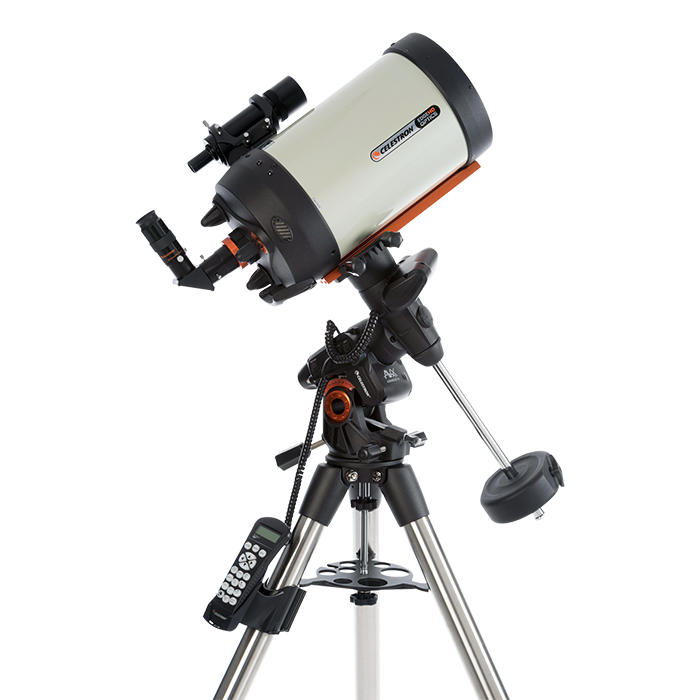
If you’ve spent any time shopping for a first telescope, you’ve almost certainly landed on these two names. Celestron and Sky-Watcher dominate the beginner-to-intermediate market, show up on nearly every “best telescope” list, and get compared constantly — for good reason, since they’re the two most trusted brands most retailers actually stock in depth.
Table of Contents
This guide breaks down what actually separates them (it’s less than you’d think, and also more than you’d think), which one fits different budgets and goals, and specific models worth considering so you’re not guessing.
Quick Answer
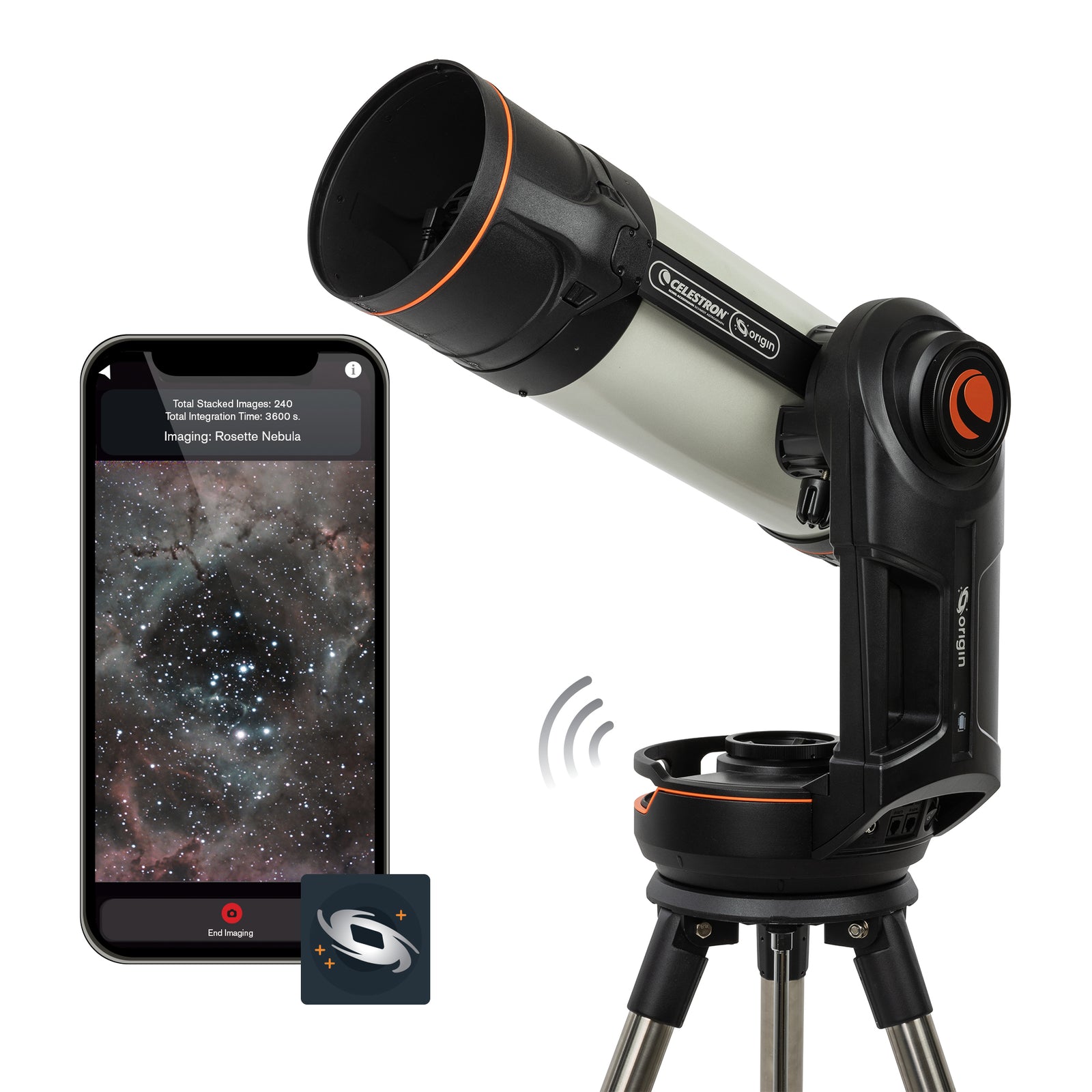
Choose Celestron if you want a computerized GoTo mount or a phone-guided finder system that points you at objects with minimal sky knowledge — its NexStar and StarSense Explorer lines are the most polished beginner-friendly tech on the market. Choose Sky-Watcher if you want the most mirror (aperture) for your money, especially in tabletop and full-size Dobsonians or apochromatic refractors, and don’t mind finding objects manually or with a simpler mount.
How the Two Brands Actually Differ
Here’s the twist most buyers don’t know: Celestron and Sky-Watcher are owned by the same parent company. Synta Technology Corporation launched Sky-Watcher in 1999 as its value-focused house brand, then bought Celestron in 2005. Many optical tubes from both brands are made in the same Suzhou, China facilities, so a lot of what you’re paying for is branding, mount technology, and support ecosystem rather than a totally different manufacturing pedigree.
Where they genuinely diverge is optical design and user experience. Celestron leans heavily on compact Schmidt-Cassegrain and Maksutov-Cassegrain designs (like the NexStar 4SE, 6SE, and 8SE) paired with its NexStar+ hand controller or the StarSense Explorer app, which uses your phone’s camera to plate-solve the sky and give you real-time directional arrows to any target — no alignment stars or astronomy knowledge required. Sky-Watcher’s strength is Newtonian reflectors on Dobsonian mounts (the Heritage and Classic lines) and apochromatic refractors, prioritizing raw aperture and optical quality per dollar over pointing convenience. Sky-Watcher does make GoTo and equatorial mounts too — its EQ6-R Pro is one of the most respected equatorial mounts in astrophotography, arguably outranking anything Celestron offers at that tier.
Which Model Fits Your Budget and Goals
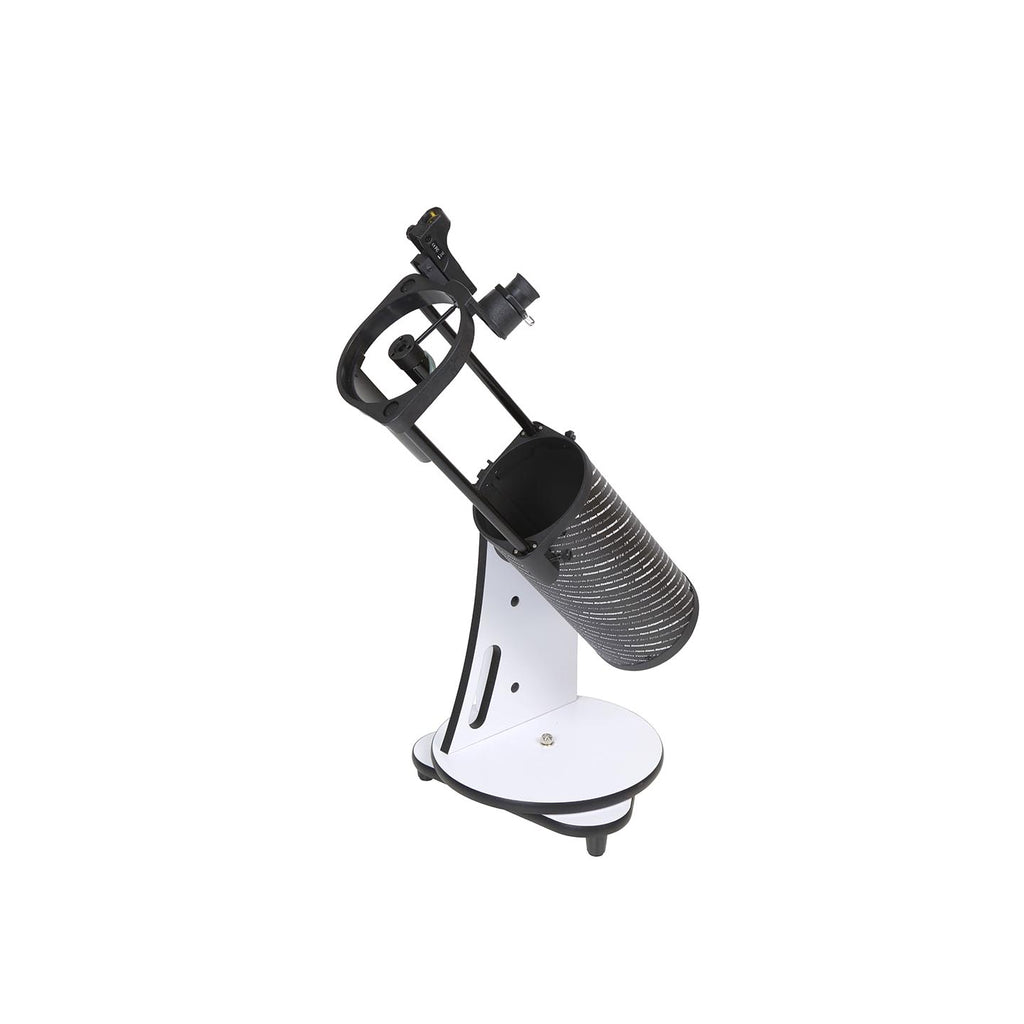
For an entry-level pick that still delivers genuine deep-sky views, the Sky-Watcher Heritage 130P tabletop Dobsonian stands out: a 130mm parabolic mirror, collapsible flextube design, and real views of star clusters, brighter nebulae, and Saturn’s rings, in a scope light enough to carry in one hand. It runs around $300 direct from Sky-Watcher USA, and few Celestron scopes match its aperture at that price point.
In the roughly $400–600 range, it comes down to how you want to find objects. The Celestron NexStar 4SE pairs a 102mm Maksutov-Cassegrain tube with a computerized GoTo mount and a large built-in object database — point it at three stars with SkyAlign and it slews to targets on its own. If you’d rather learn the sky yourself with assistance rather than full automation, Celestron’s StarSense Explorer LT 80AZ or LT 114AZ uses your smartphone to guide you manually without a motorized mount, typically at a lower price than the GoTo models.
Stepping up further, Celestron’s NexStar 6SE and 8SE are the long-standing benchmarks for reliable GoTo pointing with larger apertures (6 and 8 inches) in a compact Schmidt-Cassegrain tube — good for both visual observing and light imaging. If you want more raw aperture instead of computerized pointing at a similar budget, Sky-Watcher’s Classic 200P Dobsonian (8-inch parabolic mirror) delivers noticeably more light-gathering power for the same money, just on a simple push-to mount. For dedicated astrophotography, most experienced imagers point to the Sky-Watcher EQ6-R Pro as the go-to equatorial mount, with Celestron’s Advanced VX as a solid, more affordable mid-range alternative.
Tips and Common Mistakes
Don’t shop by magnification numbers printed on the box — a scope’s usable power is limited by its aperture (mirror or lens diameter in mm/inches), and cheap high-magnification claims usually mean a blurry, unusable image. Aperture is what actually determines how much you’ll see.
Resist buying a GoTo mount as your very first scope purely for convenience; learning a handful of constellations first makes any telescope, motorized or not, far more rewarding, and a manual Dobsonian is genuinely easier to start with than people assume.
Factor in storage and portability before aperture. An 8-inch Dobsonian shows you more than a 4-inch Maksutov-Cassegrain, but only if it’s convenient enough that you’ll actually haul it outside regularly.
Both brands use standard 1.25-inch and 2-inch eyepiece barrels, so accessories, eyepieces, and filters are largely interchangeable between Celestron and Sky-Watcher scopes — you’re not locked into one ecosystem for upgrades.
Explore more: More space and astronomy guides.
Celestron vs Sky-Watcher FAQs
Are Celestron and Sky-Watcher made by the same company?
Yes. Both are owned by Synta Technology Corporation, which launched Sky-Watcher in 1999 and acquired Celestron in 2005. Many optical tubes are produced in the same Chinese manufacturing facilities, though the brands target different price points and use different mount technology.
Which brand is better for a total beginner?
Celestron generally has the edge for absolute beginners thanks to StarSense Explorer (phone-guided manual finding) and NexStar GoTo mounts, both of which remove the guesswork of locating objects. Sky-Watcher’s Heritage 130P is also an excellent, arguably better-value beginner pick if you don’t mind finding targets manually with a star chart.
Which brand is better for astrophotography?
Sky-Watcher’s EQ6-R Pro is widely regarded as one of the best equatorial mounts for deep-sky astrophotography, thanks to its payload capacity and tracking precision. Celestron’s Advanced VX is a capable, more budget-friendly mid-range alternative for imagers getting started.
Make Your Digital Life Better
More practical tech how-tos, tool picks, and guides to upgrade your everyday digital life. More on GTWebs.
Want web tips in your inbox? Subscribe to the free newsletter.
Images: Celestron.