


The United States now flies two very different heavy-lift rockets built around opposite philosophies. SpaceX’s Falcon 9 is a reusable workhorse that has redefined how often and how cheaply a rocket can fly, while United Launch Alliance’s Vulcan Centaur is a newer, expendable-for-now heavy lifter purpose-built to satisfy the U.S. government’s most demanding national security missions.
Table of Contents
If you’re trying to understand why the Pentagon, NASA, and commercial satellite operators all care about having both rockets available, this guide breaks down the real differences in payload capacity, cost, launch cadence, and mission fit — so you know which rocket does what, and why.
Quick Answer
Falcon 9 is cheaper and flies far more often because SpaceX routinely reuses its first-stage boosters, making it the default choice for Starlink, most commercial satellites, and crew/cargo missions. Vulcan Centaur is a newer, more expensive, currently expendable rocket with a heavier-lift, higher-energy upper stage that ULA and the Space Force use for the most demanding national security and deep-space missions where raw performance and a second independent launch provider matter more than price.
Payload Capacity and Design
Falcon 9 is a two-stage kerosene/liquid-oxygen rocket powered by nine Merlin engines on the first stage. It can lift roughly 22,800 kg (50,300 lb) to low Earth orbit when the booster is expended, or about 17,500 kg when the booster is recovered on a drone ship — the trade-off SpaceX accepts in exchange for reusability. To geostationary transfer orbit, Falcon 9 carries around 8,300 kg.
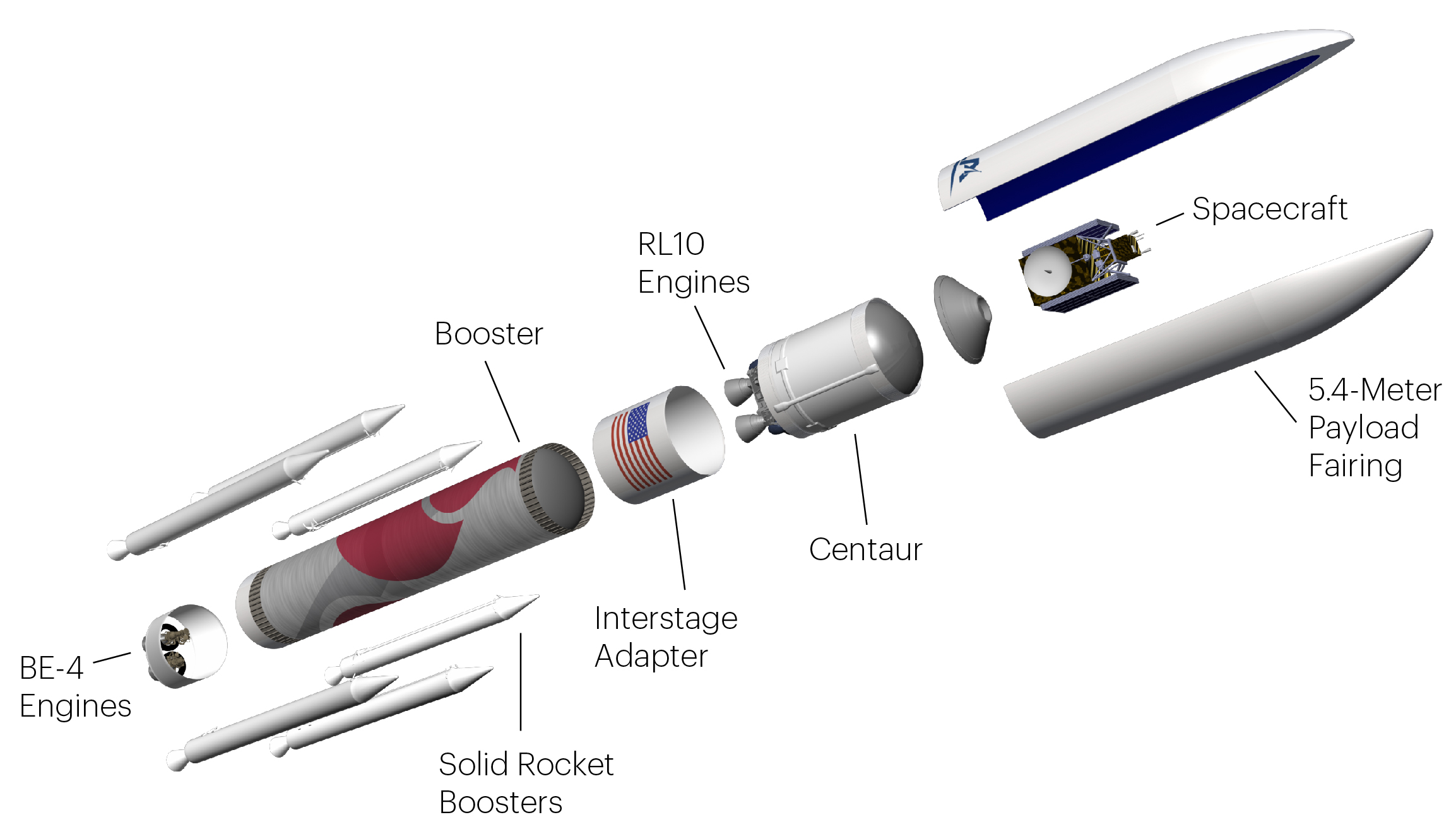
Vulcan Centaur uses two Blue Origin BE-4 engines on its first stage, burning methane instead of kerosene, paired with a Centaur V upper stage powered by two Aerojet Rocketdyne RL10C engines. It can be configured with zero, two, four, or six solid rocket boosters (built by Northrop Grumman) to scale performance. In its most powerful configuration, Vulcan can lift up to about 27,200 kg (60,000 lb) to LEO and roughly 14,400 kg to GTO — noticeably more than Falcon 9, largely because Vulcan flies fully expendable and its Centaur V upper stage is optimized for high-energy trajectories like those needed for GPS satellites and deep-space missions.
In short: Vulcan out-lifts Falcon 9 on paper, especially to high-energy orbits, but Falcon 9 delivers most of that performance while also bringing its booster home.
Cost, Reusability, and Launch Cadence
This is where the two rockets diverge most. Falcon 9’s first-stage boosters routinely fly well over a dozen times each, and SpaceX has now landed hundreds of boosters and reflown hundreds of missions. That reuse is the biggest reason SpaceX flew a record-breaking pace of launches in 2025 — 165 orbital flights in the year, with Falcon 9 accounting for the vast majority and just under three-quarters of those (123 of 165) dedicated to launching its own Starlink satellites — at a list price that industry estimates put in the roughly $60-70 million range per launch.
Vulcan Centaur is, for now, fully expendable: every booster and engine is lost after each flight. ULA has designed a future engine-recovery concept called SMART reuse, which would detach and parachute down just the BE-4 engine section (said to represent a large share of first-stage cost) rather than land the whole booster the way SpaceX does — but that capability hasn’t flown yet. Partly as a result, Vulcan’s list price starts around $110 million and climbs with each pair of solid boosters added. ULA has flown only a handful of Vulcan missions since its January 2024 debut, but the company has said it’s targeting a cadence of roughly 20-25 launches a year as it ramps up in 2026, split between national security, commercial, and Amazon Kuiper missions.
Vulcan earned U.S. Space Force certification for National Security Space Launch missions in March 2025 and flew its first NSSL mission later that year, making it — alongside Falcon 9 and Falcon Heavy — one of the government’s certified launch providers. Having two independently built rockets matters to the Pentagon because it guards against a single point of failure grounding all national security launches at once.
Tips / Common Mistakes
Don’t assume ‘more payload’ automatically means ‘better rocket’ — for most commercial satellite operators, Falcon 9’s lower price per launch and higher flight rate matter more than Vulcan’s extra lift capacity, which is why Falcon 9 dominates the commercial and Starlink market.
Don’t confuse Vulcan Centaur with ULA’s older Atlas V or Delta IV rockets — Vulcan is the replacement for both, and Atlas V is being phased out as its remaining contracted missions fly.
Don’t assume Vulcan is reusable today — the SMART engine-recovery concept is a future goal, not current hardware. As of 2026, every Vulcan booster is expended after a single flight.
When comparing ‘cost per launch’ figures across articles, note that Falcon 9’s public price applies to a standard commercial mission, while Vulcan’s government national security missions are priced separately and typically run higher than the commercial base price — so headline numbers aren’t always apples-to-apples.
Explore more: More space and rocket launch coverage.
ULA Vulcan Centaur vs SpaceX Falcon 9 FAQs
Which rocket is more powerful, Vulcan or Falcon 9?
Vulcan Centaur can lift more mass to orbit on paper — up to about 27,200 kg to low Earth orbit versus roughly 22,800 kg for an expended Falcon 9 — largely because Vulcan flies fully expendable and can add up to six solid rocket boosters for extra thrust.
Why is Falcon 9 cheaper than Vulcan?
SpaceX routinely lands and reflies Falcon 9’s first-stage booster, often more than a dozen times per booster, which spreads the hardware cost across many missions. Vulcan is currently fully expendable, so ULA builds a new booster and engines for every flight.
Is Vulcan Centaur reusable?
Not yet. ULA has a planned concept called SMART reuse that would recover just the BE-4 engine section by parachute for reuse, but as of 2026 this hasn’t been implemented — every Vulcan flight expends the entire booster.
Why does the U.S. military use both rockets?
The Space Force certifies and uses multiple launch providers, including SpaceX (Falcon 9 and Falcon Heavy) and ULA (Vulcan Centaur), so that no single company or rocket failure can ground all national security satellite launches at once.
How many times has Vulcan Centaur launched?
Vulcan debuted in January 2024 and has flown only a handful of missions so far, including its first National Security Space Launch flight in 2025. ULA is aiming to significantly ramp up its launch cadence through 2026.
Make Your Digital Life Better
More practical tech how-tos, tool picks, and guides to upgrade your everyday digital life. More on GTWebs.
Images: Ulalaunch.