

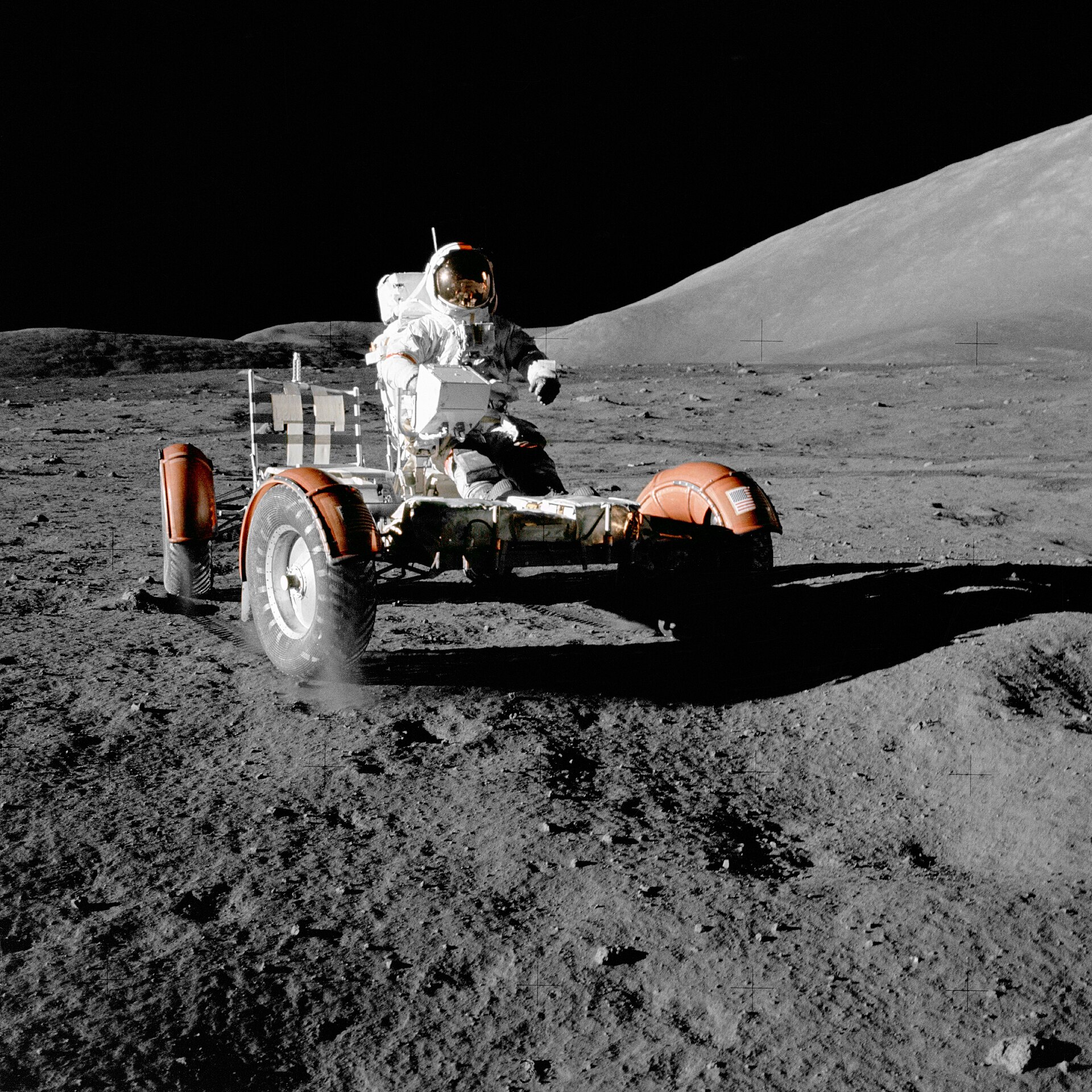
NASA is one of the most iconic employers on Earth — or anywhere else — and the assumption is that getting a job there means spending years buried in aerospace engineering textbooks. That assumption sells NASA short. The agency employs thousands of people across a wide range of disciplines, and while technical roles dominate the headlines, they are far from the whole picture.
Table of Contents
Whether you studied biology, communications, accounting, or computer science, there is likely a path into NASA for you. This guide breaks down exactly what degrees NASA looks for, which roles go beyond STEM, and how the application process actually works.
Quick Answer
No, your degree does not have to be in engineering. NASA hires professionals across a wide range of fields — from astrophysics and biology to human resources, technical writing, and public relations. Most professional roles require at least a bachelor’s degree, but the specific field depends heavily on the position. The one non-negotiable for civil service roles: you must be a U.S. citizen.
The Degrees NASA Actually Hires For
For its core technical and scientific workforce, NASA looks for degrees in engineering disciplines (aerospace, mechanical, electrical, computer), mathematics, physics, astrophysics, chemistry, biology, geology, earth sciences, and atmospheric science. Engineers are the largest single group, and they span every type of mission — from propulsion to software to systems integration.
Scientists with backgrounds in biology, planetary science, and earth science are equally vital. NASA’s science directorate covers four major areas: astrophysics, planetary science, earth science, and heliophysics. Biologists, in particular, play an important role in astrobiology research and human spaceflight health studies — not just engineering labs.
Computer science and IT degrees open doors to mission-critical software development, data systems, and cybersecurity. Mathematics is another strong fit: mathematicians contribute to trajectory modeling, data analysis, and mission planning in ways that are often invisible but essential.
Beyond STEM, NASA explicitly lists accounting, human resources, business administration, communications, public relations, and project management among the disciplines it recruits. Technical writers help translate highly complex engineering and science content for different audiences. Photographers and visual media specialists document missions. HR professionals manage a workforce that spans multiple centers across the country. These roles do not require a science or engineering background — they require expertise in their own field, applied to a space agency context.
Does the Level of Degree Matter?
It depends on the role. For many engineering and IT positions, a bachelor’s degree is the standard entry point. Research scientists — the people designing experiments, analyzing data from telescopes, or running planetary models — typically need a master’s degree or a PhD. The more specialized the science, the higher the expected credential.
Some technician roles require only an associate’s degree. Technicians assist engineers and scientists with hands-on work: testing spacecraft components, collecting atmospheric data, performing mechanical installation and repair. These positions are a legitimate and respected part of NASA’s workforce, and they offer a lower educational barrier to entry than most people assume.
For the most competitive path — becoming a NASA astronaut — the bar is set high. Astronaut candidates must hold a master’s degree in a STEM field (engineering, biological science, physical science, computer science, or mathematics), or have completed two years toward a doctoral program in a related field, or hold an MD or DO. On top of that, candidates need at least two years of related professional experience obtained after their degree, or 1,000 pilot-in-command hours in jet aircraft. Astronaut selection is extraordinarily competitive — the most recent classes drew thousands of applicants and only a handful were chosen.
For non-professional and support roles, NASA notes that work experience can substitute for a college degree in many cases. If you have significant relevant experience in your field, the absence of a four-year degree is not automatically disqualifying outside of professional, scientific, and engineering categories.
How to Actually Apply
All NASA civil service jobs are posted on USAJOBS (usajobs.gov), the federal government’s official job portal. You will need to create an account, build a resume in the USAJOBS format, and apply directly through the site. Each job listing spells out the specific education and experience requirements for that role — there is no single universal standard across all of NASA.
NASA also runs the Pathways Internship Program, which is one of the best entry points for students at any stage of their education. Pathways internships cover a wide range of disciplines, including social sciences, human resources, administration, communications, and IT — not just engineering and science. Many interns convert to full-time positions after graduation, making it a genuine pipeline rather than just résumé padding.
When applying, tailor your materials to the specific specialized experience listed in the job announcement. NASA hiring panels are looking for a clear match between your background and the role. Generic applications get screened out quickly. If you are invited to complete assessments through USA Hire, those evaluate skills like attention to detail and problem-solving ability across candidate types.
Tips and Common Mistakes
Do not assume you need to be an engineer. A common mistake is self-selecting out of NASA careers because your degree is in biology, communications, geology, or finance. NASA is a full organization, not just a collection of rocket builders — it needs the same professional support functions as any large employer, plus specialized science roles that span many disciplines.
Do not inflate your qualifications or misrepresent your field experience. Federal hiring is rigorous, and your resume goes through structured review. Be specific and honest about what your experience actually covers. Vague claims like ‘passionate about space’ carry no weight without concrete, relevant experience to back them up.
Start with internships if you are still in school. The Pathways program is specifically designed to bridge students into NASA careers, and it actively recruits across disciplines that have nothing to do with STEM. Getting a foot in the door early — even in an administrative or communications role — builds real institutional knowledge and internal connections.
Check job announcements regularly and set up alerts on USAJOBS. NASA hiring is position-specific and openings come and go. If you are serious about working there, treat the job hunt the same way you would treat a professional job search at any major organization — proactively and persistently.
Explore more: Explore more space guides and career articles.
NASA degree requirements FAQs
Can you work at NASA without a STEM degree?
Yes. NASA hires across many non-STEM fields including communications, human resources, accounting, business administration, project management, and technical writing. These roles require expertise in their own discipline, not a science or engineering background.
Do you need a PhD to work at NASA?
Only for certain research-intensive or highly specialized science roles. Many engineering and IT positions require only a bachelor’s degree, and some technician roles require only an associate’s degree. A PhD becomes important when you are pursuing original scientific research or highly advanced scientific positions.
Does NASA hire biologists?
Yes. Biologists contribute to astrobiology research, human health studies for long-duration spaceflight, life sciences experiments, and more. NASA’s science workforce explicitly includes biologists as part of its mission.
Is a master’s degree required to become a NASA astronaut?
Yes. Astronaut candidates must hold at least a master’s degree in a STEM field, or have completed two years toward a doctorate in a related field, or hold a medical doctorate. Candidates also need at least two years of related professional experience obtained after their degree, or 1,000 pilot-in-command hours in jet aircraft.
Do you have to be a U.S. citizen to work at NASA?
For NASA civil service positions, yes — U.S. citizenship is required. Non-U.S. citizens may explore opportunities with international partner agencies such as ESA, JAXA, or the Canadian Space Agency.
Make Your Digital Life Better
More practical tech how-tos, tool picks, and guides to upgrade your everyday digital life. More on GTWebs.
Photo: NASA / Harrison H. Schmitt / Public domain, via Wikimedia Commons.