

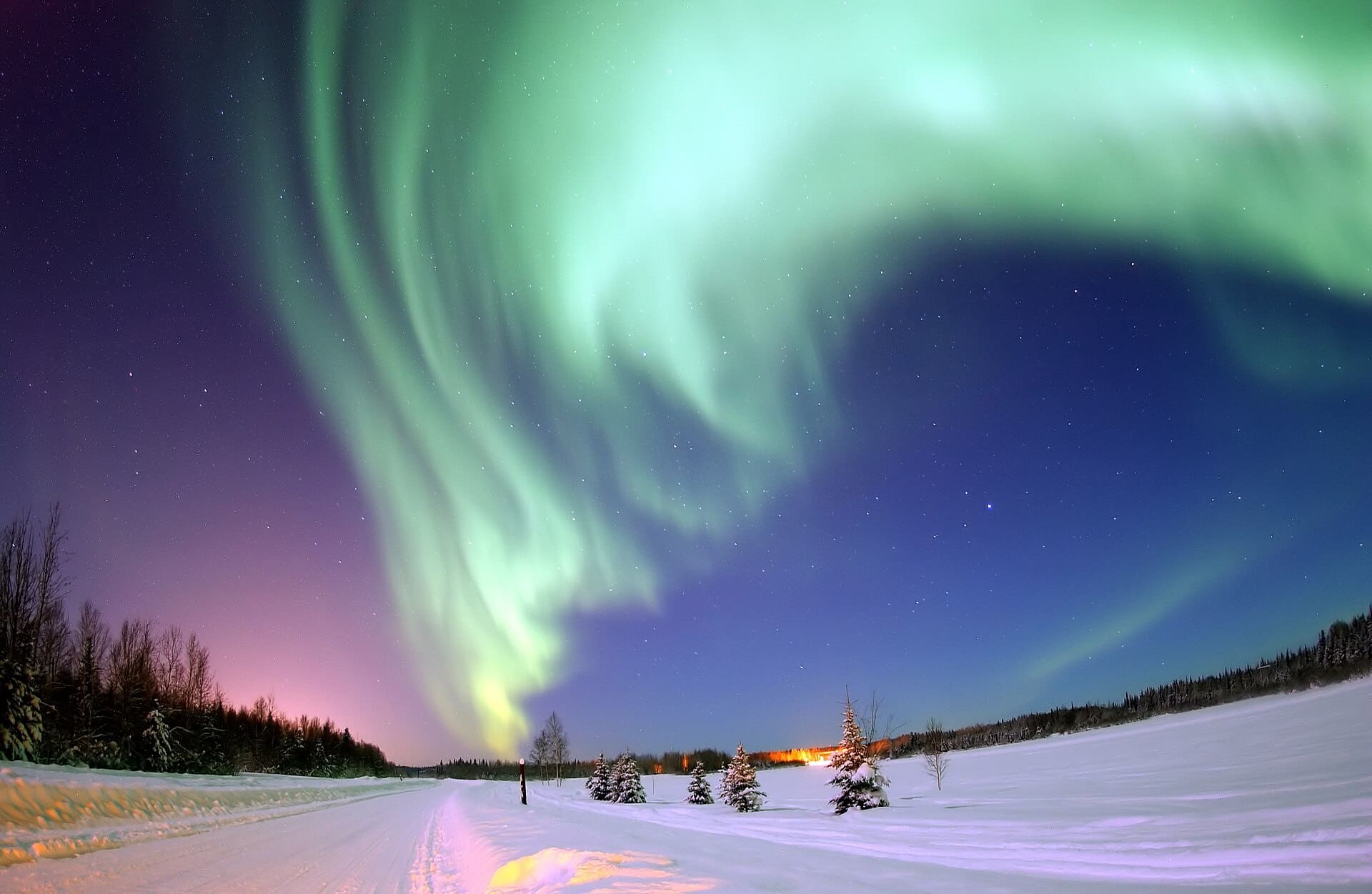
Few natural spectacles rival the northern lights — curtains of green, violet, and white rippling across a black sky. But catching them takes more than luck. The right timing, the right location, and a real-time forecast app can turn a frustrating trip into a night you never forget.
Table of Contents
This guide covers exactly what you need to plan a successful aurora-hunting trip: the best months to go, the top destinations in Europe and North America, how to make sense of the KP index, and which apps actually deliver reliable short-notice alerts.
Quick Answer
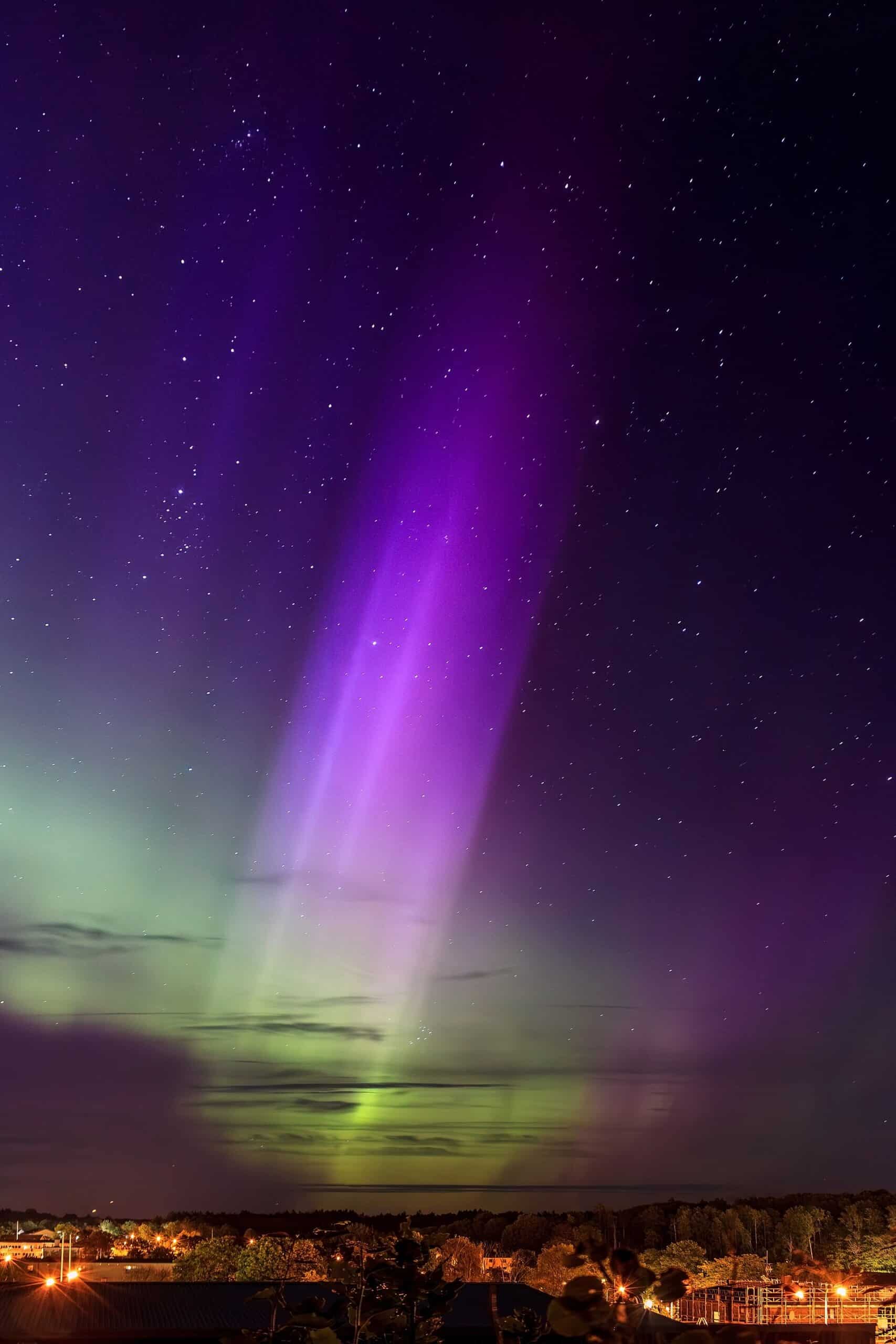
The northern lights are most reliably seen between September and March, from high-latitude locations like Tromsø (Norway), Abisko (Sweden), Rovaniemi (Finland), Iceland, or Fairbanks (Alaska), between roughly 10 PM and 2 AM on clear, dark, moonless nights. Download Aurora Hunt, My Aurora Forecast, or Aurora Compass to get real-time KP and solar wind alerts when activity spikes at your location.
Why 2026 Is Still One of the Best Years to Go
The sun operates on roughly an 11-year cycle. Solar Cycle 25 peaked around 2024–2025 — producing some of the strongest and most widely visible aurora events in years — and elevated solar activity carries into 2026. More frequent solar flares and charged particles hitting Earth’s upper atmosphere mean stronger and more geographically widespread aurora displays. Travel experts and astronomers note that after this window, activity is expected to decline noticeably until the mid-2030s. If the northern lights are on your bucket list, you are still inside one of the best opportunities in a decade.
A useful bonus: around the spring and autumn equinoxes — March and September — Earth’s magnetic orientation makes it especially receptive to geomagnetic disturbances. These equinox boosts are well-documented and make September and March particularly productive months even when raw solar output is not at its absolute peak.
Best Time of Year (and Night) to See the Aurora
The aurora season runs September through March, when nights at high latitudes are long enough to see the lights. October through February offers the most consistent darkness, while September and March benefit from those equinox effects. Within any given night, aurora activity tends to peak between 10 PM and 2 AM local time, so plan for a late outing rather than a quick look before bed.
Moon phase matters more than most guides acknowledge. A bright full moon can wash out faint displays, so experienced chasers often plan trips around new moon periods to maximize sky darkness. And rather than booking a single overnight stay, aim for at least three to four nights in destination — weather and geomagnetic activity both need to cooperate, and that combination rarely arrives on demand.
Where to Go: Top Destinations
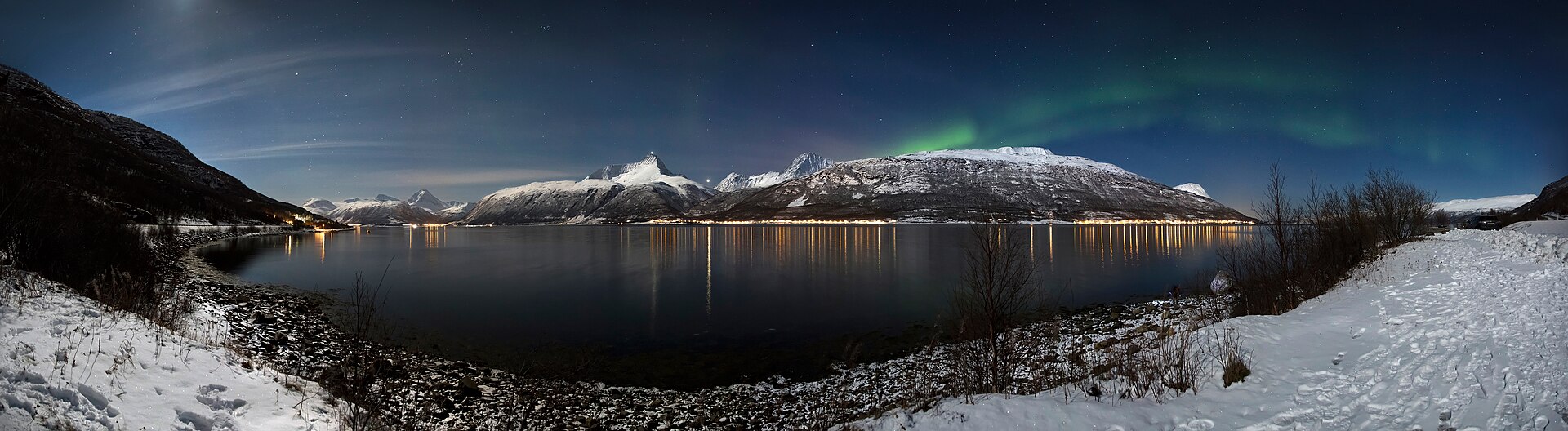
The closer you are to the auroral oval — a roughly ring-shaped zone centered on Earth’s magnetic poles — the better your odds on any given night. In Europe, Tromsø in northern Norway is one of the most established aurora hubs: it sits well above the Arctic Circle, has excellent tour infrastructure, and offers varied terrain from fjord shores to mountain plateaus for escaping town lights. Nearby Lofoten and Alta are strong alternatives. In Sweden, Abisko National Park has earned a reputation for unusually clear skies thanks to a local microclimate — known informally as the ‘blue hole’ — where cloud cover that blankets surrounding areas often dissipates. Finnish Lapland, centered on Rovaniemi and Saariselkä, offers glass-roofed cabins and igloos designed specifically for aurora watching from the warmth of your bed.
In North America, Fairbanks, Alaska, sits almost directly beneath the auroral oval and has one of the longest aurora seasons — typically August through April — with consistently dark and accessible skies. Denali National Park is a darker, more remote option nearby. Iceland is a perennial favorite because the entire country lies inside the auroral zone, combining city convenience with easy access to dark rural landscapes. During strong solar events, which remain possible in 2026, the lights can occasionally be spotted from Scotland, northern England, or southern Canada — but these are weather-dependent bonuses, not reliable targets.
Wherever you go, distance from artificial light is essential. Drive or join a guided tour at least 20–30 kilometers outside any town. Darker skies dramatically increase what you can see, especially for moderate or faint displays.
Understanding the KP Index — and What Else to Watch
The KP index is the most widely cited aurora forecast number. It measures global geomagnetic activity on a scale from 0 to 9, updating roughly every three hours based on data from magnetometer stations worldwide. In Arctic regions — Norway, Iceland, Fairbanks — a KP of just 1 or 2 can be enough for a visible display on a clear night. At mid-latitudes like northern US states or central Europe, you generally need KP 5 or above. A KP of 6 or 7 can push the aurora far enough south to be visible from the northern edge of the continental United States.
That said, the KP index has real limits: it is a global average, updates slowly, and does not account for local weather. Experts increasingly recommend also watching Bz — the north–south component of the interplanetary magnetic field. When Bz points southward, it connects with Earth’s magnetic field and drives aurora activity; this is often a better short-notice signal than KP alone. Apps that combine Bz, solar wind speed, and local cloud-cover radar give you a much clearer picture than KP numbers alone.
Best Apps for Northern Lights Forecasting
Aurora Hunt (iOS and Android, free with optional premium) is among the highest-rated options currently available. It combines live solar telemetry with local cloud-cover radar into a single ‘Viewing Score,’ simplifying the go/no-go decision. GPS-based threshold alerts notify you when activity is expected to be visible at your specific location — not just somewhere in your hemisphere.
My Aurora Forecast (iOS and Android, free with free push notifications) is a long-standing favorite, particularly for beginners. It shows KP history charts, the global auroral oval, solar wind indicators, and offers extended outlooks based on the 27-day solar rotation cycle. Hello Aurora (iOS and Android, free with an optional Pro tier) takes a community-driven approach: users drop real-time sighting pins on a shared map, so you can see whether people near you are actually watching the lights right now. It also provides location-based alerts and cloud coverage data.
Aurora Compass (iOS and Android, free to download with all core features unlocked — optional cosmetic color palette themes are available as in-app purchases, but no features are paywalled) is a strong pick for data-oriented chasers. It pulls real-time activity from over 100 magnetometers worldwide, includes a darkness tool for when civil twilight ends at your location, and offers alert notifications filtered by local cloudiness. For raw authoritative data, NOAA’s free Aurora Dashboard at spaceweather.gov uses the OVATION Prime model to generate 30–90 minute predictions and publishes official multi-day outlooks — the same underlying data that most apps use, presented without interpretation.
Practical Tips and Common Mistakes
The most common mistake is underestimating light pollution. Even a moderate aurora can look spectacular in a genuinely dark sky, while the same display can be nearly invisible from a town center. Book accommodation or arrange transport that puts you well outside city glow — many popular destinations offer dedicated aurora safaris that handle this logistics problem and keep you warm while you wait.
Dress for serious cold. Temperatures at high-latitude destinations regularly drop to -15°C or colder, and you may be standing still outside for an extended period. Thermal base layers, a windproof mid-layer, insulated boots, hat, and thick mittens are essentials. Experienced chasers keep hand warmers in their pockets as standard practice.
For photography, set your camera to manual mode: widest aperture your lens allows, ISO in the range of 1600–3200, and experiment with shutter speeds of roughly 5–15 seconds (shorter for fast-moving active displays, longer for faint arcs). A sturdy tripod is non-negotiable. Modern flagship smartphones in night mode can also capture surprisingly good results, so do not let not owning a DSLR stop you from going.
Finally, stay patient and flexible. Aurora chasers routinely book four to seven nights to secure one or two good sightings. Both weather and geomagnetic conditions need to align — and they rarely do on the first night. Keep your evenings open, watch your app alerts, and treat every clear sky after 9 PM as an opportunity.
Explore more: Explore more space guides.
Northern Lights viewing guide FAQs
What KP level do I need to see the northern lights?
In Arctic destinations — Norway, Iceland, Fairbanks — even KP 1–2 can produce a visible display on a clear, dark night. At mid-latitudes like northern US states or central Europe, you generally need KP 5 or higher. A KP of 6–7 can push the aurora far enough south to be seen from the northern edge of the continental US during active periods.
Can I see the northern lights in summer?
Not at most high-latitude destinations, because summer brings near-constant daylight — the midnight sun means skies never darken enough for the aurora to be visible. The reliable viewing season runs from late September through late March. Fairbanks, Alaska, is an exception where darkness returns early enough for aurora sightings to begin in August.
How far in advance can aurora apps predict activity?
Long-range forecasts beyond a few days are rough probabilities at best, since solar behavior is difficult to predict precisely. The most actionable window is about 30–90 minutes: once a solar wind event reaches NOAA’s monitoring satellites positioned between Earth and the sun, apps can alert you that aurora is likely imminent at your location. Enable push notifications and keep the app open on nights you plan to go out.
Make Your Digital Life Better
More practical tech how-tos, tool picks, and guides to upgrade your everyday digital life. More on GTWebs.
Photo: United States Air Force photo by Senior Airman Joshua Strang / Public domain, via Wikimedia Commons.