


Saturn’s rings are one of the most jaw-dropping sights in amateur astronomy — the moment you first see them floating around the planet through an eyepiece is genuinely unforgettable. The good news is that you don’t need professional observatory equipment to witness them. A modest telescope costing well under $400 is plenty to reveal the rings clearly.
Table of Contents
This guide covers the key specs to look for, the best telescope options in this price range, and what to expect when you point your scope at Saturn in 2026 — including an important heads-up about current ring conditions that every new observer should know before buying.
Quick Answer
For most beginners, the Sky-Watcher Heritage 130P Tabletop Dobsonian (~$305) is the best telescope under $400 for seeing Saturn’s rings clearly — its 130mm aperture reliably shows the ring structure and even hints of the Cassini Division on steady nights. If budget is tight, the Celestron AstroMaster 70AZ (~$200) will still show the rings as a gorgeous, distinct halo around the planet and is hard to beat for simplicity.
What You Actually Need to See Saturn’s Rings
Two specs matter most: aperture (the diameter of the main lens or mirror) and magnification. Aperture determines how much light the telescope gathers and how much fine detail you can resolve. Magnification makes Saturn large enough in the eyepiece to actually see the ring structure.
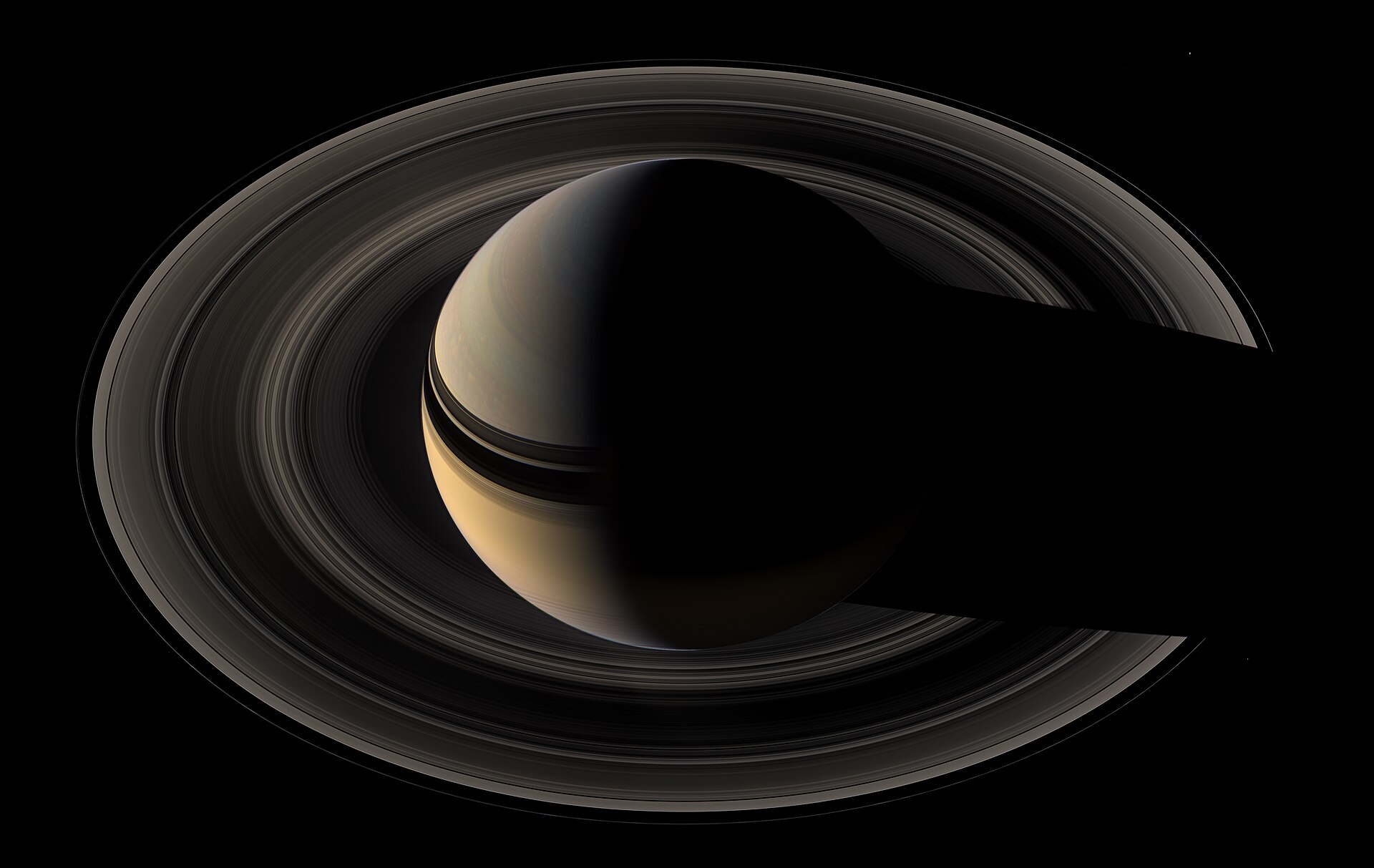
Saturn’s rings are visible through even a 60-70mm telescope at around 25x magnification — they appear as a distinct oval shape encircling the planet’s disk. Step up to 80-100mm and the ring structure becomes noticeably sharper. At 100-130mm, a dark gap between the inner and outer rings called the Cassini Division starts to become visible on steady nights at 100x or more. In general, more aperture produces a brighter, more detailed image — especially important at the higher magnifications used for planetary viewing.
One factor unique to 2026: Saturn’s rings went edge-on to Earth in early 2025 for the first time since 2009, and are currently in the process of reopening. At Saturn’s October 4, 2026 opposition — the best night of the year to observe the planet — the rings will be tilted roughly 7.5 degrees relative to our line of sight. They will look noticeably thinner than the wide-open views seen around 2017. This makes aperture a little more important than usual: a 100mm or larger scope will reward you with a more satisfying view during this transitional period than a smaller instrument would.
Top Telescope Picks Under $400
Sky-Watcher Heritage 130P (~$305): This 130mm tabletop Dobsonian is the standout pick in this budget for planetary viewing. Its collapsible truss-tube design folds from about 25 inches down to 14.5 inches, making it genuinely portable. Setup takes under two minutes with no tools required. At 75x-100x, Saturn’s rings are clear and well-defined, and the Cassini Division becomes visible on nights with steady air. The trade-off is that it sits on a table or flat surface rather than a full-height tripod, and the mirrors need occasional collimation (realignment) — a simple process once learned.
Celestron AstroMaster 70AZ (~$200): A solid entry-level refractor that ships ready to use with two eyepieces (20mm and 10mm), an erect-image diagonal, and a finderscope. At 90x with the included 10mm eyepiece, Saturn’s rings are clearly visible as a bright, distinct halo — a genuinely thrilling first view. It won’t show the Cassini Division under most conditions, but it requires no collimation, weighs just under 11 lbs with the tripod, and is about as simple to set up as a telescope gets.
Celestron Inspire 80AZ (~$200-250): A step above the 70AZ with an 80mm aperture, this refractor sits in a useful middle ground — more light-gathering than the 70mm class, still compact, and similarly maintenance-free. It shows Saturn’s rings clearly with a bit more brightness and contrast than smaller refractors.
Explore Scientific FirstLight 102mm Doublet Refractor (~$250): A 102mm refractor that offers excellent aperture for the price. Refractors deliver high-contrast, sharp planetary images with no collimation needed. Ring detail is noticeably better than 70-80mm scopes at this aperture, and it sits comfortably within the $400 ceiling.
Tips for Getting the Best View — and Common Mistakes to Avoid
Let your telescope cool down outdoors for at least 20-30 minutes before you start observing. Optics that are warmer than the surrounding air create internal turbulence that blurs the image. This is one of the most common reasons beginners get disappointing planetary views — the fix is just patience.
Start with your lowest-magnification eyepiece to locate and center Saturn, then swap to a higher-magnification eyepiece (10mm or shorter) to zoom in on detail. A 2x Barlow lens — often available for under $30 — doubles any eyepiece’s power and can meaningfully improve planetary views without requiring a whole new eyepiece set.
Observe when Saturn is highest in the sky. Near the horizon, you’re looking through a much thicker slice of Earth’s atmosphere, which wobbles and blurs the image. A free planetarium app like Stellarium lets you track when Saturn reaches its peak altitude on any given night.
Avoid observing on warm evenings or right after rain, when atmospheric turbulence tends to be worst. The calmest, steadiest air — which gives the crispest planetary detail — often comes late at night in cool, settled weather.
The biggest mistake beginners make is pushing magnification too high too fast. More magnification amplifies atmospheric shimmer along with the image. Start at moderate power, increase slowly, and if the image turns to a shimmering blur, back off. The sharpest view is usually at a moderate magnification, not the maximum the telescope can physically achieve.
Explore more: Explore more space articles.
Best Telescopes for Saturn’s Rings Under $400 FAQs
Can you really see Saturn’s rings with an inexpensive telescope?
Yes — Saturn’s rings are visible through almost any telescope with at least 60-70mm of aperture at 25x or higher magnification. Even budget beginner scopes show the rings as a clearly distinct oval halo around the planet’s disk. More aperture and better optics simply reveal finer detail, like the dark Cassini Division between the ring bands.
Why do Saturn’s rings look thin or underwhelming in 2026?
Saturn’s rings went edge-on to Earth in early 2025 — the first time since 2009 — and are now slowly tilting back into view. In 2026, the rings are angled at roughly 7.5 degrees toward Earth, making them appear considerably narrower than the expansive views seen around 2017. They will become progressively more impressive over the next several years as the tilt increases heading toward the 2030s.
What magnification do I need to see Saturn’s rings clearly?
The rings become recognizable as a structure at around 25x, but 50x-100x is the sweet spot for a satisfying view. For the Cassini Division (the dark gap separating the A and B rings), aim for 100x-150x on a night with steady atmospheric seeing. Most telescopes in this budget reach those magnifications with their included eyepieces or with an inexpensive Barlow lens.
Make Your Digital Life Better
More practical tech how-tos, tool picks, and guides to upgrade your everyday digital life. More on GTWebs.
Photo: NASA/JPL/Space Science Institute / Public domain, via Wikimedia Commons.