

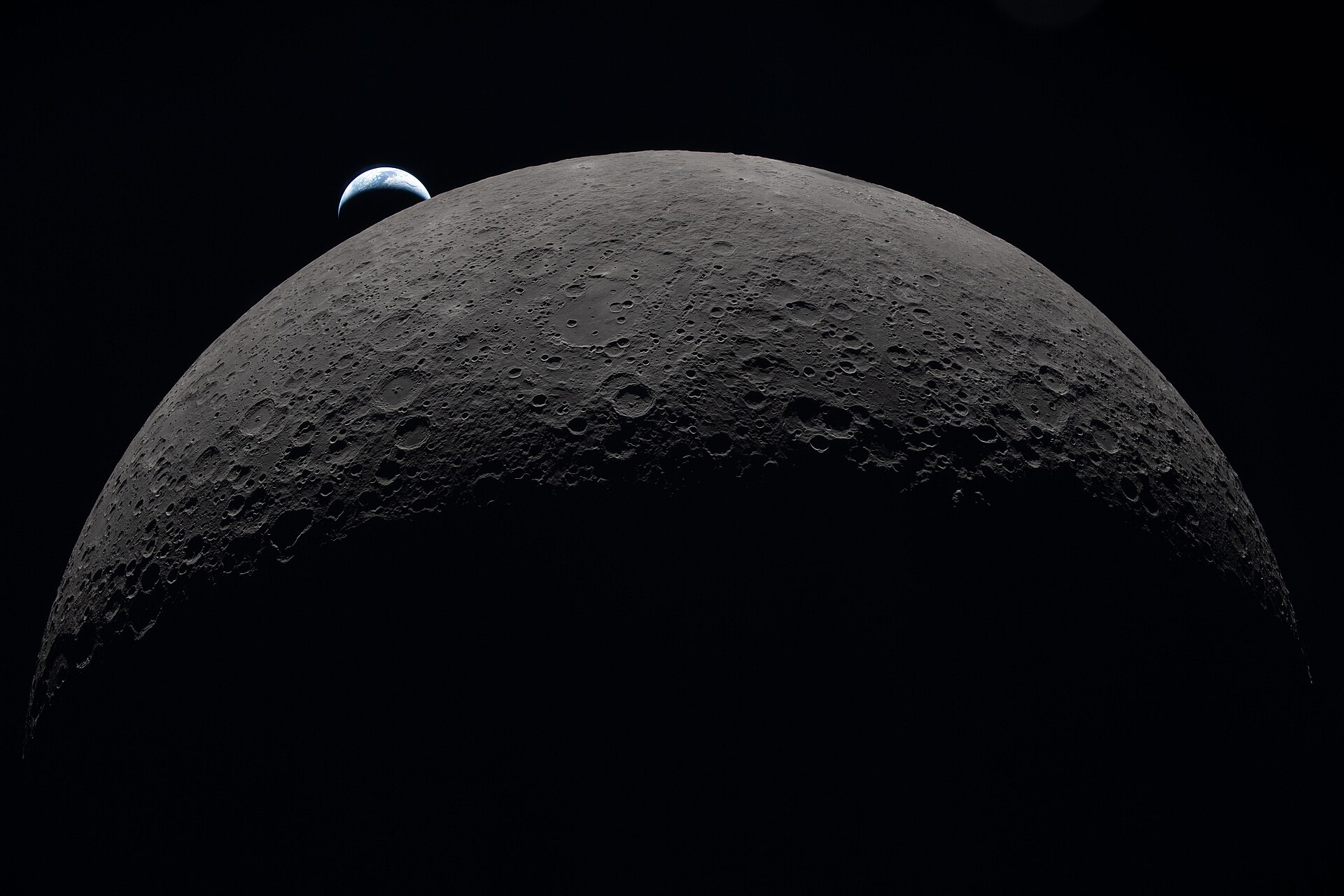
The last humans to walk on the Moon left in December 1972. More than five decades later, NASA’s Artemis program is changing that — and going somewhere Apollo never went: the lunar south pole.
Table of Contents
Artemis isn’t just a nostalgia trip. It’s the foundation for a permanent human presence beyond Earth, with Mars as the long-range goal. In April 2026, four astronauts completed the program’s first crewed lunar flyby, setting distance records not broken since Apollo 13. A surface landing is now squarely on the horizon. Here’s everything you need to know.
Quick Answer
NASA’s Artemis program is the agency’s effort to return humans to the Moon, land the first woman and first person of color on the lunar surface, establish a long-term base near the south pole, and build the deep-space expertise needed for a future crewed mission to Mars. Artemis II completed a crewed lunar flyby in April 2026; the first crewed lunar surface landing is targeted for around 2028.
Why Are We Going Back to the Moon?
The short answer: the Moon has something Apollo didn’t know about — water. Permanently shadowed craters at the lunar south pole never see sunlight and hold temperatures cold enough to preserve ancient ice deposits. That ice is a game-changer: split water molecules into hydrogen and oxygen and you have rocket propellant and breathable air. A Moon base that can manufacture its own resources is far more sustainable than one resupplied entirely from Earth.
Beyond resources, the Moon is a 4.5-billion-year-old geological record. Its surface has been mostly undisturbed since the solar system formed, offering clues about how planets — including Earth — evolved. And practically, practicing long-duration surface operations on the Moon (a few days from home) is far safer than attempting the same on Mars (months away). Artemis is, in many ways, a dress rehearsal for the Red Planet.
The Artemis Missions: What Has Happened and What’s Next
Artemis I (November 2022) was an uncrewed shakedown flight. NASA’s new Space Launch System (SLS) rocket carried the Orion capsule on a 1.4-million-mile loop around the Moon and back, proving the hardware could handle deep space on its first launch.
Artemis II (April 2026) sent four astronauts on a 10-day lunar flyby: Commander Reid Wiseman, Pilot Victor Glover, Mission Specialist Christina Koch, and Canadian Space Agency astronaut Jeremy Hansen. Glover became the first Black person and Koch the first woman to travel to the Moon. The crew flew farther from Earth than any humans since Apollo 13 — capturing thousands of images of the lunar surface — before splashing down in the Pacific Ocean on April 10, 2026.
Looking ahead, the next missions are planned to test integrated operations with commercial lunar landers before attempting the first crewed south pole landing, currently targeted for around 2028. Two astronauts are expected to spend roughly a week on the lunar surface conducting science before returning to orbit. After that, NASA’s vision is regular lunar landings building toward a permanent surface outpost.
The Spacecraft Making It Happen
Three systems power Artemis. The Space Launch System (SLS) is NASA’s heavy-lift rocket — capable of sending Orion, astronauts, and cargo directly to the Moon in a single launch. The Orion capsule is the crew vehicle built to survive re-entry from deep space, which is considerably more demanding than returning from the International Space Station.
Getting from lunar orbit to the surface is where commercial partners come in. NASA selected SpaceX’s Starship — in a lunar lander variant called the Human Landing System (HLS) — to ferry astronauts between Orion and the Moon’s surface. Blue Origin’s Blue Moon lander is also in development as a second HLS option for later missions. This commercial lander model is a major departure from Apollo, where NASA built and operated every piece of hardware itself.
Common Misconceptions About Artemis
Artemis is not a repeat of Apollo. Apollo was driven by Cold War politics and targeted equatorial landing sites; Artemis is designed for sustained presence at the scientifically rich south pole, a place no human has ever visited. The goals, the hardware, and the target location are all fundamentally different.
The program has also faced real delays — the first crewed landing slipped significantly from early projections. Those delays are real, but they reflect the genuine complexity of developing new deep-space hardware. Importantly, the core architecture works: Artemis II proved the SLS rocket and Orion capsule can safely carry a crew to the Moon and back.
Finally, Artemis is not a solo American venture. Canada is a formal partner (reflected by Jeremy Hansen’s spot on Artemis II), and NASA’s Artemis Accords — a framework for responsible space exploration — have been signed by dozens of countries, making this a broadly international undertaking even though NASA leads it.
Explore more: Explore more space articles.
NASA Artemis Program FAQs
When will humans land on the Moon again?
NASA is currently targeting around 2028 for the first crewed lunar surface landing under the Artemis program. That date has shifted several times due to development challenges with the rocket and commercial lander systems, so it could move further as plans evolve.
Who will be the first woman to walk on the Moon?
NASA has committed that Artemis will land the first woman and first person of color on the Moon. Christina Koch became the first woman to travel to the Moon when she flew the Artemis II lunar flyby in April 2026. The first woman to actually walk on the surface is expected on a future Artemis landing mission.
How is Artemis different from the Apollo program?
Apollo was a political sprint to beat the Soviet Union; Artemis is designed for long-term, sustained presence. Artemis targets the lunar south pole (never visited by Apollo), aims to use local resources like water ice, relies on commercial partners like SpaceX for lunar landers, and is explicitly a stepping stone toward sending humans to Mars.
Make Your Digital Life Better
More practical tech how-tos, tool picks, and guides to upgrade your everyday digital life. More on GTWebs.
Photo: NASA / Public domain, via Wikimedia Commons.